
Leifsonia
Leifsonia
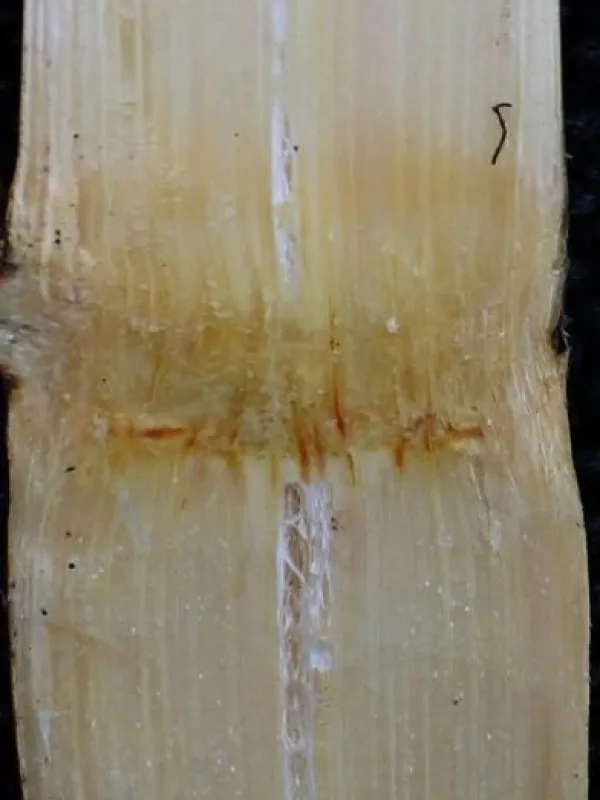
Description
Symptoms
The visual symptoms of a Leifsonia infection are often subtle, frequently presenting as a general decline in the health and vigor of the affected plants.
A hallmark sign of the infection is the discoloration of the vascular system, which can be observed as brown or reddish streaks upon cross-sectioning the stem.
Infected plants typically exhibit severe stunting, as the reduced nutrient and water transport prevents normal development and biomass accumulation.
Leaf chlorosis is another common indicator, which gradually transitions into necrosis as the water supply to the upper parts of the plant becomes severely restricted.
- Stunted plant growth.
- Discoloration of internal stem tissues.
- Progressive wilting of leaves.
- Reduced crop yield and quality.
Pathogen
The disease is caused by bacteria of the genus Leifsonia, specifically Leifsonia xyli, which is a gram-positive, rod-shaped bacterium inhabiting the vascular tissue of plants.
This pathogen acts by colonizing the xylem vessels, where it multiplies and produces extracellular substances that lead to the blockage of water transport.
Leifsonia species are known for their ability to persist in plant debris and soil, making them a recurring problem in areas with continuous cultivation of susceptible hosts.
The transmission of the bacteria often occurs through the use of contaminated vegetative planting material, which serves as a primary source of new outbreaks.
Detection involves complex laboratory techniques, such as ELISA (enzyme-linked immunosorbent assay) or PCR, because the symptoms often mimic abiotic stress or other vascular diseases.
Conditions for development
The development and spread of Leifsonia are significantly influenced by environmental conditions, with high humidity and moderate to warm temperatures being most favorable.
Agricultural practices, such as mechanical harvesting and pruning, create numerous entry points for the bacteria, facilitating systemic infection throughout the field.
Poor soil drainage and suboptimal irrigation management can exacerbate the plant's stress levels, thereby increasing susceptibility to the pathogen.
The movement of contaminated equipment between fields is a major factor in the rapid dissemination of the bacteria across large areas.
High planting densities may also increase the probability of pathogen transmission through physical contact between healthy and infected plant parts.
Why it matters
The economic impact of Leifsonia is significant, particularly in the production of sugarcane and other susceptible industrial crops, where it causes reduced sugar content and biomass.
By compromising the plant's vascular integrity, the disease renders crops more vulnerable to drought, nutrient deficiency, and infestation by opportunistic pests.
Yield losses can be substantial, often requiring the complete removal and destruction of affected plantings to prevent further spread of the bacteria.
The long-term persistence of the pathogen in the agricultural environment poses a continuous challenge to sustainable crop production and regional economic stability.
Damage caused by this pathogen necessitates costly sanitation protocols and the potential transition to more resistant but perhaps less profitable plant varieties.
Protection
The most effective strategy is the use of healthy, disease-free planting material obtained from reputable certified nursery sources to prevent initial infestation.
Strict sanitation of all harvesting and trimming tools using chemical disinfectants is essential to break the cycle of mechanical transmission between plants.
Implementing an integrated pest management program that includes the roguing of infected plants is crucial for suppressing the pathogen's population in the field.
Crop rotation practices should be followed to allow sufficient time for the pathogen population to decline in the soil before replanting susceptible species.
Enhancing overall plant health through balanced fertilization and proper moisture management can improve the natural defense mechanisms of the crop against the pathogen.
Discussion
No discussions yet — be the first.