
Laxitextum bicolor
Laxitextum bicolor
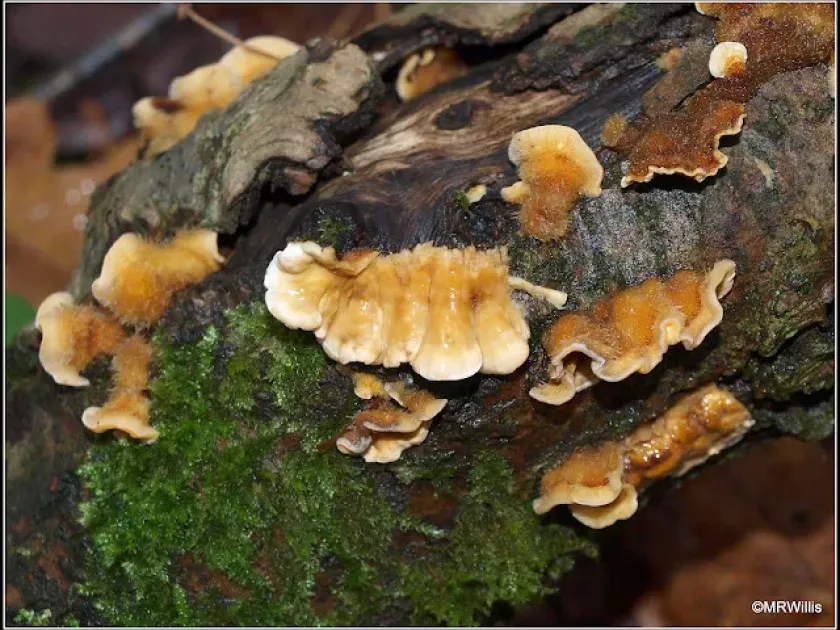
Description
Symptoms
The most visible sign of infection is the emergence of distinctive fruiting bodies. These are often cream-colored to brownish, leather-like patches found on the trunk or exposed wood surfaces.
Internally, the infection manifests as white rot within the wood. The affected timber becomes significantly softened, friable, and typically lighter in color as lignin is systematically degraded.
The canopy of an infected tree often exhibits symptoms of water stress, including premature leaf yellowing, wilting, and thinning. These symptoms occur as the fungal colonization interferes with vascular conductivity.
Cracks and deep fissures may appear on the bark, serving as pathways for the fungus to develop its reproductive structures. In advanced stages, bark may start peeling away from the underlying decaying sapwood.
Underneath the bark, white, fan-shaped mycelial mats may be found. The presence of these mats is a clinical indicator of established fungal decay within the tree's internal structure.
Pathogen
The disease is caused by the basidiomycete fungus Laxitextum bicolor, which is categorized within the order Russulales. It is a wood-inhabiting fungus that primarily acts as a decomposer of woody tissues in various broad-leaved trees.
While often saprotrophic, the fungus can exhibit opportunistic parasitic behavior, especially on weakened or stressed host trees. It typically forms leather-like, resupinate to effused-reflexed fruiting bodies on bark surfaces.
The pathogen thrives by decomposing structural components of wood, specifically cellulose and lignin. By breaking down these complex polymers, the fungus compromises the mechanical integrity of the host plant.
Dispersal is primarily achieved through the production of basidiospores, which are distributed by wind or insect vectors. Upon contact with suitable substrates, these spores germinate to initiate new colonization.
The mycelium of Laxitextum bicolor expands through the xylem and phloem, effectively obstructing the transport of water and essential nutrients throughout the tree, leading to decline.
Conditions for development
High humidity and moderate temperatures are the most critical factors favoring the development of Laxitextum bicolor. Damp environments, such as dense, poorly ventilated forest stands, promote fungal activity.
Mechanical damage to the tree, including frost cracks, sunburn, or improper pruning cuts, acts as the primary entry point for the pathogen. Healthy, intact bark serves as a strong natural barrier.
Trees subjected to environmental stress, such as drought, nutrient deficiency, or prior damage from other pests, are significantly more susceptible to successful colonization by this fungus.
Stagnant air and poor sunlight exposure in overgrown areas create a microclimate that remains moist for longer periods, facilitating the germination and spread of fungal spores.
Transmission is frequently aided by the use of contaminated pruning tools. If tools are not sanitized between trees, the fungus can easily be transferred from infected wood to healthy tissue.
Why it matters
The primary concern is the significant structural degradation of the wood, which reduces the timber's quality and value. Affected trees may become physically unstable and prone to snapping during high winds.
For ornamental and orchard trees, the disease causes a decline in yield and aesthetic value. Severe infections often render the tree structurally unsound, necessitating its removal to prevent accidents.
Infection by Laxitextum bicolor creates a gateway for secondary colonization by wood-boring insects and other opportunistic pathogens, drastically accelerating the tree's mortality rate.
The economic impact is substantial, involving the costs associated with the removal of hazardous trees, loss of potential yield, and the need to rehabilitate land or orchard spaces.
In landscape or park settings, the presence of infected trees poses a public safety risk, as decay can progress internally without early visible warnings until the tree becomes hazardously brittle.
Protection
Proactive sanitation is the most effective defense strategy. This includes the regular removal of dead branches and wood debris to minimize the available substrate for fungal growth.
Maintaining tree vigor through proper irrigation, fertilization, and general care is essential. A robust tree can often compartmentalize minor infections and prevent them from spreading deeply.
Sanitizing pruning equipment with alcohol or disinfectant solutions between trees is a vital measure to prevent the accidental spread of spores during routine maintenance tasks.
Infected material should be removed from the site and destroyed, preferably by burning or deep burial, to eliminate the reservoir of spores and prevent reinfection of nearby plants.
If the infection is detected early, localized surgical excision of the diseased tissue down to the healthy wood, followed by the application of copper-based fungicides, may salvage the tree.
Discussion
No discussions yet — be the first.