
Lasiosphaeris hirsuta
Lasiosphaeris hirsuta
Description
Pathogen
The causal agent is the ascomycete fungus Lasiosphaeris hirsuta, belonging to the Sordariales order. It is primarily classified as a saprotrophic organism that thrives on decaying organic matter.
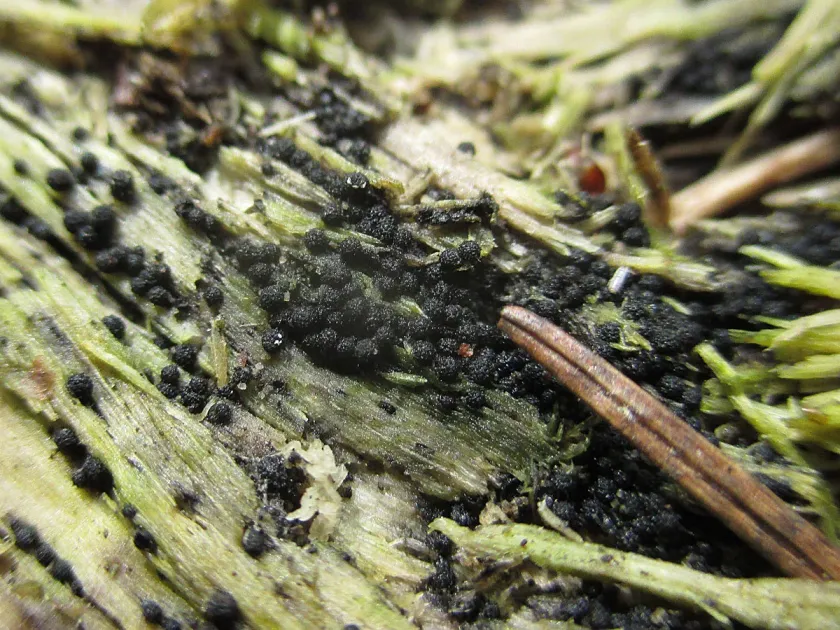
Its morphology is characterized by the formation of perithecia, which are fruiting bodies covered in dense, hair-like structures, serving as the species' namesake and identification marker.
Within agricultural systems, this fungus is often found in soil rich in undecomposed plant residues, where it plays a role in the microbial breakdown of cellulosic materials.
The fungus produces specialized enzymes that allow it to efficiently degrade complex organic polymers, such as cellulose and lignin, present in plant cell walls.
Its life cycle involves the production of ascospores that disperse through environmental vectors, allowing the fungus to colonize new substrates under favorable conditions.
Conditions for development
The development of Lasiosphaeris hirsuta is heavily dependent on high moisture levels. It prefers substrates that remain damp for extended periods, providing a stable environment for fungal growth.
Optimal growth temperatures typically range between 15°C and 20°C, which correspond to the natural conditions found in soil surface layers and decaying leaf litter.
Fields with significant amounts of crop residues left on the surface, especially under no-till farming practices, provide an ideal habitat for this fungus to thrive.
Soil aeration plays a critical role; restricted oxygen flow and high humidity create a niche where this saprotrophic fungus outcompetes other microorganisms.
Dissemination is primarily facilitated by water splash during rain events and the movement of contaminated soil particles via farm machinery across fields.
Why it matters
While Lasiosphaeris hirsuta is not typically a primary pathogen of healthy, vigorous crops, it can pose risks to weakened plants or seeds in direct contact with infested debris.
It can cause secondary rot if the plant's protective barriers are compromised due to environmental stress or pre-existing damage, leading to root or collar degradation.
Its presence in high concentrations can lead to nutrient competition in the rhizosphere, temporarily immobilizing nitrogen while it works to break down high-carbon residues.
In cases of heavy infestation, the metabolic byproducts released by the fungus may inhibit the germination process of sensitive seeds in the seedbed.
The fungus acts as an indicator of an imbalanced soil ecosystem where organic matter decomposition is stagnant rather than efficient.
Protection
Effective management focuses on promoting the rapid decomposition of organic matter through proper tillage or the application of biological soil amendments.
Utilizing stubble decomposers containing beneficial bacteria helps to displace the fungus from crop residues by accelerating the composting process in the field.
Implementing crop rotation helps to disrupt the fungal cycle by alternating plant species and modifying the environmental conditions at the soil surface.
Ensuring proper soil drainage is essential to prevent the prolonged waterlogged conditions that favor the development of this specific fungal species.
- Deep plowing to bury infested residues.
- Balanced fertilization to support rapid microbial turnover.
- Monitoring soil moisture levels in fields with high organic matter.
Discussion
No discussions yet — be the first.