
Lasiosphaeria ovina
Lasiosphaeria ovina
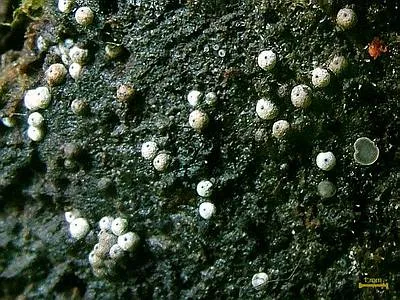
Description
Symptoms
The primary visual sign of Lasiosphaeria ovina is the appearance of small, white, velvety or hairy fruiting bodies on the bark or exposed wood. These structures are often less than a millimeter in size and typically grow in dense, crowded colonies.
Infected wood exhibits signs of soft rot. As the fungus consumes the organic matter, the wood loses its density and structural integrity, becoming crumbly and fragile. This changes the appearance of the wood, often making it paler or grayish.
Early-stage colonization is difficult to detect because the mycelium spreads within the internal fibers of the wood. The fruiting bodies only become visible when environmental conditions are optimal for the reproductive phase of the fungus.
The colonies are usually concentrated on specific patches of dead wood, such as storm-damaged branches, pruning stubs, or frost cracks. In periods of high humidity, the fuzziness of the fruiting bodies becomes more prominent.
Unlike parasitic fungi that kill foliage or fruits, this organism primarily impacts the wooden framework of the tree. Therefore, signs of its presence are almost exclusively found on woody parts, indicating a process of ongoing degradation.
Pathogen
Lasiosphaeria ovina is an ascomycete fungus belonging to the class Sordariomycetes. It is primarily identified as a saprotrophic fungus, which plays an essential role in forest ecosystems by decomposing dead and decaying woody materials.
This fungus typically develops on the wood of deciduous trees. Its life cycle involves the production of small, white or grayish perithecia, often appearing as fuzzy or hairy clusters on the surface of the substrate, which are characteristic of its taxonomic identity.
The mycelium of Lasiosphaeria ovina penetrates deep into the wood structure. By secreting specific enzymes, it breaks down complex polymers like lignin and cellulose, transforming the woody mass into softer, decaying material over time.
Reproduction occurs through the release of ascospores contained within perithecia. These spores are light and easily dispersed by wind or water, allowing the fungus to colonize new sites whenever suitable moist conditions and dead woody tissues are present.
In terms of agricultural significance, while it does not usually attack healthy, vigorous tissues, its presence is a clear indicator of localized decay, suggesting that the host plant may be suffering from structural weaknesses or previous injuries.
Conditions for development
High moisture levels are the most critical factor for the development of Lasiosphaeria ovina. The fungus thrives in shaded, humid environments where water persists on surfaces for extended periods, preventing rapid drying.
Temperature plays a secondary role, as the fungus is generally adapted to temperate climates. It prefers areas with moderate temperatures and limited direct sunlight, which are common in dense forest understories or neglected orchards.
Wounded wood provides an easy entry point for the fungus. Pruning cuts left unsealed, broken branches, or damage caused by pests or equipment create favorable sites for spore germination and mycelial colonization of the inner tissue.
Poor orchard sanitation is a major contributor to the spread of the pathogen. Accumulated woody debris, such as fallen branches and dead wood piles, serve as a constant source of inoculum, increasing the risk to the remaining healthy trees.
Air circulation and canopy management significantly influence the fungus's ability to establish itself. Trees with dense, unpruned crowns tend to stay wetter for longer, creating the ideal microclimate for the development of fungal colonies.
Why it matters
The main danger posed by Lasiosphaeria ovina is the structural compromise of the tree. By breaking down the wood, it reduces the overall strength of branches and trunks, making them susceptible to failure during high winds or heavy snowfall.
Although typically a saprotroph, the fungus can exacerbate the weakening of a tree already under stress. By creating areas of decay, it invites secondary invaders that may eventually attack healthy cambium, leading to the decline of the plant.
In agricultural settings, the presence of this fungus can be costly due to the increased maintenance required for tree health. Constant structural degradation may lead to the need for early removal of infected trees or major branch reductions.
The fungus can act as an epidemiological risk factor within a plantation. If dead wood is not managed, the spore load increases, leading to a higher incidence of fungal growth on any vulnerable or damaged woody surfaces across the orchard.
Furthermore, aesthetic damage to trees in public parks or ornamental landscapes is a significant concern. The unsightly appearance of fungal clusters and the associated wood decay detract from the visual value of the trees.
Protection
Sanitation is the most effective management strategy. Regularly removing and destroying dead wood, pruning stubs, and diseased branches reduces the primary habitat and inoculum source for the fungus within the orchard.
Proper wound care is essential to prevent infection. All large pruning cuts or accidental bark wounds should be treated with protective paints or fungicidal sealants to physically block fungal spores from reaching the wood.
Improving air circulation through regular pruning helps keep trees dry. By opening up the canopy, you expose the wood to sunlight and wind, which are natural inhibitors of this fungus, preventing it from establishing successful colonies.
Maintaining tree vigor through appropriate fertilization and water management builds the plant's natural resistance. Healthy trees are better able to compartmentalize wounds and resist the spread of decay-causing microorganisms like Lasiosphaeria ovina.
In cases where fungal pressure is high, the use of biological control agents, such as Trichoderma species, can be beneficial. These beneficial fungi compete with Lasiosphaeria ovina for space and resources, effectively suppressing its development.
Discussion
No discussions yet — be the first.