
Lasiodiplodiosis
Lasiodiplodia
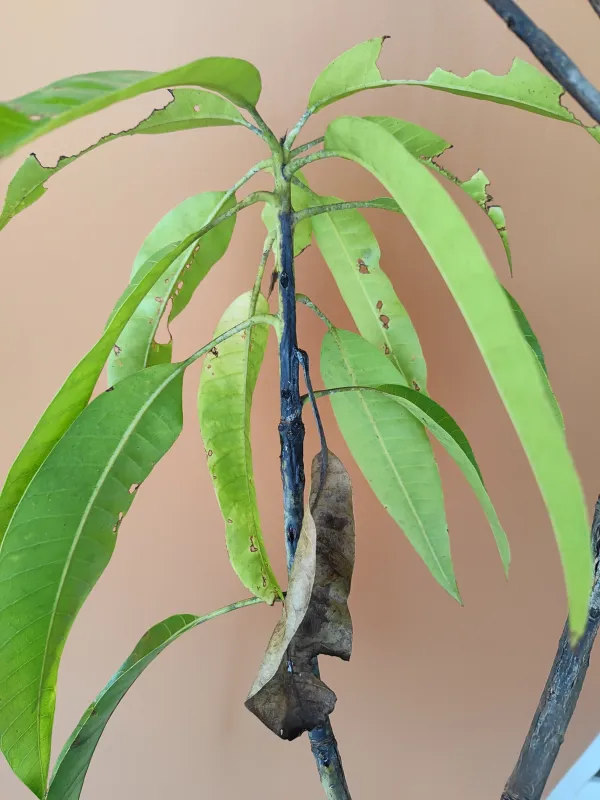
Description
Symptoms
The disease often manifests as localized necrosis on branches, leading to the formation of cankers or longitudinal cracks in the bark. These lesions may exude sap or gum, depending on the host species.
In fruit-bearing crops, the infection results in post-harvest or pre-harvest decay. The affected fruit darkens rapidly and may become covered with a dense, dark grey or black fungal mat composed of spores.
Systemic symptoms include progressive wilting, where leaves turn yellow, droop, and die while remaining attached to the branches. In severe cases, the entire plant may show signs of sudden collapse due to vascular disruption.
When infected wood or stems are cross-sectioned, a characteristic internal discoloration (browning or blackening) is often visible, indicating the destruction of the xylem and the progression of the fungal mycelium.
Early identification is difficult as symptoms often overlap with other vascular wilts; however, the presence of tiny, black, pimple-like pycnidia on dead bark is a diagnostic hallmark of Lasiodiplodia infection.
Pathogen
Lasiodiplodiosis is caused by several species of fungi belonging to the genus Lasiodiplodia, most notably Lasiodiplodia theobromae. These fungi act as aggressive plant pathogens that can thrive in various climates and infect a wide range of host plants.
The fungus survives in the environment as dormant mycelium or pycnidia within infected plant tissues, soil, and organic debris. It produces conidia that are disseminated via wind, rain splashes, and movement of infested agricultural machinery or plant material.
Infection primarily occurs through wounds caused by environmental stress, pruning, or insect damage. Once the fungus enters the host, it colonizes the vascular tissues, effectively blocking the flow of water and nutrients throughout the plant.
The life cycle involves the formation of dark pycnidia, which rupture to release masses of asexual spores. These spores are highly resistant to environmental changes and can remain viable for extended periods until conditions favor infection.
This pathogen is considered a facultative parasite, meaning it can quickly switch from living on dead tissues to attacking healthy, vigorous parts of the plant when the opportunity arises.
Conditions for development
The development of Lasiodiplodiosis is highly dependent on high temperatures and high relative humidity. Warm climates provide the thermal energy required for rapid spore germination and extensive mycelial growth.
Plants subjected to environmental stressors—such as drought, heat waves, or waterlogging—are significantly more susceptible. Stress weakens the host's innate defense mechanisms, making it easier for the fungus to establish infection.
Poor orchard management practices, such as excessive nitrogen fertilization which forces succulent growth, or the failure to prune correctly, create microclimates and entry points that facilitate the spread of the pathogen.
Insect activity plays a major role in disease dispersal. Wood-boring insects not only create tunnels that act as infection courts but also actively vector the spores deep into the woody tissues of the host.
Inconsistent sanitation practices contribute significantly to the disease cycle, as discarded prunings and infected fallen fruit serve as large-scale reservoirs for re-infection in the following growing seasons.
Why it matters
The primary economic impact of Lasiodiplodiosis is the substantial loss of fruit yield. Infected fruit is largely unmarketable, and the rapid onset of rot during transit can lead to the loss of entire harvest batches.
The disease poses a long-term threat to orchard longevity, often killing mature trees and requiring early removal and costly replanting. This loss of productive capital can devastate fruit farming businesses.
Trees weakened by the pathogen show reduced vitality and are less resilient to winter frost and other environmental stressors, which further compounds the damage to the plantation over several years.
In international trade, the presence of Lasiodiplodia can trigger phytosanitary restrictions, preventing growers from exporting their produce and leading to significant financial losses and market access issues.
The cost of managing this disease is significant, involving frequent monitoring, specialized labor for sanitation, and the application of chemical control measures, all of which increase production costs.
Protection
An integrated pest management approach is essential. The cornerstone of control is strict orchard hygiene, including the prompt removal, burial, or burning of all dead wood and symptomatic plant parts to reduce the spore load.
The use of certified disease-free nursery stock is the first line of defense. Ensuring that new plantings are sourced from reputable growers helps prevent the introduction of the pathogen into new areas.
Regular applications of copper-based fungicides or other broad-spectrum protective agents during dormant periods and after significant pruning events can help minimize the risk of infection.
Maintaining optimal tree vigor through balanced fertilization and appropriate irrigation helps the plant maintain its natural structural integrity, making it more resilient against fungal colonization.
- Sterilize pruning equipment with 70% alcohol or bleach between trees to prevent cross-contamination.
- Seal larger pruning cuts with appropriate fungicide-treated pruning paste to prevent pathogen entry.
- Monitor for and control insect populations, particularly wood-boring species.
- Remove any mummified fruit from trees and the ground to eliminate overwintering sites.
Discussion
No discussions yet — be the first.