
Lasiobolus
Lasiobolus
Description
Pathogen
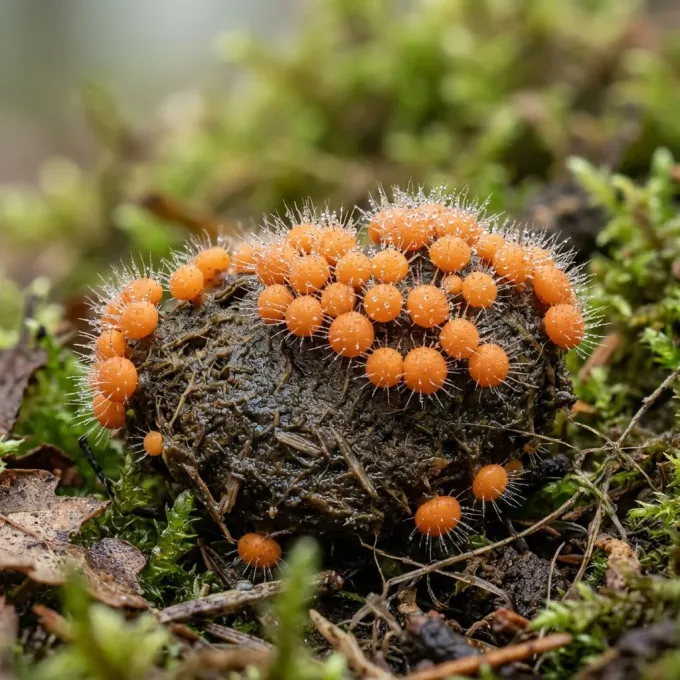
Lasiobolus is a genus of fungi belonging to the Ascobolaceae family. It is typically classified as a coprophilous ascomycete, meaning it naturally thrives on the dung of herbivorous animals, but it can adapt to decaying organic matter in agricultural soils under high moisture conditions.
The fungus produces fruiting bodies known as apothecia, which are small, cup-shaped structures often adorned with distinct hairs. These structures serve as the primary site for spore production and dissemination, allowing the fungus to spread across field surfaces.
In an agronomic setting, Lasiobolus is generally considered a saprotrophic indicator rather than an aggressive plant pathogen. Its presence typically signals high levels of decomposing organic matter and prolonged soil saturation, rather than a direct threat to healthy vegetation.
As a saprotroph, the fungus feeds on organic debris. However, when it colonizes the rhizosphere and the crown area of crop plants, its mycelial mat can physically impede normal gas exchange and water uptake.
The spores of this fungus are highly resilient, capable of persisting in the soil for extended periods. Once conditions become favorable—particularly with the introduction of fresh manure or heavy rain—these spores germinate to form new colonies.
Conditions for development
High moisture levels are the most critical factor for the development of Lasiobolus. The fungus thrives in waterlogged or poorly drained soils where organic matter decomposes under suboptimal aerobic conditions.
The optimal temperature range for the appearance of apothecia is between +15°C and +25°C. During these warm and humid intervals, the fungus rapidly colonizes soil surfaces and crop residues.
The use of inadequately composted manure is the primary driver of infestation. Fresh organic waste provides the exact substrate Lasiobolus requires to thrive, leading to rapid spread across treated fields.
Soil compaction exacerbates the issue by preventing proper drainage and air circulation. Soils that remain constantly damp at the surface create an ideal microclimate for the fungus to establish dense mycelial mats.
Poor field sanitation, specifically the accumulation of plant debris, provides additional habitats for the fungus. Continuous cropping without proper field clearance leads to an increased background level of fungal spores in the soil profile.
Why it matters
The primary concern regarding Lasiobolus is the physical blockage of oxygen supply to the roots. A dense mat of mycelium around the base of the plant can restrict aeration, potentially leading to root stress or "suffocation."
Plants weakened by the physical presence of the fungus become more susceptible to secondary infections from true pathogenic fungi or soil-borne bacteria. Thus, while not a primary killer, it acts as a catalyst for other disease outbreaks.
In greenhouses and seedling nurseries, the growth of this fungus can lead to damping-off symptoms or stunted growth, as the moisture-saturated environment hinders the seedlings' ability to absorb nutrients efficiently.
In extreme cases, the colonization of the soil surface by Lasiobolus can form a crust that interferes with water infiltration, leading to localized drought stress in the crop despite adequate irrigation.
The ecological shift caused by the fungus indicates an imbalance in the soil microbiome. Excessive colonization by Lasiobolus may suggest a nutrient excess or lack of beneficial microbial competition, which can affect overall crop yield and uniformity.
Protection
Management begins with the application of fully composted organic matter. Ensuring that manure or compost is well-decomposed before application removes the preferred food source for the fungus.
Improving soil aeration through regular mechanical cultivation or tilling is essential. Breaking up the soil surface disrupts the mycelial mat and increases oxygen levels, which inhibits the growth of the fungus.
Effective water management, including the installation of proper drainage systems and avoiding over-irrigation, is vital. Keeping the surface of the soil relatively dry prevents the conditions necessary for Lasiobolus development.
Biological control using beneficial fungi such as Trichoderma species can help suppress Lasiobolus by competing for space and nutrients within the soil profile.
- Practice robust crop rotation to interrupt the fungal life cycle.
- Ensure timely removal and disposal of heavy plant residues.
- Monitor soil pH and maintain it within the range optimal for the crop to promote healthy plant vigor.
- Use appropriate planting densities to ensure sufficient airflow around the base of the plants.
Discussion
No discussions yet — be the first.