
Lasallia pustulata
Lasallia pustulata
Description
Symptoms
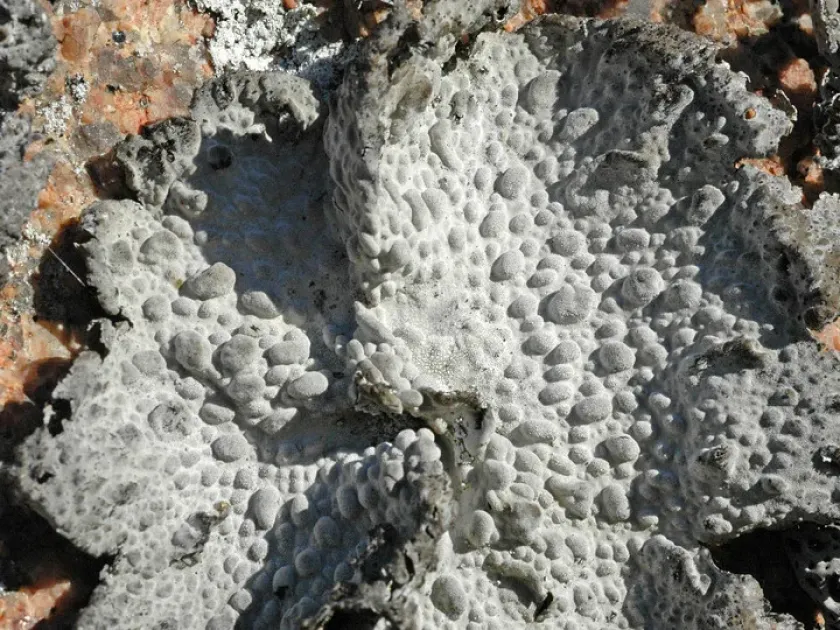
The visual characteristics of Lasallia pustulata are quite distinct. The thallus is typically grayish-brown or ash-colored, shifting to a greenish hue when wet.
The primary identification feature is the presence of numerous pustules on the upper surface of the thallus, which correspond to pits on the underside.
The margins of the thallus are often undulating, wavy, or jagged, sometimes decorated with small hair-like structures known as rhizinae.
Mature specimens can reach diameters of 10 to 15 centimeters. They are typically found in well-lit environments on stable vertical surfaces such as mature tree bark or bare rock.
Unlike true bark diseases that cause rotting, cracking, or discoloration, this lichen sits on top of the bark without damaging the living cambium layer beneath.
Pathogen
It is crucial to clarify that Lasallia pustulata is not a plant disease, pathogen, or parasite. It is a foliose lichen, a complex symbiotic organism consisting of a fungus and algae living together.
In terms of agriculture and forestry, this organism is categorized as an epiphyte. It uses the bark of trees solely as a physical substrate for anchoring, without penetrating the tree tissues or feeding on its sap.
Biologically, the species belongs to the Umbilicariaceae family. It attaches to the surface by a single central point called a holdfast (gomphus), allowing it to grow on both vertical tree trunks and rock faces.
The thallus structure features distinct protrusions known as pustules, which give the species its name. Inside, the organism maintains a symbiotic balance between fungal hyphae and photosynthetic algal cells.
Reproduction is achieved through the release of spores from apothecia or through vegetative fragmentation, where small pieces of the thallus break off and colonize new surfaces.
Conditions for development
Lasallia pustulata is a highly regarded bioindicator of clean air quality. It is extremely sensitive to sulfur dioxide and various airborne industrial pollutants.
Its presence is a strong indicator of a healthy, unpolluted environment. In urban centers or areas with heavy chemical manufacturing, this lichen is usually absent.
The organism thrives in areas with adequate atmospheric moisture, as it absorbs water, nutrients, and gases directly from rain, fog, and air currents.
It prefers sunny, exposed habitats but requires sufficient humidity to avoid prolonged desiccation, which can temporarily halt its growth.
Growth is exceptionally slow, meaning that colonies often persist on the same tree for decades, signifying environmental stability in the area.
Why it matters
This species poses absolutely no threat to agricultural crops or forest trees. It does not induce necrosis, rot, or any form of physiological decline in plants.
The misconception that lichens "choke" trees or "steal nutrients" is a common misunderstanding; as bark is non-living tissue, the lichen's presence remains superficial.
On the contrary, the presence of lichen species like Lasallia pustulata is evidence of a favorable, low-pesticide environment, which is beneficial for the overall ecosystem.
There are no recorded cases of economic losses or reduced yields resulting from the presence of this lichen on fruit or timber trees.
For most forestry practices, the presence of these organisms is considered ecologically neutral and poses no risk to the health or vitality of the trees.
Protection
Since Lasallia pustulata is not a plant disease, there are no mandatory control or eradication measures required for agricultural plant protection.
If removal is desired for purely aesthetic reasons in landscaping, the lichen can be gently brushed off the bark using a soft-bristled brush without using abrasive tools.
The application of chemical sprays to kill epiphytes is generally discouraged, as these chemicals can damage the tree's living tissues and disrupt the natural local ecosystem.
To prevent excessive lichen growth, maintaining a healthy tree through proper pruning to ensure adequate sunlight and air circulation within the canopy is the best practice.
Promoting vigorous tree growth through appropriate nutrition and irrigation helps ensure the bark stays healthy and active, which naturally limits the colonization of lichen species.
Discussion
No discussions yet — be the first.