
Camphor milkcap
Lactarius camphoratus
Description
Symptoms
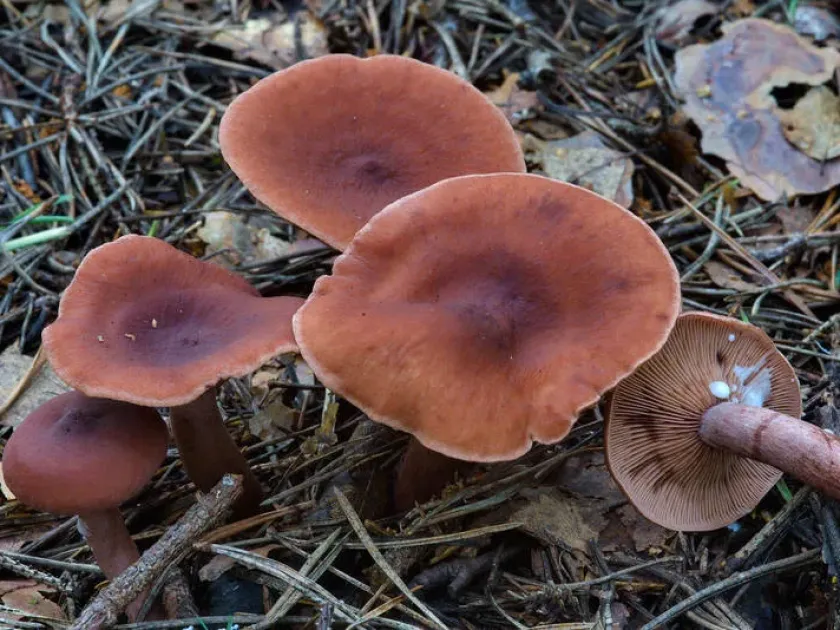
The fruit body typically features a small cap, ranging from 2 to 5 cm in diameter, often reddish-brown or dark brick in color.
The gills are cream-colored to brownish, often becoming darker as the mushroom matures.
When damaged, the fungus exudes a milky white latex that does not change color, a key diagnostic feature for identification.
The most distinctive characteristic is the strong, persistent scent of camphor or burnt sugar, especially when dried.
The stem is generally uniform in color with the cap or slightly lighter, often slender and fragile in appearance.
Pathogen
The Camphor milkcap (Latin Lactarius camphoratus) is not a plant pathogen and does not cause diseases in agricultural crops.
It is a species of fungus in the family Russulaceae, primarily recognized for its role in forming mycorrhizal associations with trees.
The fungus functions as a saprotroph and mycorrhizal partner, contributing to the decomposition of forest litter and nutrient cycling.
It does not infect living plant tissues, nor does it disrupt the physiological processes of crops or horticultural plants.
From an agronomic perspective, it is classified as a non-harmful biological component of forest-adjacent ecosystems.
Conditions for development
The species prefers acidic soil environments, commonly found in coniferous and mixed forest habitats.
It thrives in symbiosis with tree hosts such as spruce and pine, often appearing in damp and shaded forest areas.
Fruiting bodies develop most actively during the late summer and autumn seasons following periods of heavy rainfall.
High soil moisture and a rich layer of decaying organic matter are essential for the mycelial growth of the fungus.
Optimal temperatures for development typically range between 12 and 18 degrees Celsius, characteristic of temperate climate zones.
Why it matters
This fungus poses no risk to agricultural productivity and is entirely benign regarding crop health.
It does not compete for space or nutrients with crops, nor does it harbor pests that might damage farming operations.
There are no recorded instances of this fungus causing harm to soil structure or plant vitality.
As it is not a pathogen, it does not require any form of management or suppression in agricultural settings.
Its presence is purely an indicator of stable, damp forest or shrubland ecosystem conditions.
Protection
No control measures are necessary for the Camphor milkcap due to its lack of economic and biological impact on crops.
The use of pesticides or fungicides to target this fungus would be ineffective and ecologically detrimental.
If the fungus appears in areas where it is not desired, maintaining proper soil aeration and reducing moisture is sufficient.
Clearing away excessive dead wood and organic litter in garden environments naturally restricts the growth of the mycelium.
Standard agronomic practices are more than adequate to ensure that this mushroom remains restricted to its natural forest habitats.
Discussion
No discussions yet — be the first.