
Kuehneola
Kuehneola
Description
Symptoms
Initial symptoms include small, yellowish-orange spots on the upper surfaces of leaves. These eventually develop into characteristic pustules on the underside of the leaf.
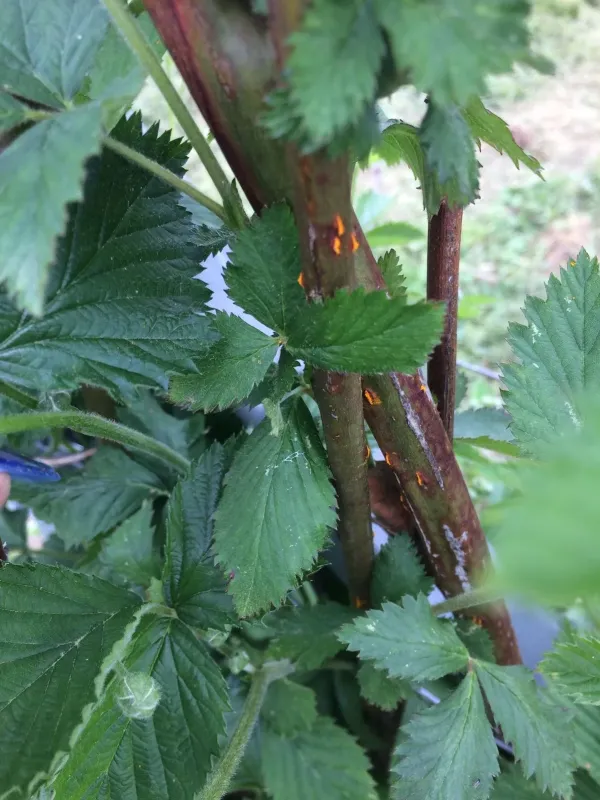
Stems often show deep cracks and ulcers, which may be covered in a powdery mass of bright orange to white spores. This physical damage can lead to the deformation and stunted growth of the canes.
Infected leaves frequently exhibit premature yellowing and abscission. The loss of foliage reduces the plant's ability to photosynthesize, which weakens the entire structure of the plant.
Severe infestations cause swelling and proliferation of tissue on canes, which can rupture, creating large, open lesions that are prone to colonization by secondary opportunistic pathogens.
- Small yellow spots on leaves.
- Bright orange spore pustules on leaf undersides.
- Deep fissures and white crusts on canes.
- Premature leaf drop.
- Distorted growth and stem dieback.
Pathogen
The disease is caused by the fungus Kuehneola uredinis, which belongs to the order Pucciniales (rust fungi). This pathogen primarily targets members of the Rosaceae family, specifically raspberry and blackberry plants.
As a fungal pathogen, it exhibits a complex life cycle, spending part of its development within the host plant tissue and part as spore-producing structures that facilitate infection spread.
Kuehneola is classified as a rust disease. It is an obligate parasite, meaning it requires living host tissue to complete its life cycle and derive essential nutrients for its growth and survival.
The fungus can overwinter as mycelium within the stems and root systems of perennial plants. This persistence makes it a recurring problem that can be difficult to eradicate once established in a patch.
The biological nature of this fungus involves the production of multiple types of spores, allowing it to adapt to various environmental conditions and maintain a consistent presence in the environment.
Conditions for development
High humidity and moderate temperatures are the primary environmental drivers for the development of Kuehneola. Prolonged periods of damp weather, dew, or rain are ideal for spore germination.
Poor air circulation, often caused by overcrowding or lack of proper pruning, creates stagnant microclimates that allow moisture to persist on leaves and stems for longer durations.
Nitrogen-rich fertilizers can exacerbate the situation by promoting rapid, succulent vegetative growth that is more susceptible to fungal penetration and less resilient to infection.
The spread of the disease occurs through the dispersal of spores by wind, water splashes, and mechanical transmission during farming activities like pruning or harvesting.
Late spring and summer, characterized by warm, humid conditions, typically represent the peak period for spore dispersal and the manifestation of visual symptoms on the foliage and canes.
Why it matters
Kuehneola significantly impacts crop yield by disrupting the physiological processes of the plant. Reduced photosynthetic capacity directly results in smaller, lower-quality fruit.
Damage to the vascular system of the canes can lead to wilting and death of entire sections of the plant, especially during periods of environmental stress like extreme heat or drought.
The disease reduces the overwintering capacity of the plants. By hindering the accumulation of necessary carbohydrates, the fungus makes plants more vulnerable to frost damage.
For nurseries, Kuehneola is a serious quarantine concern. Infected planting stock serves as a vector, spreading the disease to new locations and causing long-term economic damage.
If left unmanaged, the cumulative impact of repeated infections over several years can make the cultivation of berry plants unproductive and economically non-viable.
Protection
Sanitation is the most critical control measure. All infected canes and fallen leaf litter should be pruned, gathered, and destroyed to remove the primary sources of overwintering inoculum.
Implementing proper spacing and canopy management helps improve airflow, keeping the plant surfaces drier and less suitable for spore germination and fungal colonization.
Fungicide applications, particularly those containing copper or systemic active ingredients, can be used as a preventative or curative measure during high-risk stages of growth.
Balanced fertilization and weed control are essential for maintaining plant vigor. Healthy plants are better equipped to withstand and recover from limited fungal pressure.
Regular monitoring of the plantation is vital for early detection. Spot-treating localized infections can prevent the disease from spreading throughout the entire berry patch.
Discussion
No discussions yet — be the first.