
Kordyana tradescantiae
Kordyana tradescantiae
Description
Symptoms
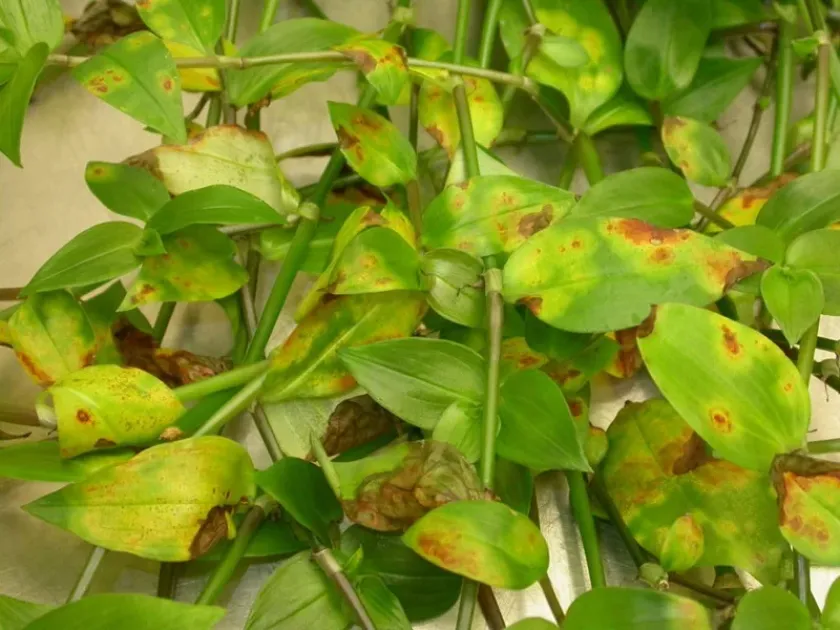
The primary symptom is the appearance of small, pale, or yellowish spots on the upper leaf surface. These spots are often subtle at first and can be easily overlooked.
A distinctive feature of this disease is the presence of a fungal mat on the underside of the leaves. This mat typically appears as a whitish or grayish velvety layer of spores.
As the infection progresses, the spots enlarge and turn brown or necrotic, indicating that the leaf tissue is dying off due to the fungal colonisation.
Leaves that are heavily infected often become deformed, shriveled, and may eventually fall off, leading to sparse and unsightly plant growth.
In addition to leaf spots, the overall vigor of the plant declines, resulting in stunted growth and a loss of the vibrant color typical of healthy Tradescantia foliage.
Pathogen
The disease is caused by the fungus Kordyana tradescantiae, an obligate parasite that specifically targets plants of the Commelinaceae family. This pathogen is a microscopic fungus that lives and reproduces within the leaf tissues of Tradescantia.
The fungus penetrates the plant through the stomata or minor lesions, establishing a mycelium that draws nutrients directly from the host cells. This process disrupts the plant's normal physiological activity.
Reproduction occurs through the formation of spores, which are easily disseminated by air currents, splashing water, or physical contact with contaminated tools.
The biology of Kordyana tradescantiae involves the development of specialized sporulation structures on the undersides of leaves, which are responsible for spreading the infection to neighboring plants.
The pathogen thrives by exploiting the moisture-rich environments often found in home gardens or greenhouses, making it a persistent challenge for plant collectors.
Conditions for development
The development of the disease is highly dependent on environmental humidity. High humidity levels, combined with poor air circulation, create the perfect atmosphere for spore germination.
Temperature plays a significant role as well; warm, stagnant conditions within a home or greenhouse significantly accelerate the growth of the fungal mycelium.
Overcrowded conditions are a major contributing factor, as they restrict airflow around the leaves and prevent moisture from evaporating, allowing the fungus to flourish.
Cultural practices, such as excessive overhead watering or misting the leaves, provide the necessary water films for the spores to attach and penetrate the leaf epidermis.
Low light conditions can weaken the plant's natural immune response, making it easier for the Kordyana tradescantiae to gain a foothold and spread rapidly.
Why it matters
The primary harm is the destruction of the plant's decorative appeal, which is especially detrimental to hobbyists and commercial growers who value foliage aesthetics.
Without control measures, the infection can spread throughout a collection, potentially damaging or killing multiple specimens in a short period of time.
Long-term infestation drains the plant of its resources, leaving it highly susceptible to secondary bacterial pathogens and common sap-sucking pests.
In cases of severe infestation, the loss of foliage severely limits the plant's ability to photosynthesize, leading to total plant collapse.
The economic impact for nurseries includes the cost of disposing of infected batches and the time and expense required for chemical treatments to stop the spread.
Protection
The most important control measure is the prompt isolation of any plants showing symptoms. Keeping infected plants away from healthy ones stops the chain of transmission.
Remove and destroy all heavily infected leaves and plant parts. It is essential to sanitize tools with alcohol after every cut to prevent cross-contamination.
Applying appropriate fungicides, such as copper-based products or systemic fungicides labeled for leaf spot diseases, can help manage the infection and protect healthy tissue.
Improve air circulation in the growing area by thinning out crowded plants and utilizing fans if necessary to keep the foliage dry.
Regular monitoring is key to success; by checking the undersides of leaves during routine care, you can detect the fungus early and address the issue before it spreads.
Discussion
No discussions yet — be the first.