
Kabatiella blight
Kabatiella nigricans
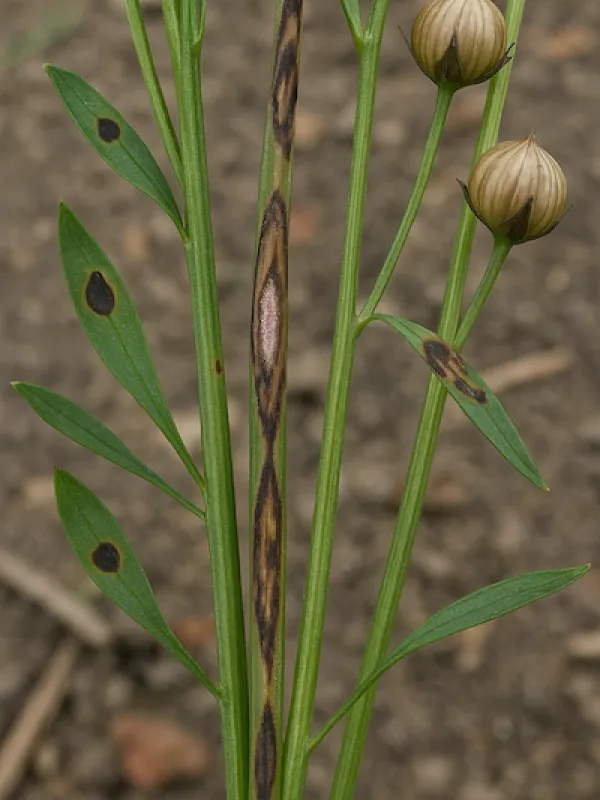
Description
Symptoms
A hallmark of Kabatiella blight is the emergence of small chlorotic spots on leaves. Over time, these spots necrotize and turn a dark, blackish color, which is characteristic of this specific fungal pathogen.
Symptoms typically manifest on the lower leaves first, gradually progressing upwards to stems and petioles. If the infestation is severe, the spots coalesce, causing extensive tissue death and wilting.
Under high humidity, a noticeable fungal growth or spore mass appears on the necrotic spots. This indicates an active sporulation phase, highlighting the high risk of rapid disease dispersal across the field.
Stems infected by the pathogen may become deformed, showing dark streaks that interfere with the plant's vascular system. This disruption causes premature wilting and reduced plant vigor.
- Development of dark, zonal leaf spots with clear margins.
- Yellowing and premature abscission (dropping) of leaves.
- General stunting and inhibition of plant growth.
Pathogen
The disease is caused by the imperfect fungus Kabatiella nigricans. It is a pathogen that specifically targets the vegetative parts of crops during periods of active growth and development.
The life cycle of the fungus involves the formation of conidial sporulation structures known as acervuli. These structures rupture the plant's epidermis, releasing spores to infect healthy tissue and neighboring plants.
The fungus can persist for long periods on infected plant debris in the soil. This makes the soil a primary reservoir for the infection, necessitating careful field management between seasons.
Infection can also be transmitted via contaminated seeds, where the mycelium remains dormant. Using untreated or infected seed material is a major risk factor for early-season disease outbreaks.
Taxonomically, Kabatiella nigricans belongs to the group of deuteromycetes. These fungi are characterized by their ability to reproduce rapidly through asexual means, allowing them to spread quickly under favorable conditions.
Conditions for development
The development of Kabatiella nigricans is highly dependent on environmental moisture. Frequent rainfall, fog, and heavy morning dew provide the ideal conditions for spore germination and infection.
Temperatures ranging from +18°C to +24°C are optimal for the pathogen. In such conditions, the disease incubation period is significantly reduced, facilitating rapid epiphytotic spread.
Dense crop stands are high-risk areas because they restrict airflow. This creates a humid microclimate in the lower canopy, which is perfect for fungal reproduction and transmission.
High levels of plant debris left in the soil after harvest promote the survival of the fungus. This is particularly problematic in fields managed with low-tillage methods that do not bury crop residue.
Crops weakened by nutrient deficiencies or excessive nitrogen application often show reduced resistance to fungal invasion, making them more susceptible to Kabatiella nigricans attacks.
Why it matters
The primary damage caused by Kabatiella blight is the massive reduction in the photosynthetic surface area. As the necrotic tissue spreads, the plant loses its ability to effectively capture sunlight.
Affected tissues become entry points for secondary pathogens, complicating diagnosis and treatment. This significantly lowers the plant's overall health and physiological resilience.
Crop quality is noticeably degraded, and in some cases, the produce becomes unmarketable. Seeds collected from infected crops may show reduced germination rates and carry the disease into the next season.
Financial losses arise from the costs of fungicide applications and significant yield reductions. In high-humidity years, crop losses can be substantial, impacting overall farm profitability.
The disease alters the architecture of the plant and causes early senescence. This shortens the grain-filling or fruit-ripening period, which negatively impacts final yields and product weight.
Protection
The cornerstone of defense is the use of resistant crop varieties. Breeding for immunity remains the most efficient strategy to mitigate risks even in years favorable for fungal growth.
Strict crop rotation, with a 3–4 year gap between susceptible crops, helps to significantly reduce the infectious pressure in the soil. It is vital to avoid sequential planting of host plants.
Deep plowing after harvest promotes the rapid decomposition of plant debris, destroying the food source and survival medium for the fungus in the soil.
Fungicide application is necessary upon the first signs of the disease. It is recommended to use products with different modes of action to prevent the development of fungal resistance.
High-quality seed treatment before sowing is essential to protect young seedlings during the initial growth stages, when they are most vulnerable to soil-borne and seed-borne infections.
Discussion
No discussions yet — be the first.