
Kabatiella
Kabatiella
Description
Symptoms
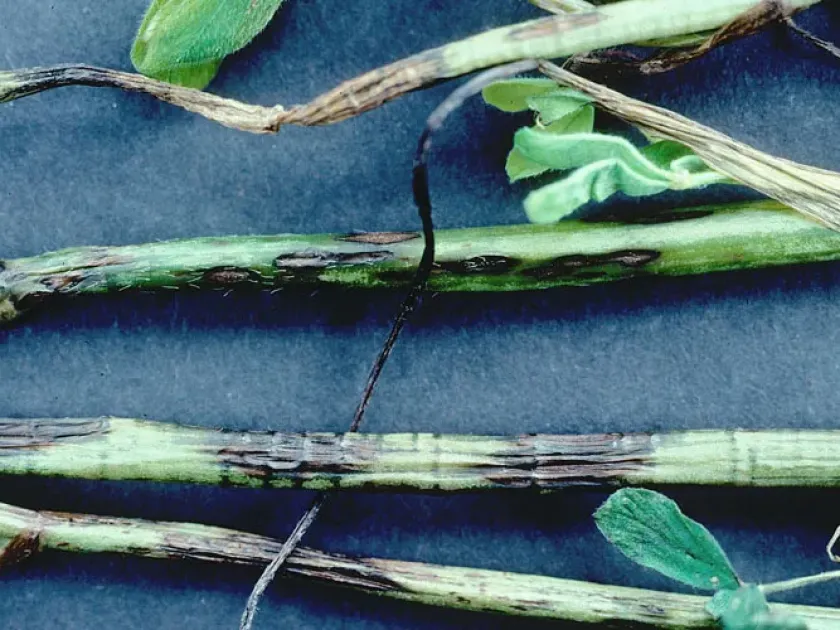
The initial symptoms of Kabatiella present as small, light-colored, or grayish spots on leaves, stems, and petioles. As the disease progresses, these spots darken, turning brown or dark gray, often surrounded by a distinct necrotic border.
A key diagnostic feature is the appearance of sporulation, characterized by whitish or creamy pustules on the surface of infected tissues. These structures are most visible under high-humidity conditions, particularly in the early morning hours.
When stems are affected, the disease causes constriction, twisting, or bending, which disrupts the vascular transport of nutrients. This often leads to the premature wilting of individual branches or the entire aerial part of the plant during active growth phases.
Severe infection triggers premature leaf drop and the formation of shriveled, low-quality seeds. Affected plants appear stunted, lose vigor, and decline in aesthetic value, which is particularly detrimental for ornamental crops and nursery stock.
In field conditions, the disease often manifests in patches that gradually merge to cover larger areas. Precise identification of Kabatiella is usually confirmed through microscopic examination of the conidial sporulation structures of the fungus.
Pathogen
The disease Kabatiella is caused by fungi belonging to the genus Kabatiella, which are categorized as deuteromycetes or imperfect fungi. The most notable species is Kabatiella caulivora, which primarily affects various legume crops.
Biologically, this pathogen is an obligate parasite that survives in crop residues and infected seeds as mycelium. This survival strategy allows the infection to persist through harsh winter conditions within the soil or on the surface of plant debris.
The life cycle of the pathogen is strictly dependent on environmental moisture, as conidia production requires free liquid water. The spores are spread mainly by wind, rain splashes, and insects that transmit the infection to healthy host tissues.
The fungus enters plant tissues through stomata or micro-injuries, after which it grows actively within the intercellular spaces. The incubation period of the disease varies depending on weather conditions, typically ranging from a few days to two weeks.
The species diversity within the genus Kabatiella allows the fungi to adapt to specific host conditions. Molecular studies confirm that the pathogen exhibits high variability, which contributes to its ability to overcome plant immune defenses over time.
Conditions for development
Prolonged rainfall and high relative humidity exceeding 80-90% are the primary catalysts for the disease. The optimal temperature range for infection is between 15 and 22 degrees Celsius.
Crowded planting schemes, where air circulation is restricted, create local microclimates with increased humidity levels. This environment facilitates rapid spore germination and successful colonization of plant tissues throughout the growing season.
Poor crop rotation practices, specifically planting susceptible hosts in the same field more frequently than every 3-4 years, significantly increase the soil inoculum load. Unburied crop debris serves as a primary reservoir for the pathogen.
Imbalanced nutrition, especially an excess of nitrogen fertilizer, results in softer and more succulent plant tissues, making them easier for fungal hyphae to penetrate. Conversely, plants with balanced nutrient uptake maintain stronger cuticles that resist infection.
Errors in agronomic practices, such as failure to thin seedlings or control weeds, allow moisture to accumulate near the base of the stems. These areas often serve as the primary infection points from which spores spread across the entire field.
Why it matters
Kabatiella causes significant economic losses by reducing the yield of vital agricultural crops. The infection of stems and leaves impairs photosynthesis, which directly limits biomass accumulation and overall crop productivity.
The damage is also reflected in the poor quality of harvested seeds. Infected seeds show low germination energy and can carry the pathogen into future seasons, necessitating costly chemical seed treatment or leading to field failure.
Structural damage to the stem makes plants susceptible to lodging, which complicates mechanized harvesting and increases post-harvest losses. In epidemic cases, yield losses can reach 30-50% if left untreated.
Beyond direct damage, the infection creates entry points for secondary bacterial and fungal pathogens. The weakened plant immune system becomes unable to cope with complex infections, leading to increased costs for pesticide interventions.
For ornamental plants, Kabatiella causes a loss of aesthetic quality. The presence of necrotic spots renders the plants unsaleable, causing financial losses for nurseries and landscapers who rely on high-quality vegetative material.
Protection
The foundation of Kabatiella control is strict adherence to crop rotation by incorporating non-host species. This strategy effectively disrupts the life cycle of the pathogen and prevents its buildup in the soil.
Agronomic measures include the thorough burial or removal of crop residues immediately after harvest. Composting or destroying infected plant parts is essential to minimize the primary spore inoculum within the field.
Selecting resistant cultivars and hybrids remains the most cost-effective protection strategy. Modern breeding programs continue to focus on enhancing the innate resistance of plants to this specific fungal disease.
Chemical control is justified when there is a risk of mass disease development. It is recommended to rotate systemic and contact fungicides to prevent the emergence of resistant pathogen strains.
- Use of healthy, certified seed material only.
- Pre-sowing seed treatment with approved fungicides.
- Ensuring optimal plant density to promote airflow.
- Applying potassium and phosphorus fertilizers to strengthen cell walls.
- Regular field monitoring to detect and isolate early infection sites.
Discussion
No discussions yet — be the first.