
Isthmiella
Isthmiella
Description
Symptoms
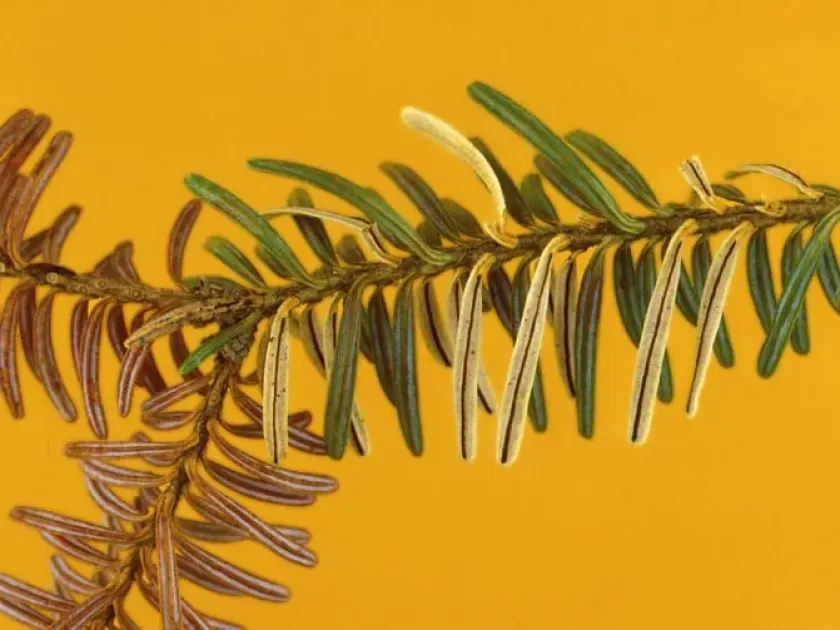
The most visible symptom of Isthmiella infection is the discoloration of needles. Infected needles typically turn yellow or light brown, a symptom that becomes increasingly evident by mid-to-late summer.
Diagnostic characteristics include small, dark-colored fruiting bodies appearing in distinct lines on the lower surface of the needles. These structures are key for identifying the pathogen.
Premature needle cast is a hallmark of the disease. Affected trees shed their older needles much earlier than normal, often leading to sparse, thin foliage and bare branches.
Infections often appear first on the lower branches of the tree, where humidity is higher and air circulation is often impeded, creating a favorable microenvironment for the fungus.
Severely infected trees may show a significant loss of older needles, leaving only the current season's growth. This gives the tree a sparse and sickly appearance that worsens over the years.
Pathogen
The disease is caused by fungi of the genus Isthmiella (most notably Isthmiella faullii). These ascomycete fungi are specialized pathogens that infect the needles of various spruce species, particularly the white spruce.
The fungus develops internally within the needle tissues. During its life cycle, it forms specialized fruiting bodies known as apothecia, which emerge on the underside of the needles to release spores.
Infection spreads primarily through spores dispersed by wind and rain splash. These spores land on healthy needles and, under favorable moisture conditions, germinate and penetrate the needle epidermis.
The mycelium of the pathogen colonizes the needle, gradually disrupting its physiological functions. This process leads to tissue necrosis and the eventual death of the affected needle section.
Isthmiella can persist on fallen needles, which serve as an overwintering reservoir. This ensures a recurrent infection cycle, especially if the debris is not properly managed in the garden or plantation.
Conditions for development
High relative humidity is the most critical environmental factor for the development of Isthmiella. Persistent rain, fog, and heavy morning dews significantly favor spore germination and infection.
Poor air circulation significantly increases disease pressure. Densely planted areas prevent the canopy from drying out quickly after rain, prolonging the duration of leaf wetness.
Moderate temperatures during the spring and early summer provide the ideal window for the fungus to complete its infection cycle and spread effectively within the host population.
Trees under stress, whether from poor soil quality, nutrient deficiencies, or water stress, are far more susceptible to infection compared to healthy, vigorous specimens.
A high density of fallen, infected needles under the tree canopy creates an immediate source of inoculum that can infect new needles during the following growing season.
Why it matters
The primary damage is caused by the premature loss of photosynthetic needles. This reduces the tree's energy production, leading to weakened growth, reduced vigor, and increased stress.
Ornamental conifers are severely impacted in their aesthetic value. Thin, yellowing crowns and bare lower branches make these trees unattractive for landscaping and park use.
Chronic infection renders the tree highly susceptible to secondary pests and pathogens. Wood-boring insects often target trees weakened by prolonged needle cast, leading to potential tree mortality.
In forest nurseries, Isthmiella can cause substantial economic losses by reducing the quality and marketability of spruce seedlings, leading to high culling rates.
While mature trees might survive, repeated infections over several years can permanently stunt the growth of young specimens, negatively affecting timber production and forest health.
Protection
Management starts with sound silvicultural practices. Planting at appropriate densities and pruning to improve air circulation helps create an environment less conducive to fungal growth.
Sanitation is a vital control measure. Collecting and destroying fallen needles prevents the buildup of the fungal inoculum that would otherwise start the cycle again next spring.
Chemical control involving fungicides can be effective if applied during the critical stages of infection. Copper-based sprays or systemic fungicides are standard options for professional plant protection.
- Ensure adequate spacing between trees to improve airflow.
- Regularly prune out heavily infected branches to reduce the pathogen load.
- Maintain tree vigor through proper fertilization and irrigation.
- Monitor needles closely during wet, cool periods for early signs of infection.
Biological control agents, such as beneficial bacteria, are also being studied for their ability to suppress fungal growth on the needle surface before infection can occur.
Discussion
No discussions yet — be the first.