
Icmadophila
Icmadophila
Description
Symptoms
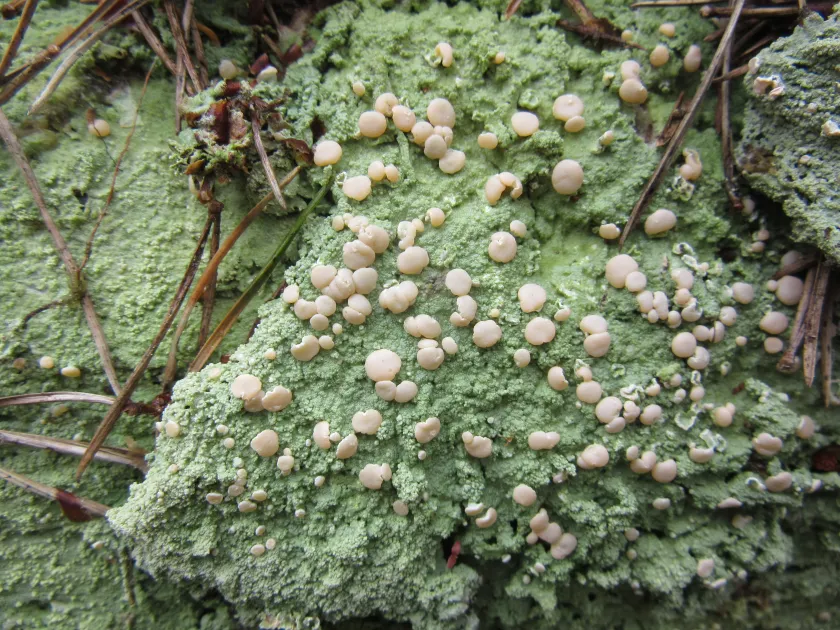
The primary sign of Icmadophila presence is the formation of a granular, crustose thallus that spreads across substrates like decaying logs or mossy soil.
A distinctive feature is the presence of bright, disc-shaped apothecia (fruiting bodies), which are typically pinkish or cream-colored and raised on short stalks.
The thallus color usually ranges from pale green to whitish, providing a unique texture to the surface it inhabits, which is easily identifiable for researchers.
Growth is localized and follows the moisture gradient of the surface; however, the lichen does not induce lesions, discoloration, or deformation on the substrate it covers.
Observers should note that unlike fungal diseases, Icmadophila does not spread through host tissues and cannot be treated with fungicides, as it is not an infectious agent.
Pathogen
It is important to clarify that Icmadophila is not a plant disease. It is a genus of lichens, which are complex symbiotic organisms consisting of a fungus and photosynthetic partners.
Biologically, Icmadophila is entirely non-pathogenic. It does not infect plant tissues, draw nutrients from host plants, or cause any decay or structural damage to crops.
The organism thrives through photosynthesis within its thallus and nutrient absorption from the surrounding environment, such as rotting wood or moist soil surfaces.
In mycological classification, Icmadophila is distinguished from phytopathogenic fungi because it lacks the ability to colonize or destroy the living tissues of vascular plants.
Therefore, it is considered a natural element of the ecosystem and a bioindicator of environmental health rather than an agricultural threat or disease agent.
Conditions for development
Icmadophila requires high atmospheric humidity and relatively stable temperatures, making it a common inhabitant of temperate and boreal forest ecosystems.
It favors substrates rich in organic matter, particularly decaying woody debris or thick layers of peat moss, which provide constant moisture and protection from dehydration.
Light exposure is a critical factor; while the lichen can adapt to various light levels, it generally prefers the diffuse, soft lighting found in shaded forest understories.
Sensitivity to atmospheric pollution is a hallmark of this genus, as high levels of nitrogen or sulfur compounds in the air can lead to its disappearance from a given habitat.
In modern agricultural environments, Icmadophila is rarely found due to soil cultivation practices and the frequent use of chemicals that create unsuitable conditions for lichen growth.
Why it matters
Icmadophila poses no harm to agricultural crops, horticultural plants, or forestry. It does not compete with plants for water or nutrients.
In gardening, the presence of these lichens on tree bark is often wrongly perceived as a sign of tree decline, but they are strictly epiphytic and do not damage the tree’s bark or wood.
There is no evidence that Icmadophila produces phytotoxins or encourages the colonization of pathogenic bacteria or fungi on its host surfaces.
Any concerns regarding its presence are typically aesthetic rather than physiological, as the organism itself is ecologically benign and does not affect plant productivity.
Therefore, managing or eradicating Icmadophila is never recommended as a part of crop protection or integrated pest management strategies.
Protection
Because Icmadophila is not a disease or a harmful parasite, no control measures are necessary, nor are there any registered chemical interventions for its removal.
For those who wish to maintain a "clean" appearance on garden trees, simple manual removal using a soft brush is sufficient and does not require the use of chemicals.
Preventive maintenance, such as proper pruning to improve light penetration and airflow through tree canopies, naturally reduces the humidity level and prevents the establishment of lichen colonies.
Focusing on the overall health and vitality of the orchard through balanced nutrition and proper watering is the best way to ensure trees remain robust and resistant to any environmental stressors.
Ecologically, Icmadophila serves as an indicator of a clean environment, and its presence can be seen as a sign of ecological balance in the surrounding landscape.
Discussion
No discussions yet — be the first.