
Hysterographium fraxini
Hysterographium fraxini
Description
Symptoms
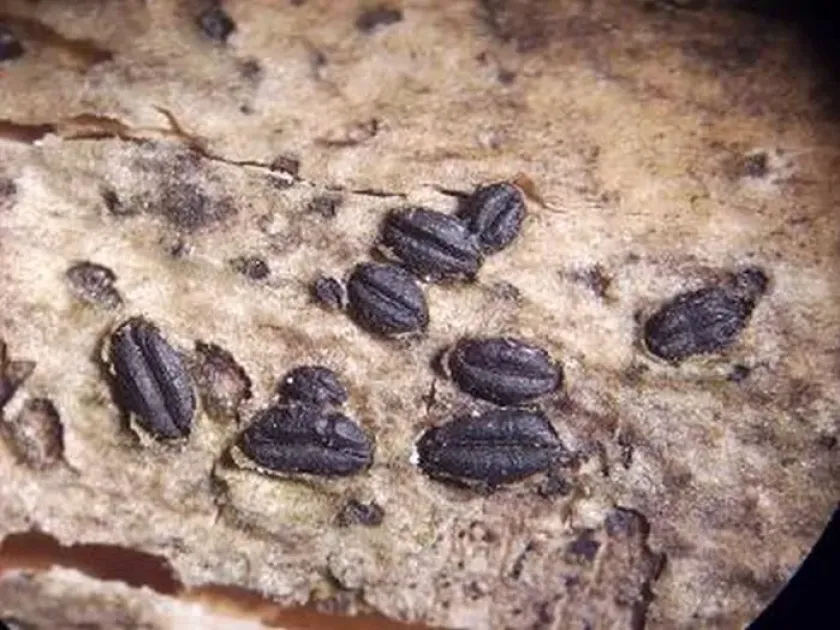
The most prominent sign of Hysterographium fraxini infection is the appearance of small, black, linear structures scattered across the bark.
Infected bark typically becomes brittle, darkens in color, and may show signs of splitting, indicating that the fungus is colonizing the sub-cortical layers.
Local necrosis may occur around the site of infection, often manifesting as small, irregularly shaped ulcers that disrupt the tree's vascular transport.
In cases of advanced infection, whole branches may dry out, becoming brittle and turning grey or black due to the dense covering of fungal fruiting bodies.
- Black elongated fungal fruiting bodies.
- Brittle and discolored bark.
- Formation of localized necrotic lesions.
- Dieback of twigs and small branches.
- Reduced vigor of the affected host tree.
Pathogen
The causal agent of this disease is the fungus Hysterographium fraxini, a member of the Hysteriales order, which typically colonizes dead or stressed ash wood.
The fungus functions primarily as a saprotroph, decomposing organic matter, but it can behave as a weak parasite under conditions where the tree's health is compromised.
Its life cycle involves the development of characteristic black, elongated fruit bodies called hysterothecia, which protrude from the bark surface.
Spore dispersal occurs primarily via wind and rain, allowing the pathogen to spread across plantations and infect weakened tissue on neighboring trees.
This fungus exhibits high survival capabilities, persisting in plant debris and bark fissures, which makes it a persistent threat in favorable environments.
Conditions for development
High humidity and moderate temperatures are the primary environmental drivers that trigger the germination of spores and the spread of Hysterographium fraxini.
Stressed trees, suffering from drought, cold damage, or insect infestation, are significantly more susceptible to successful colonization by this fungus.
Dense canopy structures that limit airflow and trap moisture around branches provide an ideal environment for the fungus to establish itself.
The presence of unpruned, dead wood within the crown serves as a continuous reservoir for inoculum, facilitating the spread of the disease.
Mechanical injuries to the bark provide the necessary entry points for the fungal mycelium to penetrate deeper into the tree's conductive tissues.
Why it matters
The primary damage caused by this fungus is the progressive weakening and dieback of branches, which negatively affects the tree's overall structure and growth.
On young or already weakened specimens, severe infection can lead to significant branch loss and, in extreme cases, the total death of the tree.
The localized necrosis weakens the structural integrity of branches, making them more prone to breakage during high winds or heavy snow accumulation.
In forestry contexts, widespread infection degrades wood quality, rendering the affected ash trees less valuable for timber production.
Repeated yearly infections can cause chronic decline, making trees less resilient to other secondary pests and environmental stressors.
Protection
Sanitation pruning remains the most effective management strategy, requiring the removal and destruction of all infected or dead branches from the tree.
All pruning wounds should be treated with appropriate sealants or fungicides to prevent the entry of new fungal spores during the healing process.
Maintaining tree vigor through proper watering, fertilization, and soil management is essential to prevent the conditions that favor fungal development.
Preventative spraying with copper-based fungicides during the dormant season can help reduce the spore load in areas with a history of infection.
Regular monitoring of the plantation, especially after severe weather, allows for the early detection and removal of potential infection sources.
Discussion
No discussions yet — be the first.