
Hypsizygus tesselatus
Hypsizygus tesselatus
Description
Symptoms
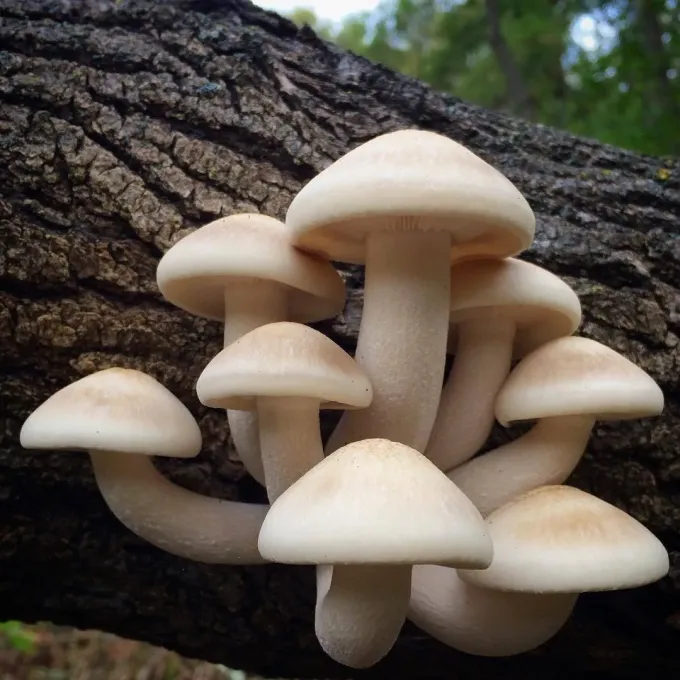
The most visible indicator of its presence is the growth of distinct, clustered fruiting bodies on tree trunks or stumps.
These fruiting bodies are characterized by a marbled or "tessellated" pattern on the cap, which serves as a key identification marker.
Infected areas of the bark may appear sunken, discolored, or show signs of mycelial colonization upon closer inspection.
Internally, the wood becomes brittle and soft, losing its structural integrity over several years of fungal activity.
Fruiting bodies generally emerge following periods of high rainfall or consistently humid weather conditions.
Pathogen
Hypsizygus tesselatus, commonly known as the beech mushroom, is a wood-decay fungus that belongs to the Lyophyllaceae family.
While often discussed in the context of plant health, it primarily acts as a saprotroph, decomposing dead or decaying woody material.
In some cases, it acts as a weak parasite, colonizing stressed or wounded living deciduous trees within forest ecosystems.
The fungus develops an extensive mycelial network that penetrates the xylem, slowly breaking down complex cellulose structures.
It is distinct from aggressive pathogens, as it typically requires pre-existing damage to successfully inhabit a living host.
Conditions for development
Hypsizygus tesselatus thrives in environments characterized by moderate temperatures and high ambient moisture levels.
Optimal colonization occurs on decaying wood, particularly when the host is exposed through physical injury or root stress.
The fungus is highly sensitive to humidity; dry environments significantly slow down its growth and inhibit fruiting body formation.
Forest stands with high biodiversity and accumulation of woody debris provide the ideal substrate for its spread and survival.
Temperature ranges between 15°C and 22°C are generally most conducive to its metabolic activity and vegetative expansion.
Why it matters
The primary concern is the long-term degradation of timber, which renders trees structurally unstable and prone to windthrow.
As the heartwood is decomposed, the tree's internal transport system may be compromised, leading to a slow decline in vigor.
For park management, the danger lies in the unpredictable failure of large limbs or entire trees colonized by the fungus.
Economic losses in forestry arise from the reduced value of timber that has been degraded by fungal wood rot.
However, it is worth noting that this fungus is a highly prized edible species in controlled cultivation settings, showing its duality.
Protection
Effective management begins with maintaining high forest sanitation standards by removing dead and decaying wood from high-risk areas.
Preventative measures include protecting tree bark from physical mechanical injuries during forestry operations or maintenance.
Applying protective sealants to tree wounds can prevent spore entry and the subsequent establishment of a fungal colony.
Regular tree health assessments help identify early signs of colonization before significant structural damage occurs.
If colonization is detected on valuable trees, systemic management strategies and the removal of infected parts may prevent further spread.
Discussion
No discussions yet — be the first.