
Hypsizygus
Hypsizygus
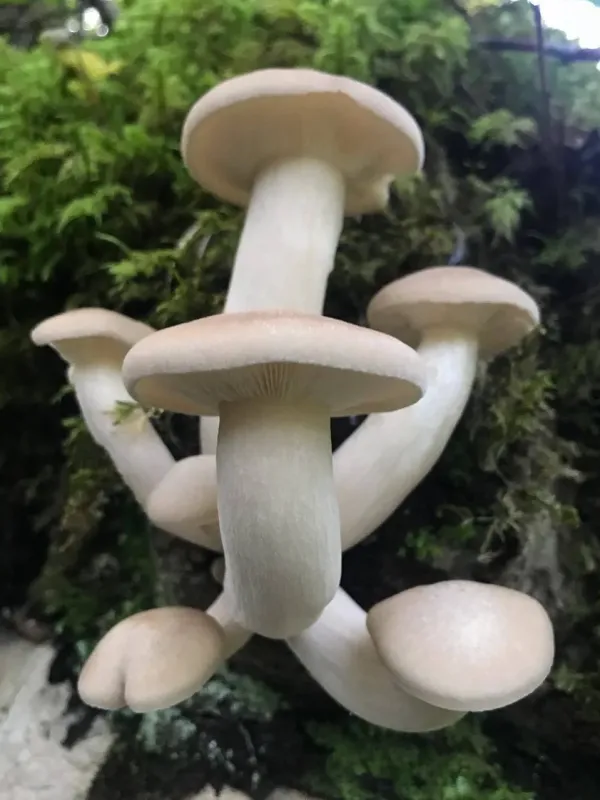
Description
Symptoms
The most visible symptom of an infestation is the appearance of fruiting bodies (mushrooms) on the trunks or at the branch junctions. They often emerge in characteristic clusters, which is a key diagnostic feature.
The wood affected by the fungus loses its density and structural integrity, showing clear signs of white rot. It becomes soft, fibrous, and pale in color, significantly weakening the tree's ability to withstand environmental stress.
Initial signs before the appearance of mushrooms may include localized bark discoloration, weeping wounds (sap flow), or reduced vigor in the canopy. These subtle clues often indicate that the internal colonization is already well underway.
Examination of the wood cross-sections often reveals dark, irregular lines bordering the colonized areas. These are protective barriers formed by the tree's defense mechanism to wall off the advancing fungal mycelium.
As the infection progresses, the tree may show signs of canopy decline, such as yellowing leaves, premature leaf drop, or the death of individual scaffold branches. By the time fruiting bodies are visible, the structural core may already be severely compromised.
Pathogen
The genus Hypsizygus consists of fungi that are primarily known as wood-decaying organisms. While some species are cultivated for culinary purposes, in an agronomic context, they function as facultative parasites that cause white rot in the heartwood of trees.
The pathogen enters the tree through open wounds, pruning cuts, or frost cracks in the bark. Once inside, the mycelium secretes powerful enzymes capable of breaking down the complex structure of lignin and cellulose, effectively softening the wood from within.
The life cycle begins with the release of basidiospores, which are dispersed by wind or insects. When these spores land on a vulnerable or wounded tree, they germinate, creating a network of hyphae that gradually colonize the internal woody tissues.
These fungi act as saprotrophs on dead wood but can easily transition to parasitizing living trees if the host is stressed or damaged. This duality makes them a silent threat to both orchard fruit trees and broader forest ecosystems.
Correct identification is vital, as the presence of these fungi often signals underlying health issues in the tree. Mycological analysis is required to distinguish them from harmless saprophytic fungi that grow only on logs.
Conditions for development
Hypsizygus thrives in conditions characterized by high humidity and moderate temperatures, which are essential for the development and spore production of the fungal fruiting bodies.
The primary prerequisite for infection is the availability of entry points. Wounds created by mechanical damage, storms, or improper pruning serve as direct gateways for spores to enter the inner wood.
Trees that are weakened by drought, pest infestations, or nutrient deficiencies are significantly more susceptible to colonization. A robust, healthy tree with a functioning defense system is generally capable of resisting initial fungal penetration.
Poor orchard or forest management, such as overly dense planting, restricts airflow and increases surface moisture on trunks. This creates a stagnant microclimate that encourages fungal spores to germinate and establish.
Warm winters can also exacerbate the issue, as the fungal mycelium remains active throughout the year. This allows for continuous growth within the wood, ensuring that the fungus is ready to spread further as soon as the growing season resumes.
Why it matters
The primary threat posed by this fungus is the loss of mechanical strength. Because it degrades the structural core of the trunk, the risk of limb failure or whole-tree collapse during high winds or heavy snow events is drastically increased.
The infection disrupts the vascular system, impairing the transport of water and nutrients from the roots to the leaves. This leads to chronic decline, reduced growth rates, and poor fruit production in affected orchard trees.
In forest environments, an infested tree serves as a persistent reservoir of inoculum. The spores released can quickly infect surrounding trees, potentially leading to localized outbreaks that compromise large areas of woodland.
Affected wood loses its commercial value, as the white rot makes it unsuitable for construction, furniture making, or other high-quality wood applications, leading to significant economic losses.
In urban landscapes, trees harboring wood-decay fungi pose a safety risk to the public. The hazard of falling branches requires professional monitoring and often necessitates the removal of affected trees to prevent accidents.
Protection
The most effective management strategy is rigorous sanitation, including the prompt removal of infected branches. All pruning cuts must be kept clean and treated with appropriate sealants to prevent spore entry.
It is essential to locate and physically remove any fruiting bodies found on trees. This reduces the overall spore load in the immediate area and limits the chances of further infection.
Promoting tree vigor through balanced fertilization, adequate irrigation, and effective pest control is critical. A healthy tree can better isolate infections and potentially coexist with minor levels of decay.
If caught in the very early stages, systemic fungicides may offer some level of protection, though their effectiveness is limited once the fungus has penetrated deep into the heartwood.
Ongoing monitoring is the cornerstone of control. Regular inspections of high-value trees allow for early detection, enabling landowners to address health issues before they become permanent and irreversible.
Discussion
No discussions yet — be the first.