
Hypoxylon canker
Hypoxylon rubiginosum
Description
Symptoms
The first sign of infection is localized necrosis of the bark on trunks and branches. The surface of the affected areas becomes uneven, often changing color to grayish or brownish.
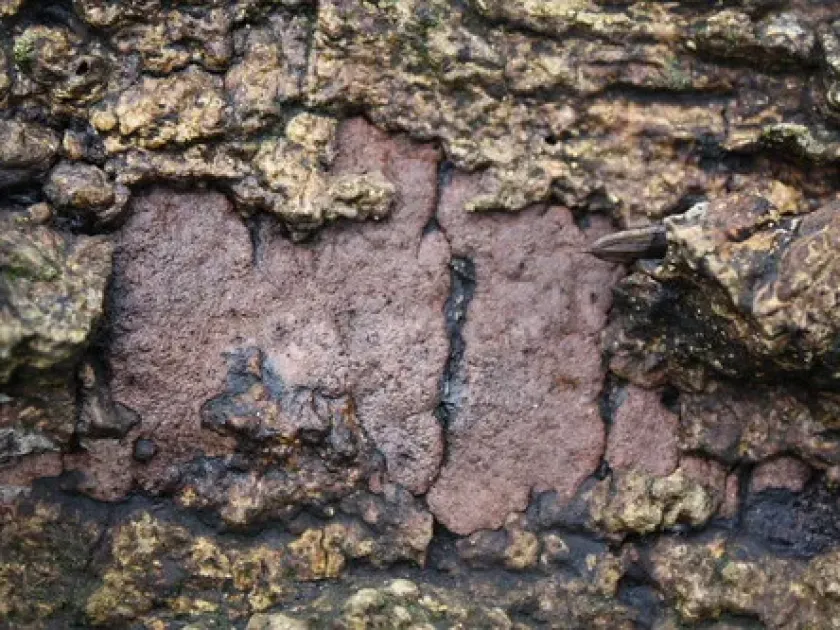
The primary visual marker is the presence of flat or slightly convex fungal stromata. These grow beneath the peeling bark, eventually rupturing it to reveal the rusty-brown mass of reproductive structures.
The wood beneath the affected bark typically shows a marbled appearance due to mycelial colonization. Fibers become brittle and prone to structural failure, which is a major symptom of internal decay.
In areas of heavy fungal growth, the bark may be covered in a fine layer of spores. Affected branches gradually lose their leaves and die back, starting from the tips or the points of infection.
In later stages, the trunk becomes covered with numerous dark, coalescing growths. The overall crown condition deteriorates rapidly, often resulting in premature yellowing and leaf drop.
Pathogen
The causal agent of this disease is the ascomycete fungus Hypoxylon rubiginosum, belonging to the order Xylariales. This pathogen is primarily a saprotroph but acts as a facultative parasite in trees stressed by environmental factors.
The fungal mycelium penetrates wood tissues through mechanical injuries, bark cracks, or pruning wounds. Within the affected areas, the fungus secretes enzymes that degrade cell walls, utilizing the plant's nutrients for growth.
Stromata, which are dense structures where spores mature, form on the surface of the dead bark. Initially, these formations appear rusty-red or reddish-brown, providing the species with its common name.
As the spores mature, the stromata darken, eventually turning black. The formation of these fruiting bodies is a key diagnostic feature for identifying the fungus in the field.
The fungus persists in the wood as mycelium for several years, ensuring a stable presence in the affected stand. Spores are primarily dispersed by wind and rain, infecting neighboring susceptible trees.
Conditions for development
The disease thrives in conditions of high humidity, which are essential for spore germination and mycelial growth. Shaded areas with poor air circulation are particularly prone to rapid infection spread.
Physiological stress in the host tree is a critical factor for successful colonization. Drought, nutrient deficiencies, temperature fluctuations, and insect damage significantly lower the tree's natural defense mechanisms.
The fungus prefers dead or dying woody material, making sanitation of the forest or garden a vital management practice. Accumulation of woody debris creates an ideal environment for spore build-up.
Optimal temperatures for fungal growth fall within the temperate range. During the summer, if moisture is sufficient, sporulation occurs continuously, affecting new bark patches across the tree.
Spore dispersal occurs through raindrops and air currents, making total isolation of healthy trees in an infected area difficult. Open wounds on the wood surface drastically accelerate the initial infection process.
Why it matters
Hypoxylon rubiginosum causes wood rot, significantly reducing the structural integrity of trunks. This creates a high risk of windthrow and falling branches, posing hazards to human safety and infrastructure.
The disease causes substantial economic losses in the forestry sector, as affected timber loses its structural quality and commercial value, becoming unsuitable for industrial use.
In landscape and orchard settings, Hypoxylon canker can lead to the death of ornamental and fruit trees. Gradual crown degradation ruins the aesthetic value of trees, necessitating costly removal operations.
The pathogen often acts as a secondary invader, finishing off trees already weakened by root rot or other infections. This makes correct diagnosis and management planning more complex for arborists.
Infection leads to irreversible bark destruction, creating entry points for other opportunistic pathogens. Thus, this fungus serves as a catalyst for the overall decline and dieback of woody stands.
Protection
The primary control measure is maintaining a high level of sanitation in forests and gardens. Prompt removal and disposal of infected trees and dead wood are crucial to reducing the local inoculum load.
Avoiding mechanical injuries to trunks during routine landscape maintenance is essential. All pruning wounds and accidental damage should be treated with protective sealants to prevent fungal entry.
Providing optimal growing conditions through fertilization and irrigation helps keep trees in high physiological health. A healthy tree possesses natural resistance against the colonization of Hypoxylon rubiginosum.
If early symptoms are detected on individual branches, deep pruning is recommended, followed by thorough disinfection of tools. All pruned material must be removed from the site and destroyed by burning.
While chemical control is limited, copper-based fungicides may be applied to protect large wounds in high-value trees. However, chemical methods should only complement rigorous cultural and sanitary management practices.
Discussion
No discussions yet — be the first.