
Hypospilina
Hypospilina
Description
Symptoms
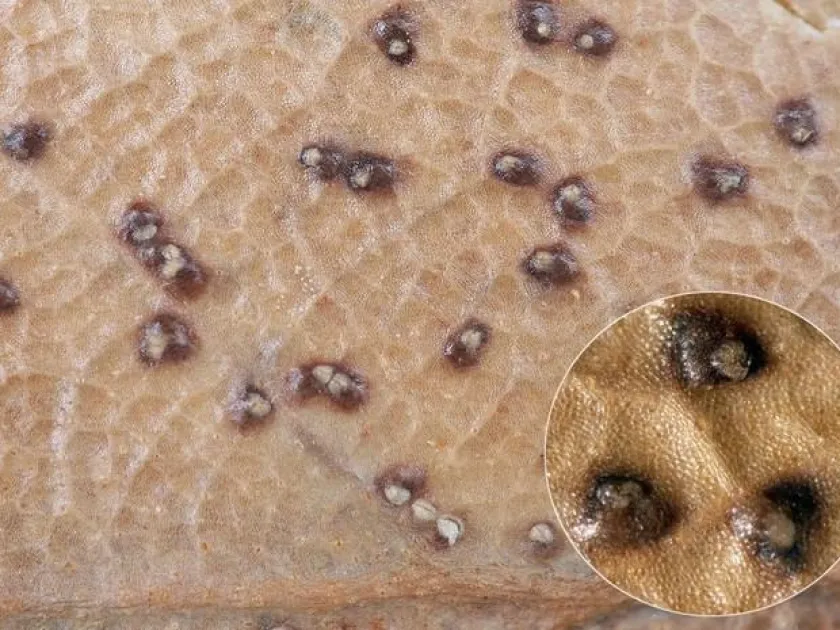
The primary symptom of a Hypospilina infection is the development of necrotic spots on the leaf blades. These spots are often circular or polygonal, delineated by the leaf's venation.
The color of these spots generally ranges from light brown to deep mahogany, often surrounded by a darker, more defined margin that indicates the plant's defense response.
Close inspection of the leaves will reveal tiny, pin-point black structures on the surface. These are the diagnostic fungal fruiting bodies, which help differentiate this condition from other leaf spots.
In severe infections, the affected foliage turns yellow or brown prematurely. This leads to early defoliation, which can occur weeks before the natural autumn senescence.
The central tissue of the spots may become brittle and necrotic, sometimes tearing away to create small holes, giving the leaves a ragged and unhealthy appearance.
Pathogen
The disease is caused by fungi of the genus Hypospilina, which are members of the Ascomycota phylum. These pathogens are typically host-specific and target the foliage of various deciduous trees.
The fungal mycelium spreads within the leaf mesophyll, drawing nutrients from the host plant's tissues, which eventually leads to cellular death and the characteristic appearance of spots.
In the later stages of infection, the fungus produces fruit bodies known as pseudothecia. These appear as small, dark, often raised structures embedded in the leaf tissue, which facilitate spore release.
The pathogen completes its life cycle by utilizing the leaf's organic material. As a hemi-biotroph, it transitions from living tissues to saprophytic survival within decaying leaves over the winter.
Biological studies indicate that the primary inoculum is dispersed by wind and splashing raindrops, which allows the fungus to spread across the crown of the host tree during the growing season.
Conditions for development
Environmental conditions characterized by high humidity and moderate temperatures are the most critical factors for the rapid development of the disease.
Crowded plantations with poor air circulation create a localized high-humidity microclimate within the tree canopy, which significantly encourages the germination of fungal spores.
Trees that are already suffering from drought stress, nutrient deficiency, or insect damage are much more susceptible to successful colonization by the Hypospilina fungus.
The presence of overwintered leaf litter serves as a reservoir for the pathogen. Damp spring weather triggers the release of ascospores from this debris, initiating the annual infection cycle.
Rapid growth phases during the spring provide an abundance of susceptible, soft tissue, allowing the pathogen to gain a foothold easily before the leaves fully harden.
Why it matters
The primary harm caused by Hypospilina is the reduction of the leaf surface area available for photosynthesis, which limits the tree's energy storage and annual wood increment.
Repeated annual defoliation weakens the overall vigor and immune system of the tree, making it significantly more vulnerable to secondary infections and opportunistic pests.
In landscape architecture and ornamental settings, the aesthetic value of the trees is severely diminished due to premature browning, leaf curling, and thinning of the canopy.
For young saplings in nursery environments, the disease can stunt growth significantly, potentially leading to total loss of marketability or death of the young plants.
Over several years, heavy infections can contribute to the dieback of fine branches and a progressive decline in the tree's lifespan, eventually compromising the stability of the stand.
Protection
Effective management begins with strict sanitation. Collecting and destroying fallen leaves in the autumn is the single most important step to break the disease cycle.
Thinning the canopy and maintaining proper plant spacing ensures adequate airflow, which helps keep leaves dry and reduces the window of opportunity for fungal spore germination.
Fungicidal treatments can be applied as a preventative measure in nurseries or high-value ornamental gardens, especially during wet springs when the risk of infection is highest.
Improving general tree vitality through balanced fertilization and appropriate irrigation helps the plant develop stronger cell walls and better natural resistance to fungal entry.
- Regular monitoring of tree foliage for early spotting.
- Removal and disposal of infected branches and litter.
- Selection of resistant tree species or cultivars.
- Optimizing irrigation to avoid overhead leaf wetting.
- Applying systemic fungicides when conditions are favorable for disease.
Discussion
No discussions yet — be the first.