
Hypodermella needle cast
Hypodermella
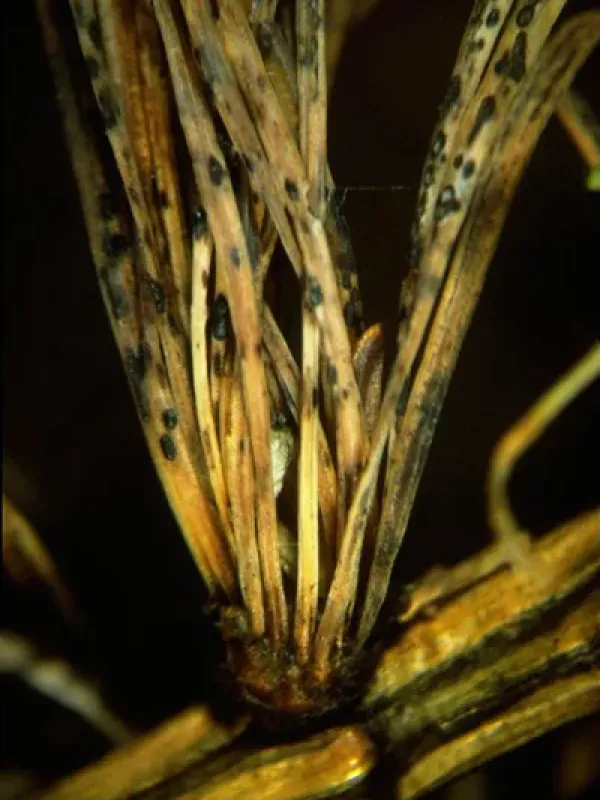
Description
Symptoms
The primary symptom of Hypodermella needle cast is the yellowing or browning of the previous year's needles during late spring.
Elongated, black, football-shaped fruiting bodies known as apothecia appear along the midrib of the infected needles.
Infected needles become brittle and fall prematurely, often resulting in sparse foliage in the lower and middle parts of the tree crown.
Typically, the current year's growth remains unaffected by the disease, serving as a visual contrast to the discolored older needles.
The disease often occurs in scattered patches, affecting groups of trees within a forest stand or nursery setting.
Pathogen
The disease is caused by various species of fungi belonging to the genus Hypodermella, which are host-specific to certain conifer species.
The fungus colonizes the needles, forming an internal mycelium that disrupts the normal physiological functions of the host tissue.
Pine species are the most common hosts for this pathogen, although it can also affect other members of the Pinaceae family.
The pathogen completes its life cycle by releasing spores that are dispersed by wind and splashing rain to healthy needles.
Fruiting bodies persist on fallen needles, serving as the primary inoculum for infection during the following growing season.
Conditions for development
The development of Hypodermella is heavily favored by prolonged periods of high humidity and moderate temperatures during spring.
Dense stand architecture that limits airflow promotes the accumulation of moisture, creating an ideal environment for spore germination.
Trees experiencing physiological stress, such as nutrient deficiency or drought, are significantly more susceptible to successful infection.
Sites located in low-lying areas with poor air drainage frequently report higher incidences of needle cast outbreaks.
The presence of old, infected needle litter on the forest floor facilitates the continuous cycle of re-infection of new growth.
Why it matters
Premature needle loss reduces the total photosynthetic capacity of the tree, directly impacting its overall growth and vigor.
Chronic infection results in reduced annual increment and may lead to stunted tree development over multiple years.
Trees weakened by the needle cast are highly predisposed to secondary infestations by opportunistic pests, such as bark beetles.
In ornamental and commercial nurseries, the disease significantly degrades the aesthetic and market value of the conifer stock.
Severe and repeated outbreaks can result in the eventual mortality of young saplings or weakened mature trees in plantation settings.
Protection
Sanitation is a critical control measure, involving the systematic removal and disposal of infected needle litter to eliminate the inoculum source.
Thinning forest stands and pruning lower branches can significantly improve airflow and reduce the humidity levels within the tree canopy.
Fungicidal treatments applied during the needle expansion period can protect healthy trees from primary infections in high-risk areas.
Promoting tree health through proper site selection and balanced fertilization helps to bolster the natural resistance of the stands.
Monitoring the disease onset in early spring allows for timely intervention before the fungal spores spread to the wider forest population.
Discussion
No discussions yet — be the first.