
Sulfur tuft
Hypholoma fasciculare
Description
Symptoms
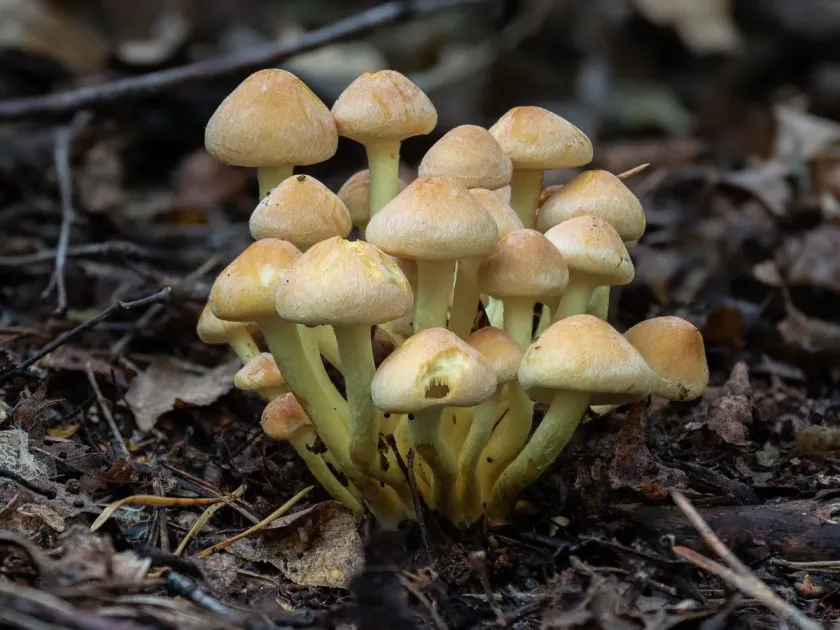
The most distinctive symptom is the presence of yellow-green to sulfur-yellow clusters of fruiting bodies appearing at the base of affected trees or stumps.
Internal wood infection is characterized by white-rot symptoms, where the timber appears bleached and soft, often with dark, irregular lines outlining the decay zones.
Trees may exhibit general signs of stress, including premature leaf yellowing, canopy dieback, and reduced annual shoot development.
Cracks in the bark may reveal layers of white or yellowish mycelial growth, indicating that the fungus has deeply penetrated the sapwood.
In advanced stages, the structural integrity of the tree is significantly compromised, leading to brittleness and an increased risk of breakage under wind pressure.
Pathogen
Sulfur tuft (Hypholoma fasciculare) is a basidiomycete fungus commonly found on decaying wood, acting as an aggressive decomposer of lignin and cellulose.
While often considered a saprotroph, it frequently behaves as an opportunistic pathogen in weakened or damaged trees, leading to extensive wood decay.
The pathogen reproduces via airborne basidiospores that settle on wounds, broken branches, or exposed roots, initiating the colonization process.
Once established, the mycelium spreads rapidly through the vascular tissues, effectively disrupting the nutrient flow of the host plant.
This fungus is recognized for its ability to thrive in various wood types, making it a significant concern for both fruit orchards and ornamental forests.
Conditions for development
High humidity and moisture are the primary environmental drivers for the rapid development and spread of Hypholoma fasciculare.
The fungus thrives in temperate climates, with optimal growth temperatures typically ranging between 18°C and 25°C throughout the growing season.
Accumulated dead wood, decaying stumps, and forest debris serve as massive reservoirs for spores, facilitating widespread infection across the site.
Poor ventilation and dense planting schemes create micro-climates that trap moisture on bark surfaces, providing perfect conditions for spore germination.
Plants already weakened by environmental stress, frost damage, or insect attacks are highly susceptible to becoming hosts for this aggressive fungus.
Why it matters
The core damage caused by sulfur tuft is the irreversible destruction of wood structure, which destabilizes the tree and causes physiological decline.
Safety is a primary concern, as infected trees can become brittle and collapse unexpectedly, posing risks to nearby structures or property.
The presence of the fungus significantly lowers the timber value of the trees and can lead to the total loss of sensitive ornamental or fruit species.
Root-to-root contact transmission allows the fungus to spread efficiently through a plantation, potentially turning a single infection into a widespread outbreak.
Economic losses in nurseries and orchards are significant due to the costs associated with the removal and disposal of infected plant material.
Protection
Sanitation is the most effective management tool: all dead stumps and severely decayed wood must be removed and destroyed to reduce the spore load.
Strict wound management is essential; any physical damage to the trunk or branches should be treated with appropriate sealants to prevent spore entry.
Proper pruning techniques should be employed to ensure good airflow within the canopy, preventing the build-up of excess moisture on bark surfaces.
Preventive application of fungicides may be necessary in high-risk areas to protect valuable specimens from opportunistic fungal colonization.
Regular health monitoring allows for the early detection and isolation of infected individuals before the pathogen has a chance to spread to the wider population.
Discussion
No discussions yet — be the first.