
Hymenochaete cruenta
Hymenochaete cruenta
Description
Symptoms
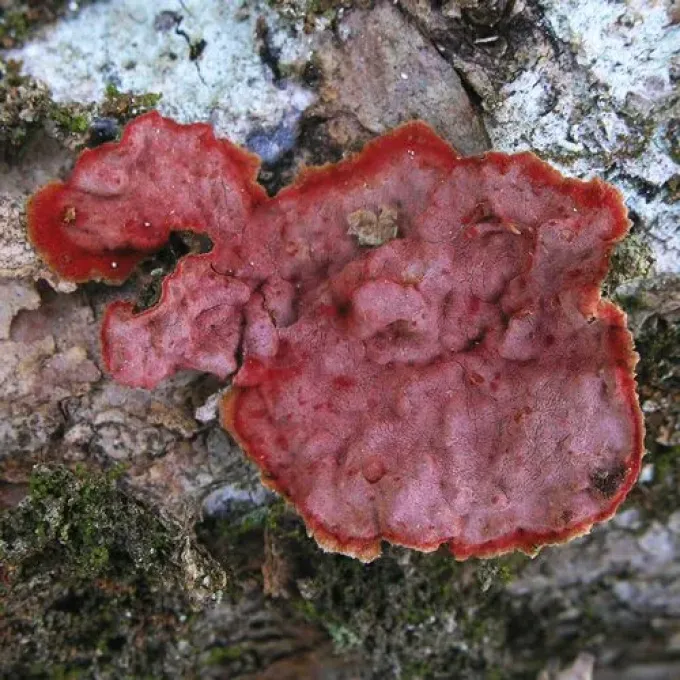
The primary diagnostic feature of this pathogen is the appearance of bright red, crust-like fungal fruiting bodies on the bark of infected branches or trunks.
Affected tissues under the bark typically show signs of necrosis, as the mycelium destroys the cambium layer, leading to the formation of localized cankers.
As the infection progresses, branches often exhibit wilting and dieback, which is clearly visible by the discoloration of the needles that turn brown and fall off.
Cracking of the bark in the area of infection is a common symptom, providing evidence that the tree's internal transport system is being compromised by the fungal growth.
Visual observation often reveals the pathogen's preference for targeting smaller branches before moving toward the main trunk in severe cases.
Pathogen
The pathogen responsible for this disease is the basidiomycete fungus Hymenochaete cruenta, which primarily targets various species of fir trees.
This fungus acts as a specialized parasite, deriving nutrients from the living tissues of the host plant, particularly targeting the phloem and cambium layers.
It spreads via spores that are released from the mature red fruiting bodies and dispersed by wind or splashing rain to new, susceptible locations.
The fungal mycelium spreads beneath the bark, slowly girdling branches and interrupting the flow of water and nutrients, which ultimately results in the death of the distal parts.
The biology of Hymenochaete cruenta allows it to remain viable in the environment, facilitating its persistence within forest ecosystems over many years.
Conditions for development
Favorable conditions for the development of the disease include high humidity, frequent rainfall, and mild temperatures, which support the germination of fungal spores.
Dense forest stands that lack proper air circulation and sunlight exposure provide a conducive microclimate for the fungus to establish and spread.
Trees with pre-existing physical damage, such as frost cracks, wounds from machinery, or injuries from wildlife, are significantly more susceptible to successful fungal colonization.
Physiologically stressed trees, often due to poor soil conditions or drought, lack the defensive resources to contain the infection effectively compared to healthy specimens.
The release of basidiospores is most intense during warm, moist periods, aligning with the peak seasonal activity for pathogen reproduction.
Why it matters
The disease causes significant damage by killing individual branches, which drastically reduces the photosynthetic capacity and vitality of the infected fir tree.
Over time, the infestation can lead to the decline of the entire tree, especially when the main stem becomes girdled, preventing the movement of systemic nutrients.
Infected trees become highly susceptible to secondary attacks by wood-boring insects, which further weaken the structure and health of the tree.
In forest nursery settings, Hymenochaete cruenta can lead to the loss of young stock, causing significant economic setbacks and management challenges.
The structural integrity of the timber is often compromised in diseased trees, making them unsuitable for commercial lumber production and reducing the value of the forest stand.
Protection
Effective management begins with strict sanitation practices, involving the removal and proper disposal of all infected branches and dead material from the site.
Promoting a balanced stand density ensures better airflow and light penetration, which naturally discourages the growth and colonization of this fungus.
Minimizing mechanical injury during logging or forest thinning operations is critical to preventing the entry of spores into the tree tissues.
In high-value areas like tree nurseries, the application of registered fungicides can be used as a preventative measure during periods of high spore activity.
- Regular health monitoring of forest stands.
- Improving site conditions to reduce tree physiological stress.
- Proper pruning of affected branches to limit pathogen spread.
Discussion
No discussions yet — be the first.