
Hymenochaetaceae fungi
Hymenochaetaceae
Description
Symptoms
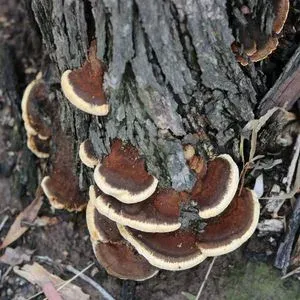
The most distinctive sign of a Hymenochaetaceae infection is the emergence of bracket-like or crust-like fungal fruiting bodies on the trunk or large limbs. These growths are typically brown, dark, or rusty in appearance.
Symptoms in the tree canopy include premature chlorosis, sparse foliage, and the dieback of upper branches. These symptoms often reflect the internal damage, as the fungal growth disrupts the tree's vascular transport system.
Internal wood decay can be observed by looking at cross-sections of damaged limbs. The wood becomes soft, discolored, or spongy, often showing dark, distinct lines that mark the boundary between healthy and infected tissue.
The bark overlying the infection sites often develops deep cracks or cankers. In some cases, there may be oozing of sap or resin, indicating the tree's attempt to seal off the fungal invasion.
Increased structural instability is a major indicator, as the wood loses its mechanical integrity. This leads to wind-breakage, where branches or entire stems fail at the point of heaviest fungal colonization.
Pathogen
The Hymenochaetaceae family includes a wide range of basidiomycete fungi known for being aggressive wood decay agents. They primarily attack woody plants, causing significant white or brown rot in stems and trunks.
These fungi act as opportunists, invading trees through damaged bark, broken branches, or improper pruning wounds. Once inside, the mycelium colonizes the wood, breaking down complex structural components like lignin and cellulose.
The fruiting bodies are often perennial, tough, and woody, appearing as brackets or crusts on the bark. They act as persistent sources of spores, capable of spreading the infection to neighboring trees over long distances.
The biology of these pathogens allows them to survive inside the host for years without visible signs. This stealthy growth makes them particularly dangerous, as the structural damage is often well advanced before the tree shows external distress.
After the death of the host, these fungi can continue to thrive as saprotrophs, recycling the dead wood. This ability ensures their presence in the environment, posing a continuous threat to susceptible host species.
Conditions for development
High humidity and moisture are the primary environmental drivers for the development of Hymenochaetaceae. Rainwater helps transport spores into wounds, creating a perfect environment for successful colonization.
Poor horticultural practices, such as leaving large pruning wounds untreated, are major contributing factors. Any break in the bark barrier provides a gateway for the fungal spores to establish themselves.
Overcrowded plantations with poor air circulation create stagnant, humid conditions that encourage fungal spread. Dense canopies trap moisture on the bark surface for longer periods, favoring infection.
Trees under stress, whether from nutrient deficiency, drought, or insect damage, have weakened immune responses. This physiological stress makes them significantly more susceptible to opportunistic fungal attacks.
Temperature plays a secondary role, but mild and wet weather conditions significantly accelerate both the germination of spores and the vegetative growth of the mycelium within the timber.
Why it matters
The economic and safety impact is severe, as these fungi cause rot that renders trees structurally unstable. This presents a high risk of property damage or injury in public and private landscapes.
Growth performance and yield are negatively affected in orchard environments, as the tree directs its resources toward fighting the pathogen instead of fruit production.
These fungi function as persistent reservoirs of infection. An unchecked infected tree can release millions of spores, putting the entire surrounding forest or orchard at risk of secondary outbreaks.
The wood quality is completely destroyed, making it useless for construction or any high-value commercial purposes. This represents a direct financial loss for timber or fruit producers.
The removal and disposal of infected trees are costly and labor-intensive processes, especially when large, mature specimens are involved in hazardous locations.
Protection
Effective control starts with proper wound management. All pruning should be performed carefully, and large wounds should be sealed with specialized fungicides or wound dressings to prevent entry.
Regular monitoring of the trees is essential for early detection. Any identified fungal fruiting bodies should be surgically removed, collected, and incinerated to prevent the dispersal of new spores.
Promoting tree health through balanced fertilization and adequate watering builds natural defenses. A vigorous, healthy tree is much better at compartmentalizing and isolating fungal infections.
Sanitizing pruning tools between different trees using alcohol or bleach solutions is a crucial practice to prevent cross-contamination in both orchards and gardens.
In cases of severe infestation where the structural integrity of the trunk is compromised, the only viable solution is the complete removal and professional disposal of the affected tree to ensure safety.
Discussion
No discussions yet — be the first.