
False chanterelle
Hygrophoropsis aurantiaca
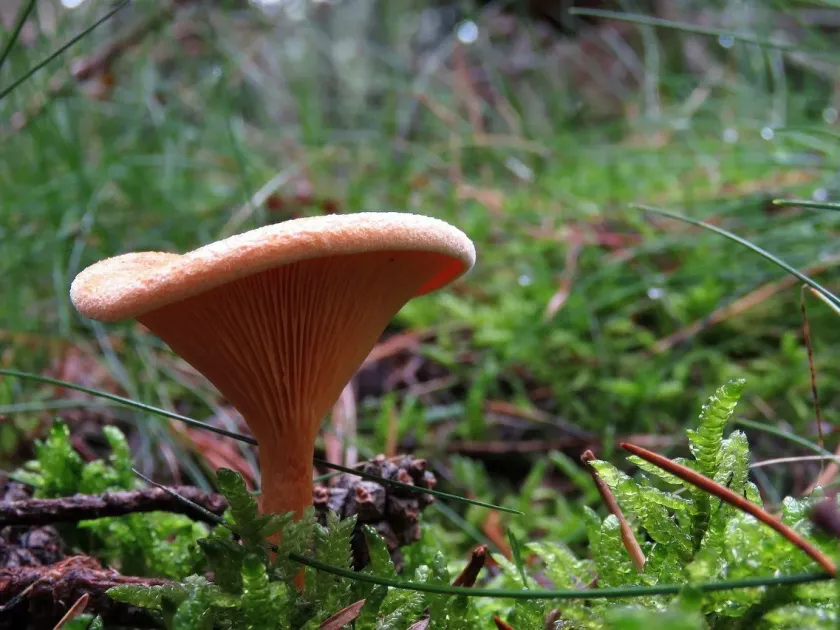
Description
Pathogen
Hygrophoropsis aurantiaca, commonly known as the false chanterelle, is not a plant pathogen. It belongs to the group of saprotrophic fungi that break down decaying organic matter.
In biological terms, this fungus acts as a decomposer, specifically targeting lignocellulosic materials such as rotting wood, stumps, and dense organic mulch.
It lacks the physiological ability to infect or parasitize living plant tissues. Therefore, it does not cause diseases such as rot, wilt, or necrosis in agricultural crops or ornamental plants.
The organism plays an important role in the nitrogen and carbon cycle within the soil by processing dead forest and garden debris into usable mineral forms.
Recognizing the false chanterelle as a "disease" is a common misunderstanding. It is a natural component of garden soil health rather than a threat to vegetation.
Conditions for development
The development of Hygrophoropsis aurantiaca fruit bodies is highly dependent on humidity levels. The fungus thrives in shaded, moist environments where organic material remains saturated.
It prefers acidic substrates and is often found near coniferous remains or decaying wood piles that have been exposed to high moisture for an extended period.
Spores are dispersed by air currents and require a suitable nutrient-rich surface to germinate. Once a suitable dead wood source is found, the mycelium colonizes the area rapidly.
Agricultural practices that create high-moisture pockets, such as improper mulching or lack of soil drainage, promote the appearance of these mushrooms.
Moderate temperatures ranging from 15°C to 22°C are ideal for the growth of the fruit bodies, while dry conditions usually lead to the cessation of their development.
Why it matters
There is no direct harm to crops or garden plants caused by the false chanterelle. It does not attack roots, vascular systems, or foliage of cultivated plants.
Because it is a saprotroph, its presence simply confirms that there is decaying wood or organic material present in the vicinity. It does not compete with plants for nutrients.
There is no evidence of the false chanterelle producing phytotoxins that would hinder plant growth or productivity in any agricultural or horticultural setting.
The false chanterelle is harmless to soil structures and does not induce any pathogenic symptoms in plants, regardless of the plant species or growth stage.
The perception of harm is purely psychological, as gardeners may confuse this mushroom with pathogenic fungi that cause root rot, leading to unnecessary concern.
Protection
Control measures are generally not required since the false chanterelle is not a disease agent. Standard horticultural maintenance is sufficient to manage the environment.
The primary method for minimizing the presence of these fungi is to remove potential substrates, such as decaying wood debris, stumps, and old branches.
Improving air circulation around plants and ensuring adequate drainage in the soil will create conditions less favorable for the growth of any saprotrophic fungus.
- Clear away rotten wood and stumps from the garden.
- Avoid using excessively wet or decomposing mulch.
- Ensure proper drainage to prevent soil saturation.
- Maintain general hygiene by clearing dead plant materials.
No chemical treatments or fungicides are necessary or recommended for the false chanterelle, as it is a beneficial part of the natural decomposition process.
Discussion
No discussions yet — be the first.