
Hygrophoropsis
Hygrophoropsis
Description
Symptoms
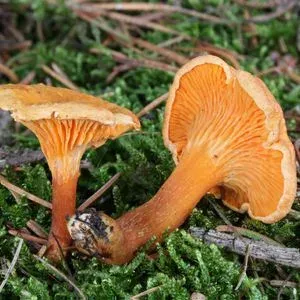
The fruit bodies are characterized by a funnel-shaped cap. The color ranges from bright orange to yellow-brown, mimicking real chanterelles.
The gills on the underside are the main diagnostic feature. They are thin, crowded, and frequently branched, distinguishing them from other species.
The flesh is soft and does not change color when handled. Importantly, there is no milky latex present in the tissue of these mushrooms.
They often grow in small clusters, sometimes appearing on decaying coniferous wood or mossy ground.
The morphological structure of the gills is the primary method for experts to identify this fungus in the field.
Pathogen
The genus Hygrophoropsis consists of saprotrophic fungi that play a crucial role in decomposing organic matter in forest ecosystems.
The most recognized species is Hygrophoropsis aurantiaca, commonly known as the false chanterelle. It belongs to the Hygrophoropsidaceae family.
These fungi are not plant pathogens. They do not infect living plant tissues, making them harmless to agricultural and horticultural crops.
The mycelium of these fungi grows within decaying wood or forest litter. They act as decomposers, breaking down cellulose into simpler compounds.
Biologically, they are essential for nutrient cycling in forest soils. They thrive in environments where organic waste is abundant.
Conditions for development
These fungi prefer cool and moist conditions. They are most commonly observed during the late summer and autumn seasons in temperate regions.
Acidic soil environments and the presence of rotting wood are ideal for their development. They are rarely found in heavily cultivated fields.
High humidity and consistent rainfall are necessary for the appearance of fruit bodies. Dry spells effectively halt their growth.
Shaded areas with plenty of forest litter provide the protection needed for the mycelium to persist throughout the growing season.
Optimal temperatures for mycelial expansion generally range between 15°C and 22°C, avoiding extreme heat or freezing conditions.
Why it matters
Hygrophoropsis causes no harm to agricultural crops, vegetables, or ornamental plants. It is not a parasitic organism.
It does not deplete living plants of nutrients and does not compete with crops for resources. Therefore, it is not considered a pest.
The only negative aspect for humans is the potential for gastrointestinal upset if the mushrooms are consumed in large quantities by mistake.
From an ecological standpoint, their ability to break down wood is beneficial. They contribute to the enrichment of soil humus in forest areas.
There is no economic damage associated with this genus, and it remains a neutral member of the local forest biome.
Protection
No control measures are necessary for Hygrophoropsis as it poses no threat to agriculture. Pesticide application is strictly discouraged.
If its presence is undesirable in a garden, removing woody debris and dead branches from the soil surface will naturally discourage growth.
Improving soil drainage and sunlight exposure can reduce the humidity levels that favor fungal development in specific areas.
Preventative actions should focus on basic garden hygiene. Maintaining a clean area free of decaying timber is sufficient to prevent colonization.
Since the fungus is part of the natural decomposer community, its presence is typically viewed as a sign of a healthy, functioning ecosystem.
Discussion
No discussions yet — be the first.