
Hygrocybe euroflavescens
Hygrocybe euroflavescens
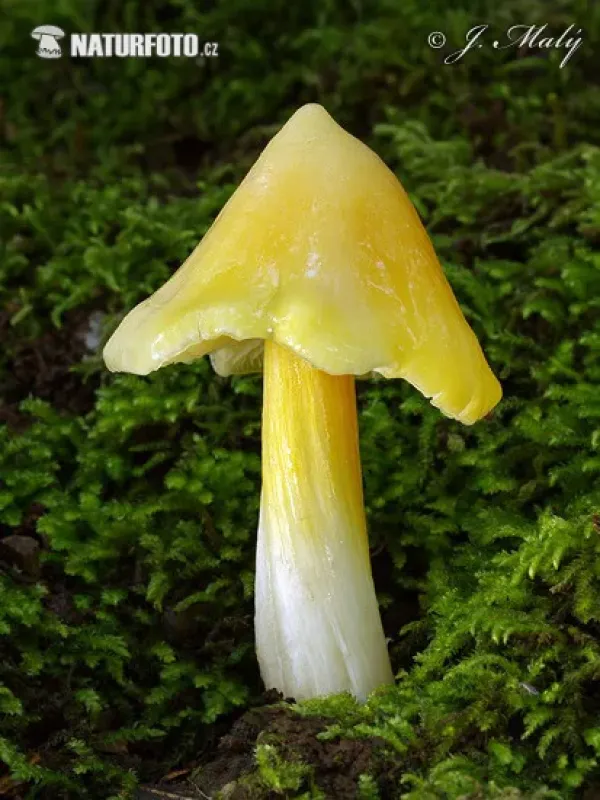
Description
Symptoms
Hygrocybe euroflavescens is a distinctive mushroom recognized by its bright yellow to golden-yellow cap and stems.
The cap typically displays a convex shape that flattens with maturity, often exhibiting a waxy or slimy surface in humid weather.
Gills of this species are spaced, slightly decurrent, and maintain a bright color consistent with the overall body of the mushroom.
The stem is generally slender, brittle, and hollow, providing a classic appearance for species within the Hygrophoraceae family.
Microscopic analysis reveals smooth, ellipsoid spores that are typical for this specific taxonomic group of grassland fungi.
Pathogen
Hygrocybe euroflavescens is not a plant pathogen; it is a saprotrophic fungus that decomposes dead organic matter.
It does not infect crops, vegetables, or ornamental plants, posing absolutely no threat to agricultural productivity.
The fungus relies on decaying plant material in the soil rather than attacking living plant tissues.
It is not known to produce toxins or metabolites that would interfere with the healthy growth of cultivated plants.
As a saprotroph, it plays a supportive role in the nutrient cycle of the soil ecosystem, distinct from any parasitic fungi.
Conditions for development
This mushroom thrives in stable, low-disturbance environments such as natural grasslands and old pastures.
It requires high soil moisture and temperate conditions to successfully develop its fruiting bodies.
The species is highly sensitive to soil chemistry and typically disappears from areas treated with nitrogenous fertilizers.
Natural meadows with diverse vegetation offer the best microclimate for its development during the late summer and autumn seasons.
The presence of mosses and undisturbed turf is often correlated with the occurrence of this fungal species.
Why it matters
The species causes no economic harm to agriculture or forestry and has no negative impact on crop yields.
It does not compete for resources with cultivated plants and does not serve as a vector for plant diseases.
Hygrocybe euroflavescens is considered ecologically beneficial as it aids in the breakdown of thatch and organic debris.
No agricultural studies classify this mushroom as a pest or a cause of crop physiological disorders.
Its existence is neutral to humans and livestock, making it a harmless and interesting inhabitant of the landscape.
Protection
No control or protection measures are required, as the species is an integral and harmless part of the meadow biodiversity.
In terms of land management, no interventions are necessary to suppress or eradicate the fungus from pastures.
To preserve biodiversity, it is recommended to maintain the natural integrity of grassland soils without excessive chemical input.
Identification of this species in an area usually indicates high ecological quality rather than a problem to be solved.
Management strategies should focus on preventing the degradation of meadows rather than controlling natural fungal populations.
Discussion
No discussions yet — be the first.