
Hygrocybe conicoides
Hygrocybe conicoides
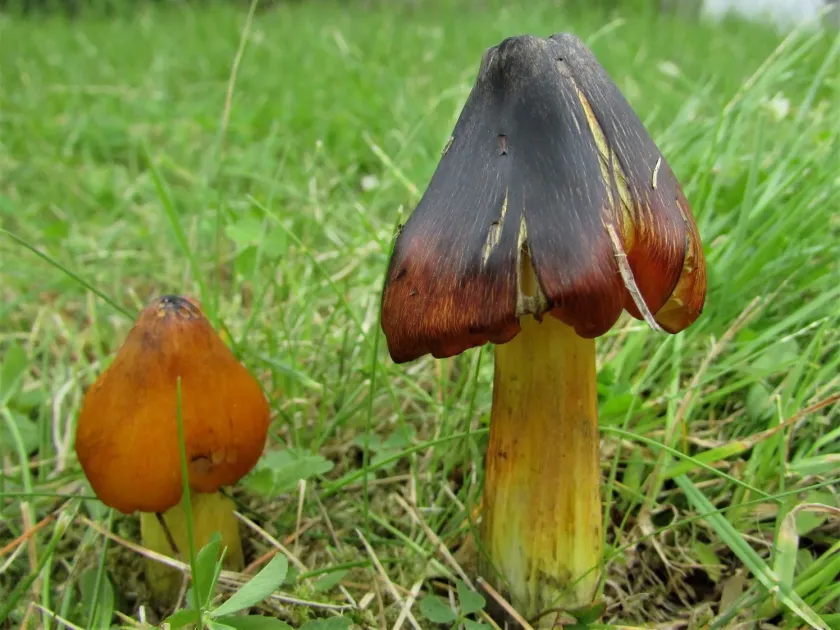
Description
Symptoms
The fruiting body is characterized by a conical or bell-shaped cap that often turns orange or red and blackens upon bruising or drying.
The gills of the mushroom are typically spaced out and may be free from or attached to the stipe, showing yellow or orange hues.
The stem is fibrous and often hollow, which is a common diagnostic feature for this specific species within the Hygrophoraceae group.
Plants growing in the vicinity of these fungi show no signs of distress, pathogen attack, or physiological disorders linked to the presence of the fungus.
Unlike parasitic fungi that form white or dark mycelial mats on crop tissues, this species lives independently in the soil structure.
Pathogen
It is crucial to clarify that Hygrocybe conicoides is not a plant pathogen or a disease affecting agricultural crops. It is a saprotrophic fungus belonging to the Hygrophoraceae family.
This organism does not parasitize living plants, nor does it cause rot, necrosis, or any form of infectious disease in commercial agriculture.
As a saprotroph, its biological role is restricted to decomposing dead organic matter within the soil, contributing to nutrient cycling.
There is no scientific record of Hygrocybe conicoides acting as a plant disease agent, making it completely harmless to farmers and agricultural producers.
In the context of agronomical research, it is classified as a beneficial component of the soil microflora, indicating a healthy and undisturbed soil profile.
Conditions for development
The fungus thrives in moist, sandy, or well-drained grassland environments where organic matter accumulates on the soil surface.
Optimal development occurs during periods of moderate temperatures and high humidity, typically coinciding with late summer or autumn rainfall.
It is sensitive to high nitrogen inputs and intensive tillage, which is why it is predominantly found in natural meadows or dunes rather than intensive monoculture fields.
The mycelium requires stable, slightly acidic to neutral pH conditions to establish itself within the topsoil layer.
Presence of Hygrocybe conicoides serves as a bioindicator for the ecological integrity of the site and the absence of heavy fungicide usage.
Why it matters
Hygrocybe conicoides poses no threat to agricultural productivity and has zero economic impact as a pest or disease.
Because it lacks the ability to digest living plant tissue, it does not compete with crops for nutrients or cause any structural damage.
On the contrary, by breaking down plant litter, it contributes to soil fertility and the overall health of the agricultural landscape.
There are no negative outcomes associated with the presence of this fungus on a farm, and it should be viewed as part of natural biodiversity.
No crop loss is associated with this species, and it does not require any form of mitigation or quarantine protocols.
Protection
As this species is not a disease, no chemical, biological, or mechanical control measures are necessary or recommended.
Attempting to eradicate this mushroom is an unnecessary use of resources that could potentially harm the beneficial soil biome.
We advise farmers to maintain standard agronomic practices, which effectively support the coexistence of such organisms with cultivated plants.
Monitoring for this species is not required, as it does not interfere with standard plant protection programs or yields.
- Support natural drainage in field margins.
- Maintain balanced soil organic matter levels.
- Avoid unnecessary fungicide applications.
Discussion
No discussions yet — be the first.