
Hygrocybe conica
Hygrocybe conica
Description
Symptoms
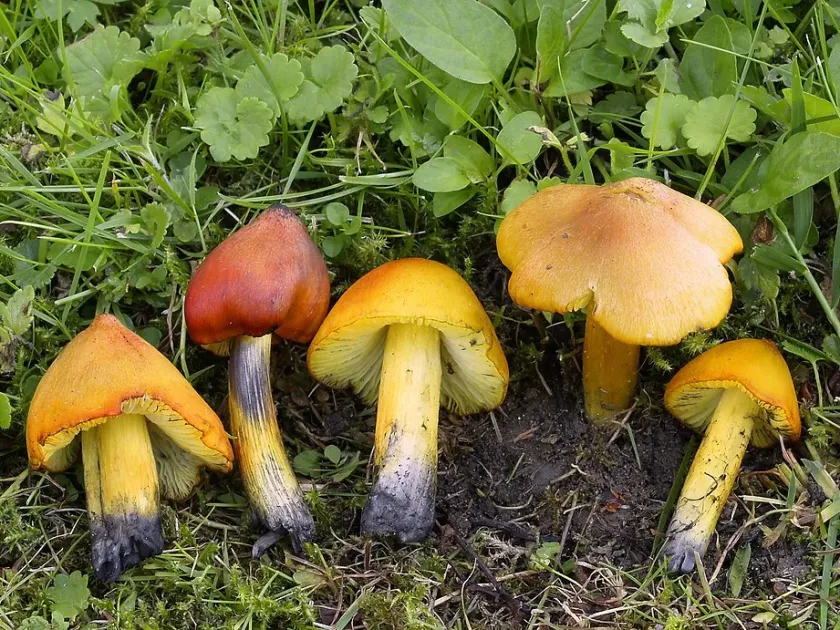
Hygrocybe conica, commonly known as the conical wax cap, is characterized by its distinctively pointed, conical cap that may flatten with maturity.
The surface of the cap is often viscid or moist, and one of the most reliable identification traits is the tendency of the entire fruit body to blacken when bruised or aged.
The gills are typically spaced widely apart, ranging from yellow to olive in color, and they eventually darken to a soot-like black as the fungus matures.
The stem is hollow, fragile, and displays vivid colors ranging from vibrant yellow to bright orange-red, which makes it stand out in grasslands.
Despite its attractive appearance, the rapid blackening of the tissue makes it easily recognizable among other species of the Hygrocybe genus.
Pathogen
It is scientifically inaccurate to categorize Hygrocybe conica as a plant disease or a crop pathogen, as it does not infect living plant tissues.
This fungus functions as a saprotroph, primarily inhabiting the soil layer and decomposing organic matter such as dead grass roots and organic debris.
It does not cause wilting, root rot, or any other pathological symptoms in agricultural crops, as its biological life cycle is restricted to the soil environment.
The species lives in a non-parasitic relationship with the local microflora, contributing to the natural nutrient cycling of the soil ecosystem.
Therefore, its presence in fields or pastures is entirely harmless to plant health and should not be confused with fungal plant diseases.
Conditions for development
Hygrocybe conica thrives in uncultivated, nutrient-poor grasslands, meadows, and occasionally along the edges of wooded areas where the soil remains undisturbed.
The development of fruit bodies is highly dependent on periods of high humidity and moderate temperatures, typically occurring during the autumn months.
This fungus is sensitive to high levels of artificial fertilizers and chemical pesticides, often serving as an indicator of an ecosystem with low chemical input.
It prefers well-drained but moist soils with a relatively stable organic layer, forming associations within the natural turf vegetation.
Extended dry spells or heavy soil tillage will inhibit the growth of its mycelium and stop the emergence of fruit bodies above the ground.
Why it matters
There is no economic harm associated with Hygrocybe conica, as it does not compete with crops or damage plant roots in any agricultural context.
It does not release metabolites that would inhibit the germination or growth of agricultural crops, meaning it has no negative impact on yield.
In pastures, it does not taint the forage or harm livestock, as it grows on decaying plant remnants rather than living pasture grasses.
The species is considered beneficial for maintaining the structure and health of the grassland ecosystem by aiding in organic matter decomposition.
No agricultural losses are attributed to this species, making it an ecologically neutral inhabitant of field environments.
Protection
No protection measures or fungicide applications are required for Hygrocybe conica, as it is not a threat to agricultural productivity.
If its presence is undesirable for landscaping or specific field management, routine mowing and soil aeration are sufficient to naturally discourage fruit body growth.
The use of chemical agents to eradicate this fungus is unnecessary and counterproductive to maintaining a healthy soil biome.
Maintaining proper drainage and ensuring that the soil is not overly saturated will naturally limit the conditions favorable for this fungus.
Since the organism is a natural component of the soil mycota, control strategies are neither recommended nor necessary in an agronomic setting.
Discussion
No discussions yet — be the first.