
Hygrocybe colemanniana
Hygrocybe colemanniana
Description
Symptoms
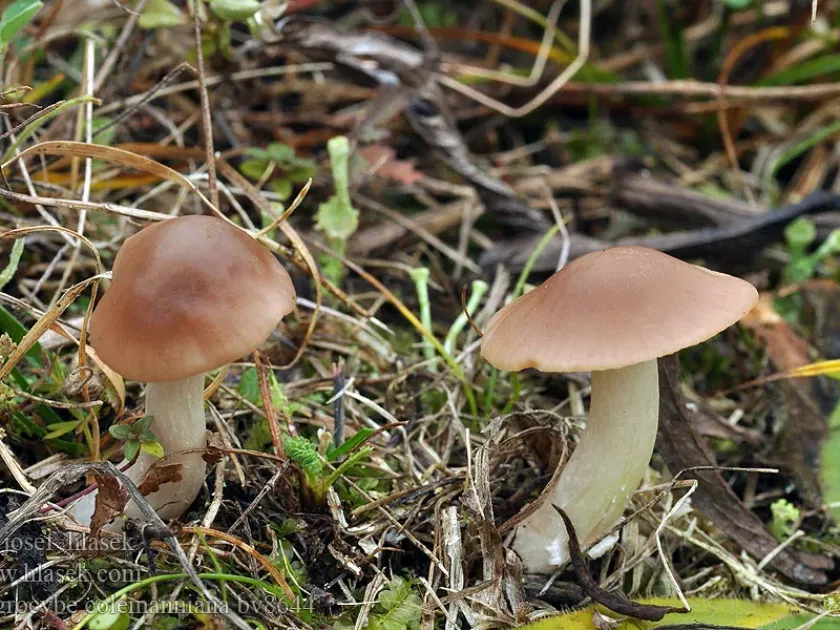
The fruit bodies feature a cap ranging from 2 to 5 cm in diameter, which often becomes funnel-shaped with maturity, displaying brown or tawny hues.
The gills are characteristically distant, thick, and decurrent, running down the stem—a key diagnostic feature for the genus Hygrocybe.
The stipe (stem) is smooth, often matching the color of the cap, and lacks any partial or universal veils like rings or volvas.
Spore prints are white, which is a consistent taxonomic characteristic used to distinguish this species from similar-looking mushrooms.
The cap is hygrophanous, meaning it changes appearance significantly when transitioning between wet and dry environmental conditions.
Pathogen
Hygrocybe colemanniana is not a plant pathogen. It is a saprotrophic mushroom belonging to the Hygrophoraceae family, which lives by breaking down organic matter.
This species does not cause diseases in agricultural crops, trees, or ornamental plants. It has no parasitic relationship with higher plants.
The fungus functions exclusively as a decomposer, contributing to the nutrient cycle in soil ecosystems by processing decaying organic residues.
Because it is not a pathogen, there is no agricultural concept of "infection" or "disease progression" associated with this fungal species.
It is classified as a macrofungus, often found in stable ecosystems where it plays a role in the maintenance of soil structure and humus formation.
Conditions for development
Hygrocybe colemanniana thrives in undisturbed, nutrient-poor grasslands and old pastures, preferring soils with stable moisture levels.
It is highly sensitive to soil chemistry, particularly to nitrogen-rich fertilizers and heavy pesticides, which often lead to its rapid disappearance.
The species requires a specific ecological niche with high biological diversity, often appearing in areas that have been used as meadows for many years.
Fruit body production is most intense during the autumn months when moderate temperatures and consistent rainfall occur.
The presence of this fungus is considered an indicator of high ecological quality and minimal anthropogenic disturbance in the soil.
Why it matters
This species poses no harm to agricultural production. It is not an invasive or damaging agent to any kind of cultivated crop or plant species.
It performs a beneficial role in the soil, helping to cycle nutrients back into the ecosystem without interfering with plant physiology.
No protective measures, fungicides, or agricultural controls are required for this species, as it does not compete with crops for resources.
It does not produce any toxins that would affect food safety, plant health, or animal welfare in agricultural settings.
As a non-pathogenic organism, it is often documented in conservation efforts to protect rare fungal flora in semi-natural grasslands.
Discussion
No discussions yet — be the first.