
Hygrocybe coccineocrenata
Hygrocybe coccineocrenata
Description
Symptoms
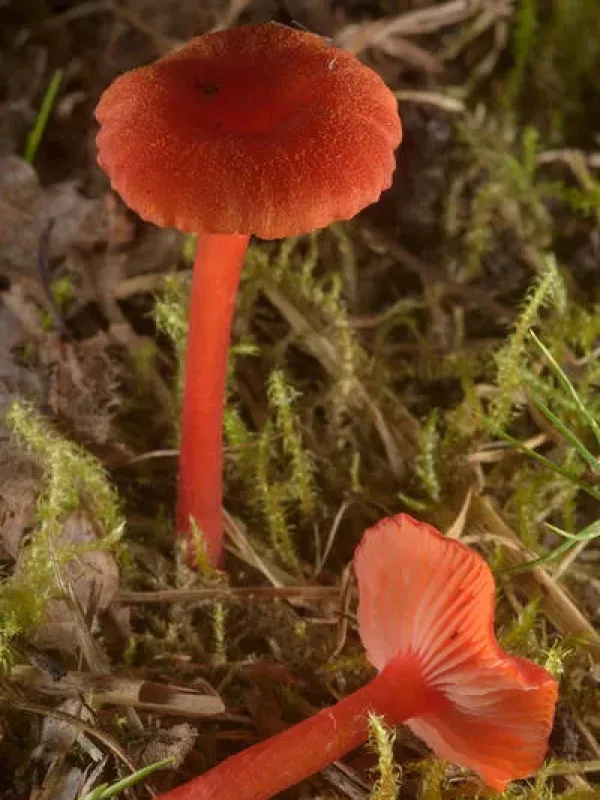
The fruit body of this mushroom is relatively small and notable for its vibrant red or orange-red coloration. The cap surface is characterized by small, distinct scales, giving it a rough appearance.
The gills beneath the cap are widely spaced, yellowish in color, and descend slightly onto the stem. The stem is generally hollow and matches the cap in color.
These mushrooms often grow in small clusters in mossy or damp soil environments. Their visual appearance is quite specific, distinguishing them from other forest fungi.
The presence of this fungus should not be confused with signs of plant diseases such as chlorosis, necrosis, or fungal infections like blight or wilt.
No agricultural countermeasures are required, as the species is entirely harmless to farming interests.
Pathogen
It is important to clarify that Hygrocybe coccineocrenata is not a plant pathogen or a disease agent. It is a fungal species belonging to the Hygrophoraceae family, which lives as a saprotroph.
This mushroom does not infect living plants, crops, or trees. Its biological function is restricted to the decomposition of dead organic matter in the soil, which is a beneficial ecological process.
There are no recorded instances of this fungus damaging agricultural crops. It lacks any mechanism to parasitically affect plant tissues or compete with cultivated species for resources.
Agronomists consider this organism as a natural component of soil biota rather than a threat to production. Its presence does not necessitate any intervention or disease management strategies.
In essence, this species represents the biodiversity of damp habitats and contributes to the overall health of forest and bog ecosystems.
Conditions for development
Hygrocybe coccineocrenata requires specific environmental conditions to fruit, primarily high soil humidity and moisture. It is frequently associated with peat bogs and waterlogged forest areas.
The species prefers acidic and nutrient-poor soils. It is highly sensitive to soil chemistry changes, including the application of synthetic fertilizers common in modern agriculture.
The optimal development period for the fruit bodies typically spans from late summer through autumn, corresponding with the peak seasonal moisture levels.
The species is an indicator of ecological stability in wetland areas. Land drainage and agricultural intensification usually lead to the local disappearance of this fungus.
From an agronomical perspective, observing this mushroom in a field is a sign of poor drainage or high water retention, which may influence land management decisions for specific crops.
Discussion
No discussions yet — be the first.