
Lemon-green waxcap
Hygrocybe citrinovirens
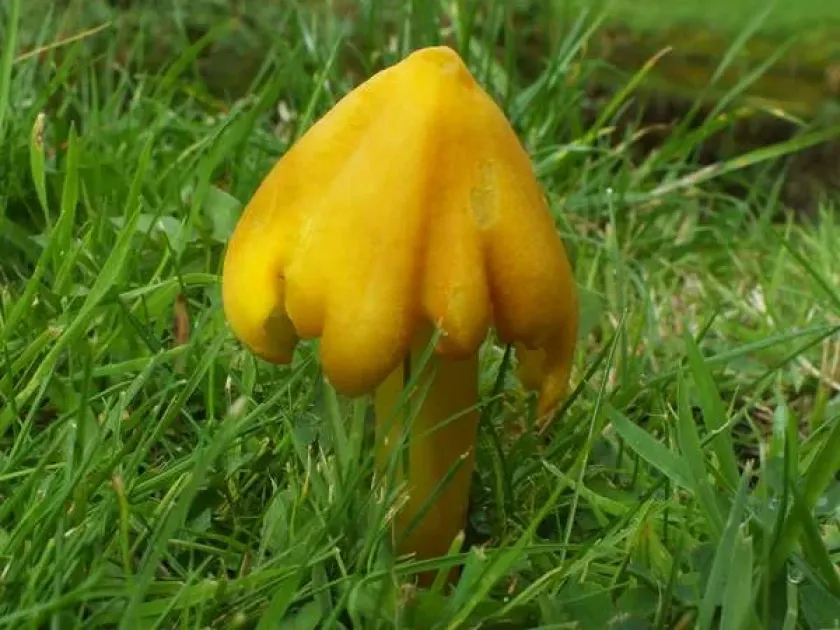
Description
Pathogen
Important clarification: Lemon-green waxcap (Hygrocybe citrinovirens) is not a plant pathogen or a disease of crops. It is a rare species of agaric mushroom belonging to the Hygrophoraceae family.
This mushroom follows a saprotrophic lifestyle. It does not infect the tissues of living plants and does not cause rot, necrosis, or wilting in agricultural crops. Its presence in the soil does not indicate an infectious background.
Mycologists classify this mushroom as an indicator species for ecosystems with high biodiversity levels. Unlike parasitic fungi, it feeds on organic debris, decomposing it within the natural environment.
The biology of Hygrocybe citrinovirens is closely linked to undisturbed soils. It lacks the enzymatic apparatus required to degrade healthy plant cells, thus posing no threat to harvests.
Therefore, classifying this object as a "plant disease" is factually incorrect. It is a biological component of an ecosystem that requires no protective agricultural measures or fungicide application.
Conditions for development
The mushroom prefers specific conditions characteristic of old, unfertilized pastures and meadows that have not been subjected to intensive chemical treatment.
Its development is limited by soil purity. High doses of mineral fertilizers and herbicides are destructive to the mycelium of this species.
For fruiting, it requires high air humidity and a stable temperature regime during late summer and autumn.
The soils should have a moderately acidic or neutral pH and should be low in nitrogen content.
This species is most often found in communities with mosses and short grasses, where anthropogenic pressure is minimal.
Why it matters
For agriculture, Hygrocybe citrinovirens is completely harmless. The absence of pathogenic influence on plants makes it a neutral participant in the agroecosystem.
On the contrary, the presence of such fungi may indicate a healthy ecological status of the site, where harsh pesticides have not been used.
Mistaking this mushroom for a disease agent could lead to unjustified fungicide use, resulting in unnecessary costs for farmers.
There is no evidence of harm caused by this object to cereal, vegetable, or fruit crops.
This mushroom is not a quarantine object, meaning there are no restrictions on the transport of agricultural products from areas where it grows.
Discussion
No discussions yet — be the first.