
Golden wax cap
Hygrocybe chlorophana
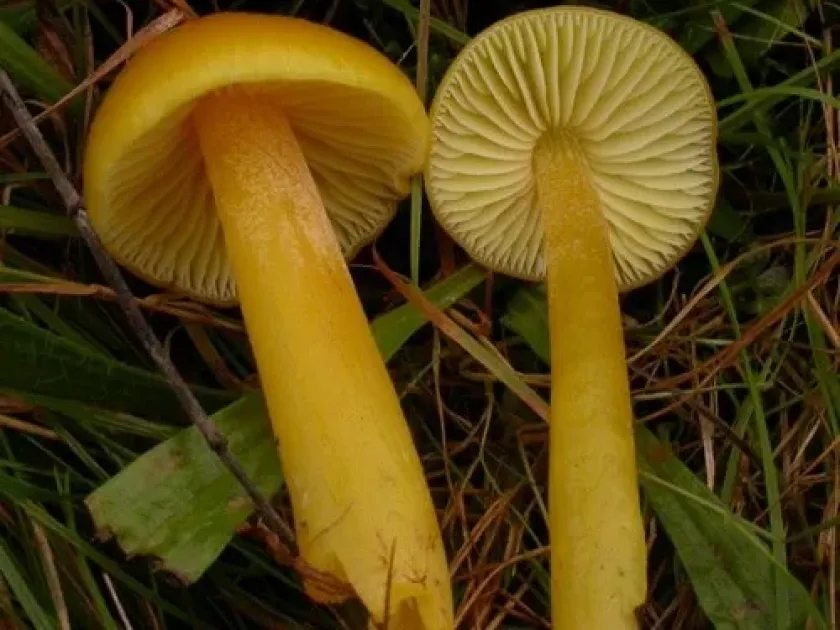
Description
Pathogen
The Hygrocybe chlorophana, commonly known as the golden wax cap, is not a plant pathogen and does not cause any diseases in crops. It is a species of agaric fungus belonging to the Hygrophoraceae family.
This fungus does not infect, parasitize, or damage any agricultural crops, horticultural plants, or soil-borne vegetation.
As a saprotrophic organism, it plays a vital role in nutrient cycling within undisturbed grassland ecosystems by breaking down organic matter.
There is no economic damage associated with this fungus, and it is strictly regarded as a beneficial part of natural biodiversity rather than a pest or disease vector.
In agronomic terms, it is completely harmless to farm production and does not require any protective measures, fungicides, or agricultural intervention.
Conditions for development
The development of Hygrocybe chlorophana fruit bodies is restricted to specific environments, primarily stable, unfertilized, and old grasslands or pastures.
The species is highly sensitive to soil chemistry and typically disappears from areas where intensive mineral fertilization or ploughing has occurred.
Environmental requirements include a balanced soil moisture level, clean air, and a lack of anthropogenic chemical pollution, making it a bio-indicator.
Fruiting typically occurs during periods of high humidity, commonly peaking in late summer and throughout the autumn season in temperate regions.
Any disruption to the delicate soil structure, such as heavy machinery use or intensive grazing, prevents the mycelium from forming the characteristic wax cap mushrooms.
Discussion
No discussions yet — be the first.