
Pink waxcap
Hygrocybe calyptriformis
Description
Symptoms
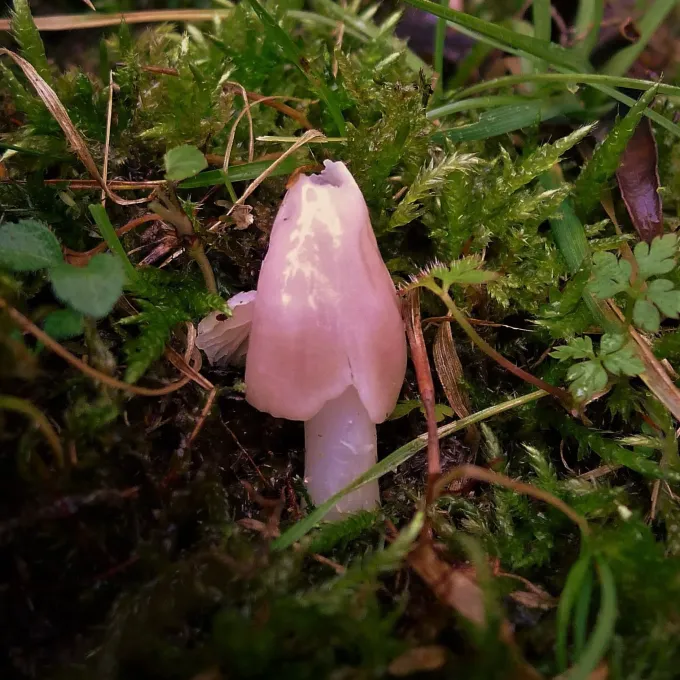
The Pink Waxcap (Hygrocybe calyptriformis) is a distinctive fungus known for its striking pink or lilac-pink, conical cap that may crack as it matures.
The cap often appears pointed, resembling a hat, and the flesh is notably brittle and delicate in texture compared to other fungi.
The gills are typically white or pale pink, attached or slightly decurrent, providing a stark contrast to the vibrant color of the cap.
The stem is slender and white, often fibrous, reaching heights of 8-10 cm, which is quite fragile and easily damaged.
It is important to state clearly that this organism is a saprotrophic fungus and not a plant pathogen affecting crops or ornamental plants.
Pathogen
The Pink Waxcap is not a plant pathogen; it does not infect or damage agricultural crops, trees, or vegetation in any capacity.
It does not possess the biological mechanisms required to parasitize living plant tissues or induce necrotic lesions.
As a saprotroph, its role in the ecosystem is limited to the decomposition of dead organic matter within the soil profile.
There are no known instances of this species causing diseases in horticultural or agricultural settings, confirming its status as harmless to farming.
Any classification of this fungus as a crop disease is biologically incorrect and lacks scientific evidence for its impact on agriculture.
Conditions for development
The species thrives exclusively in nutrient-poor, undisturbed grasslands that have not been subjected to modern agricultural intensification.
It is highly susceptible to chemical fertilizers, particularly nitrogen-rich applications, which quickly lead to the decline of its mycelial network.
Favorable conditions for its development include consistent moisture levels in the soil, usually found in older, stable meadow environments.
The fruiting bodies typically appear in late summer and autumn, provided the soil remains undisturbed by plowing or heavy machinery.
Preservation of this species requires the maintenance of natural grassland ecosystems without the use of herbicides or intensive grazing.
Why it matters
This fungus poses no risk to agriculture and is considered completely non-harmful to any type of cultivated plant species.
It does not cause root rot, leaf spots, or any other plant health issues, making it irrelevant in the context of crop protection.
In fact, its presence in a field often indicates high soil health and biodiversity, which is beneficial for the overall ecosystem balance.
There is no economic damage associated with this fungus, and farmers do not need to take any action to manage or remove it from their land.
Misidentifying this species as a disease-causing agent can lead to unnecessary and potentially damaging chemical interventions in the field.
Protection
As the Pink Waxcap is not a pest or a disease, no control measures or prophylactic treatments are required or recommended.
In many regions, this fungus is protected as a rare species, and conservationists advocate for its habitat protection rather than elimination.
Agrotechnical methods aimed at fungi control are ineffective and unnecessary for this species, as it does not negatively impact crop yields.
If observed, the presence of the Pink Waxcap should be regarded as a sign of high environmental quality within the local landscape.
No fungicides or pesticides should be applied, as these would likely kill the fungus without providing any agricultural benefit.
Discussion
No discussions yet — be the first.