
Fern rust
Hyalopsora aspidiotus
Description
Symptoms
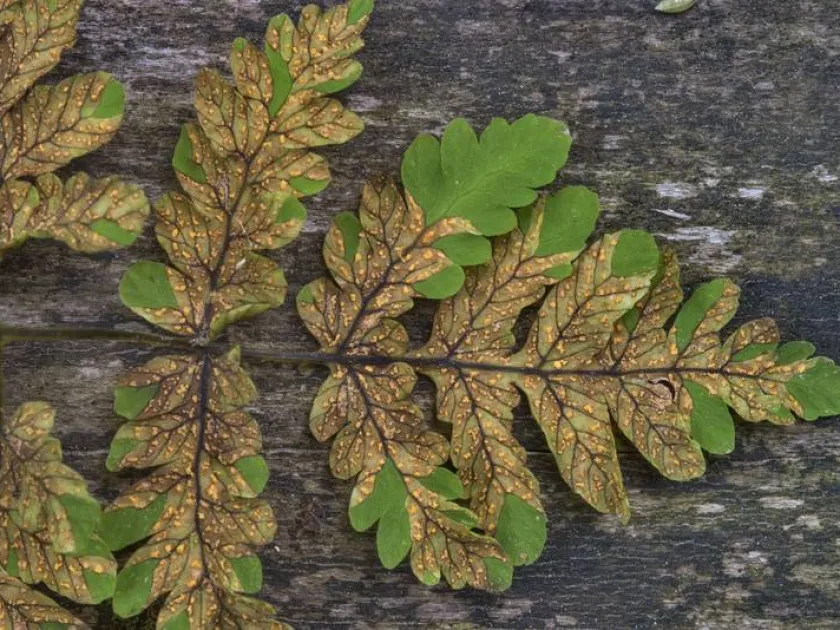
The hallmark sign of fern rust is the appearance of small, distinct pustules on the undersides of the fronds. These pustules typically exhibit a bright yellow to rusty-orange color.
On the upper surface of the leaves, corresponding locations show chlorotic spots or pale yellow discoloration. As the infection progresses, these areas often turn brown and necrotic.
Severe infestations cause entire fronds to yellow and wither prematurely. The visual impact is significant, turning healthy, lush foliage into a dry and unsightly mass of dead tissue.
Symptoms usually manifest mid-summer when environmental conditions peak in favor of fungal development. Older foliage near the soil surface is typically affected first.
Dusty patches on the leaf underside are a diagnostic feature; when disturbed, these patches release clouds of spores, confirming an active rust fungal infection rather than nutrient deficiency.
Pathogen
The causal agent of this disease is the rust fungus known as Hyalopsora aspidiotus. This is an obligate parasite, meaning it relies entirely on the living tissues of its fern host to complete its lifecycle and propagate.
The fungus follows a complex life cycle often involving different spore stages. The uredinial stage is responsible for the rapid spread of the disease across fern populations during the active growing season.
Mycelium of the fungus penetrates leaf tissues, siphoning off nutrients and disrupting the plant's physiological functions. This depletion weakens the host and leads to visible tissue damage.
Infection spreads mainly through airborne spores, water droplets during overhead irrigation, or contaminated gardening tools. The fungus is highly efficient at colonizing new hosts in damp conditions.
Overwintering occurs primarily in fallen, infected fronds, where the pathogen persists as teliospores, waiting for favorable spring temperatures and humidity to initiate a new cycle.
Conditions for development
High humidity and moisture are the primary drivers of Hyalopsora aspidiotus development. Prolonged periods of dampness on the fronds are essential for spore germination.
Crowded plantings that restrict airflow create a perfect, stagnant microclimate. In these conditions, humidity remains trapped between leaves, allowing the fungus to flourish undisturbed.
Poor soil drainage and waterlogging can increase the vulnerability of the plant, weakening its natural resistance and making it a more suitable host for the pathogen.
Failing to clean up garden debris creates a reservoir of inoculum. Fallen leaves left on the ground ensure that the fungus survives to infect new growth in the subsequent season.
Frequent rainfall or overhead watering without proper ventilation dramatically increases the speed at which the disease spreads from plant to plant.
Why it matters
Fern rust causes profound aesthetic damage, making affected plants unsuitable for ornamental purposes. The loss of foliage quality is rapid and visually jarring.
The destruction of leaf surface area inhibits photosynthesis. As the plant loses its ability to produce energy, its overall vitality and growth rate plummet.
If the infection is heavy and sustained, it can exhaust the fern's rhizomes. This leaves the plant without enough energy stores to survive winter, leading to potential death.
Young, developing ferns are particularly sensitive. An infection can stunt their growth permanently, leaving them susceptible to opportunistic secondary pathogens.
Commercial nurseries can face significant economic losses if a rust outbreak occurs, as the affected stock often requires destruction to prevent further spread of the fungus.
Protection
The first line of defense is strict sanitation. Always remove and destroy fallen fronds immediately to deprive the fungus of a site to overwinter and reproduce.
Ensure adequate spacing between plants to promote airflow. Good air circulation dries out the foliage quickly, significantly reducing the chances of spore germination.
Opt for base-level watering to keep the fronds dry. Avoid overhead irrigation entirely, especially in enclosed or humid environments where water doesn't evaporate quickly.
Apply fungicides, such as copper-based sprays or systemic treatments, as soon as you spot the first signs of pustules to prevent the infection from spreading throughout the cluster.
- Prune and discard infected fronds as soon as they appear.
- Sterilize your pruning tools between uses to avoid cross-contamination.
- Improve soil drainage to keep the root zone and surrounding area healthy.
- Regularly monitor the undersides of fronds for early signs of yellow spots.
Discussion
No discussions yet — be the first.