
Downy mildew of rockcress
Hyaloperonospora cardaminopsidis
Description
Symptoms
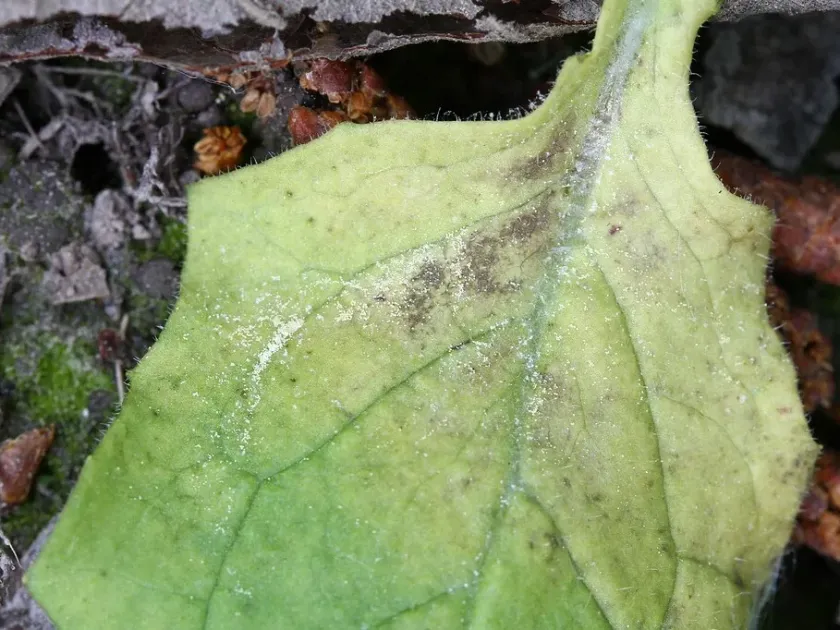
The primary symptom of downy mildew is the appearance of chlorotic, yellowing spots on the upper side of the leaves, often constrained by leaf veins.
Under high humidity, a grayish or white felt-like mycelium develops on the undersides of the leaves, representing the pathogen's sporulation.
As the infection advances, the affected foliage begins to wilt, wither, and eventually drop, causing severe stress to the entire plant.
In severe cases, the pathogen can infect the stems, leading to stunted growth, distortion of the plant architecture, and reduced overall vigor.
Unlike powdery mildew, the downy mildew signs are strictly localized on the underside of leaves and do not produce a powdery surface on the upper side.
Pathogen
The disease is caused by Hyaloperonospora cardaminopsidis, an obligate biotrophic oomycete that parasitizes members of the Brassicaceae family.
The pathogen reproduces via conidia, which are efficiently dispersed by wind and splashing water, allowing it to spread rapidly throughout the field.
It also produces thick-walled oospores, which allow the pathogen to survive in the soil and crop debris for several seasons until favorable conditions return.
The organism feeds by penetrating the host's cell walls with specialized structures called haustoria, which draw nutrients directly from the living plant tissue.
This pathogen is highly specialized and is known for its ability to cause significant damage to Arabidopsis and closely related species of rockcress.
Conditions for development
Cool, humid weather is the primary driver for the development of Hyaloperonospora cardaminopsidis, with temperatures around 15–20°C being optimal.
Prolonged leaf wetness, caused by dew, heavy rainfall, or overhead irrigation, is essential for the germination of spores and successful colonization.
Dense planting patterns that limit air circulation create a microclimate prone to stagnation, significantly increasing the risk of widespread infection.
Low light levels, which may occur in shaded areas or during cloudy weather, can further weaken the plant and promote the growth of the oomycete.
The absence of adequate ventilation allows the humidity levels near the leaf surface to remain consistently high, favoring the spread of the pathogen.
Why it matters
The main impact is a significant reduction in photosynthetic capacity, which directly limits plant growth, flowering, and total seed production.
The premature loss of foliage weakens the plant's structural integrity and makes it more susceptible to environmental stressors like frost or drought.
In seed production trials, the disease can cause a total loss of viability in the harvest due to the poor development of seeds on infected plants.
Long-term survival of the pathogen in the soil ensures that the field remains a source of infection for subsequent planting cycles if not managed properly.
Infected plants serve as a reservoir for other secondary pathogens, often leading to complex plant health issues that are difficult to mitigate.
Protection
Implementing a strict crop rotation schedule, avoiding Brassicaceae crops for several years, is essential to break the pathogen's life cycle in the soil.
Sanitation practices, such as removing and destroying all infected plant residues after the season, are critical to reducing the primary inoculum source.
Ensuring proper plant spacing is necessary to maximize airflow and minimize the duration of leaf wetness, thereby inhibiting spore germination.
When necessary, the application of targeted fungicides labeled for use against downy mildew can help manage outbreaks before they reach epidemic levels.
Regular monitoring of plants allows for early detection, enabling the gardener or grower to isolate or treat affected areas before the disease spreads.
Discussion
No discussions yet — be the first.