
Arabis downy mildew
Hyaloperonospora arabidis-alpinae
Description
Symptoms
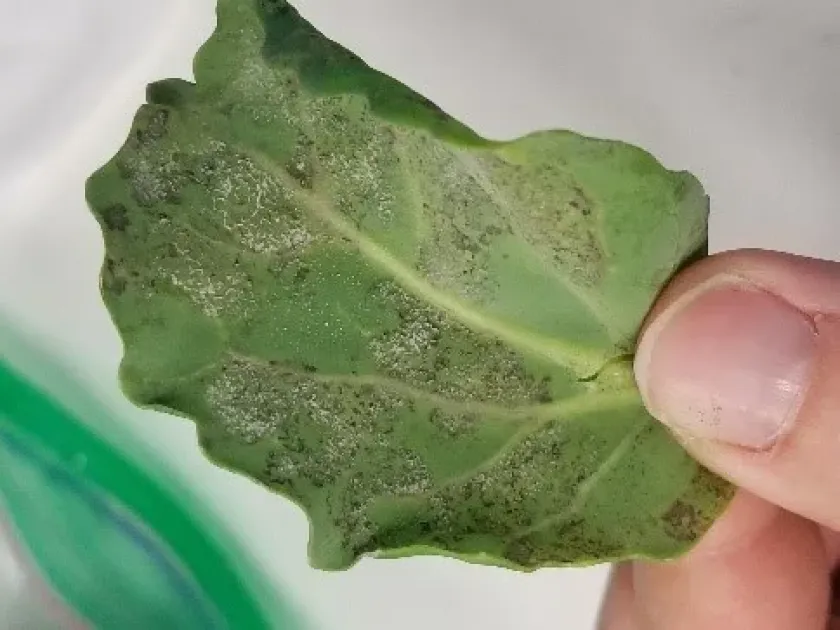
The initial symptoms are characterized by chlorotic or yellowish angular spots appearing on the upper surface of the leaves, often limited by leaf veins.
A distinctive diagnostic feature is the development of a white to greyish downy fungal growth on the underside of the infected leaves, representing the sporulation stage.
As the disease progresses, infected leaves become deformed, curl at the edges, and may eventually turn necrotic or dry up, leading to severe defoliation.
Affected plants exhibit stunted growth, reduced vigor, and poor flowering performance compared to healthy specimens in the same environment.
In severe cases, the infection can become systemic, leading to the collapse of individual rosettes and death of the entire plant if left unmanaged.
Pathogen
The causative agent of this disease is the obligate parasitic oomycete Hyaloperonospora arabidis-alpinae. It is a highly specialized pathogen that specifically targets plants within the Arabis genus.
The pathogen completes its life cycle within the host plant tissues. Under high humidity, it produces sporangiophores that emerge through the stomata to release spores, facilitating rapid spread.
Dissemination occurs primarily via zoospores that swim or splash in water droplets. Additionally, the fungus can produce oospores, which allow it to survive in the soil or plant debris for extended periods.
As an obligate parasite, Hyaloperonospora arabidis-alpinae relies on the metabolic activity of its host to derive nutrients, causing systematic stress and tissue degradation.
Biological monitoring shows that the pathogen is most active during periods when host plants are growing rapidly, taking advantage of vulnerable young tissues.
Conditions for development
The development of Arabis downy mildew is strictly dependent on high ambient humidity, typically exceeding 85%, often accompanied by dew or light rainfall.
The optimal temperature range for the pathogen's growth is between 12°C and 18°C. These mild temperatures are ideal for the rapid germination of zoospores.
Poor air circulation within dense plantings significantly increases the risk of an outbreak, as moisture remains trapped on leaf surfaces for longer durations.
Persistent moisture on foliage for a minimum of 4–6 hours is required for the spores to germinate and successfully penetrate the plant epidermis.
Overhead irrigation, especially during the evening, provides the perfect environment for the pathogen to establish and multiply throughout the garden bed.
Why it matters
The disease severely compromises the aesthetic value of Arabis, making it unsuitable for rock gardens or ornamental borders where plant quality is paramount.
By disrupting photosynthesis, the fungus weakens the host plant, making it significantly more susceptible to environmental stress and other opportunistic pathogens.
In nursery production, an outbreak can lead to the loss of entire batches of plants, causing significant economic damage and loss of plant stock.
Reduced vigor due to persistent infection lowers the cold hardiness of the plants, often leading to increased winter mortality in the following months.
Continuous presence of the fungus in the soil creates an infectious environment that hinders the successful cultivation of susceptible species for several seasons.
Protection
Cultural control is the most effective approach: plant in open, sunny locations with excellent drainage to ensure rapid evaporation of surface moisture.
Avoid overhead irrigation; use drip tape or targeted root watering to keep the foliage dry, which breaks the pathogen's infection cycle.
Regular monitoring and prompt removal of infected leaves or entire plants are essential to reduce the inoculum level in the garden area.
Chemical control should involve systemic fungicides such as those containing metalaxyl, mancozeb, or copper compounds applied at the first sign of symptoms.
Implement a fungicide rotation program to prevent the development of resistance in the pathogen population, focusing on early spring when conditions are ideal for disease.
Discussion
No discussions yet — be the first.