
Hohenbuehelia geogenia
Hohenbuehelia geogenia
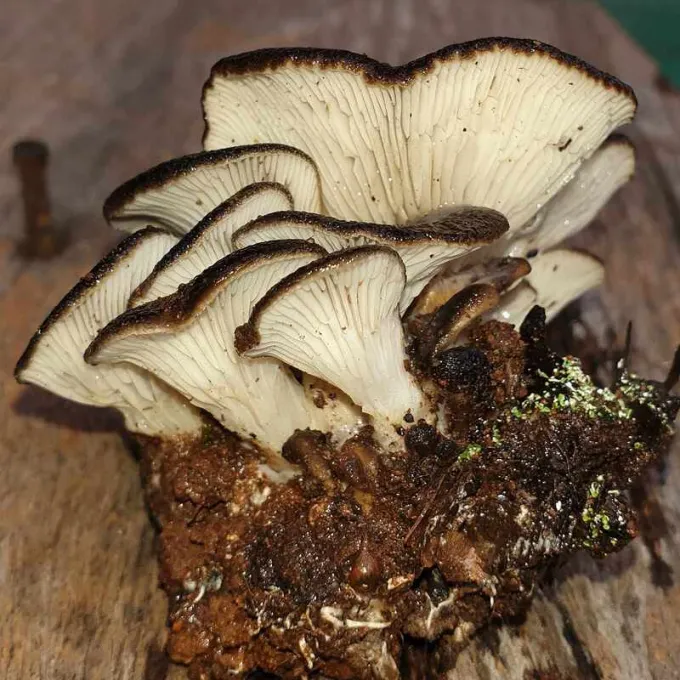
Description
Symptoms
The first sign of infection is sudden and irreversible wilting of foliage, which occurs despite adequate soil moisture. This indicates that the root system has been compromised and can no longer conduct water and nutrients to the upper parts of the plant.
Visible diagnostic features include the appearance of greyish-brown, fan-shaped fruit bodies emerging from the soil around the base of the stem. These fungi often appear after periods of high rainfall and are characteristic of the presence of the pathogen.
Upon closer inspection of the roots, a white, mycelial mat can be observed beneath the bark or on the root surface. The infected roots eventually become soft, brittle, and discolored, often emitting a distinct, pungent, musty odor characteristic of fungal decay.
Trees and shrubs affected by this pathogen show progressive crown thinning, premature yellowing, and leaf drop. Over time, the plant loses its structural stability, eventually leading to windthrow or complete collapse due to the loss of anchoring roots.
The infection is often clustered, spreading from a central infected tree to neighboring plants through direct root-to-root contact in the soil, creating patches of dying vegetation within a planting area.
Pathogen
Hohenbuehelia geogenia is a basidiomycete fungus belonging to the Pleurotaceae family. In agronomy and forestry, it is recognized as a facultative parasite and a necrotroph capable of causing significant damage to the root systems of various woody plants and shrubs.
The pathogen primarily functions as a wood-decay fungus, targeting the lignin and cellulose within the roots. Its mycelium forms aggressive rhizomorphs, which are specialized thread-like structures that allow the fungus to spread rapidly through the soil from one plant to another.
This fungus acts as a latent threat, often present in the soil as a saprotroph decomposing organic debris, but it quickly switches to a parasitic mode when it encounters weakened or stressed root systems. This opportunistic behavior makes it a persistent pathogen in forest and orchard environments.
The lifecycle includes the production of fruit bodies on the ground near the base of affected plants. These structures release spores that can colonize new hosts via water splashes or wind dispersal, ensuring the survival and expansion of the fungal population.
The fungus is highly resilient, capable of persisting in the soil for years even in the absence of a live host, provided there is sufficient decaying woody organic matter to sustain its mycelial network.
Conditions for development
High soil moisture is the primary driver for the development of Hohenbuehelia geogenia. Poor drainage, waterlogging, and high humidity levels create the perfect environment for the fungus to thrive and attack plant roots.
The presence of decomposing woody debris, stumps, or dead roots in the soil acts as a reservoir for the pathogen. These materials provide the necessary nutritional base for the fungus to grow before it infects healthy living tissues.
Compacted soil with low aeration restricts oxygen supply to the plant roots, weakening the host's natural defenses. This stress makes the plants significantly more susceptible to successful colonization by the fungal mycelium.
Mechanical damage caused by gardening tools or equipment during cultivation provides an entry point for the fungus. Fresh wounds on roots serve as infection courts where the pathogen can easily establish itself.
The optimal temperature range for the growth of this fungus is between 15°C and 25°C. In these conditions, the expansion of the mycelium is most aggressive, particularly in dense plantings where airflow is restricted.
Why it matters
The primary harm caused by this pathogen is the destruction of the vascular system in roots, which leads to the eventual death of the plant. There is no effective cure once the fungal decay has penetrated deep into the root structure.
The disease poses a serious economic threat to nurseries and orchards. The loss of established plants leads to long-term financial losses and the necessity for costly soil remediation and re-planting efforts.
Infected areas become biohazard zones, as the soil remains contaminated with fungal spores and mycelial fragments. This limits the site's future use for planting susceptible species for many years.
Affected trees become structural risks. As the root system loses its ability to anchor the plant, the risk of falling branches or whole trees falling during storms increases significantly, posing a danger to people and property.
The spread of the fungus can be rapid, often destroying entire landscape groupings if not identified and addressed immediately through rigorous sanitation and containment protocols.
Protection
Sanitation is the most critical aspect of control. All infected plants must be removed, including the entire root system and stump, to eliminate the food source of the fungus. Proper disposal of the infected plant debris is essential.
Establishing effective drainage systems is necessary to reduce soil moisture. Improving the soil structure and aeration helps plants maintain vigor and improves their natural resistance against soil-borne pathogens.
Chemical control can be attempted using copper-based or systemic fungicides to drench the soil around infected areas. While not a cure, it can help slow down the spread of the mycelium and protect adjacent healthy plants.
Cultural management, such as avoiding root damage during cultivation and ensuring proper spacing between plants, helps maintain a healthy root environment and prevents easy transmission of the pathogen.
- Complete removal of stumps and buried wood from the soil.
- Isolation of infected patches with deep trenches to block mycelial growth.
- Regular disinfection of garden tools after contact with infected soil.
- Monitoring the garden for early detection of fruit bodies.
- Application of beneficial microbes to boost soil health and competition.
Discussion
No discussions yet — be the first.