
Heterosphaeriosis
Heterosphaeriaceae
Description
Symptoms
The first signs of heterosphaeriosis are usually found on the lower leaves of the plant. These appear as small chlorotic spots that eventually darken and become necrotic, turning brown or dark grey.
Small black dots, which are the pathogen's fruiting bodies, form on the surface of the affected areas over time. This is a clear diagnostic marker that distinguishes heterosphaeriosis from bacterial spots or other fungal infections.
The leaves gradually turn yellow, lose turgor, and die prematurely. Widespread damage to the foliage leads to a significant decrease in photosynthetic intensity, which directly affects biomass accumulation.
On the stems, the disease manifests as elongated spots that can turn into deep ulcers. In severe cases, stem breakage or complete wilting of the plant top occurs due to the disruption of the vascular system.
In high humidity, a faint fungal spore-bearing layer may appear on the spots, which is easily carried by the wind to healthy neighboring plants.
Pathogen
Heterosphaeriosis is caused by fungi belonging to the family Heterosphaeriaceae. These are ascomycetous fungi that can act as pathogens on various plant species, with their virulence depending significantly on environmental factors.
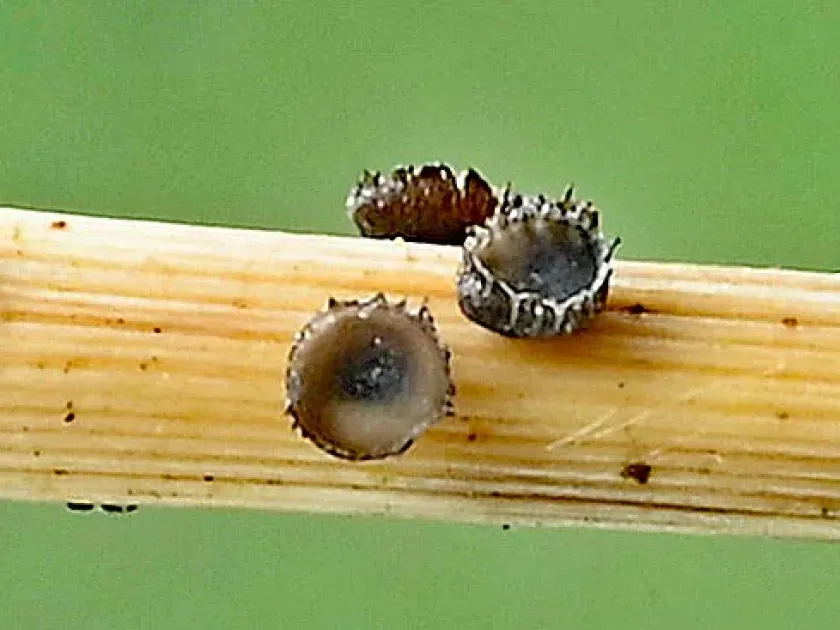
The pathogen belongs to the order Helotiales. Its biology involves the production of apothecia, which are fruiting bodies where spores develop. These spores are the primary source of infection during wet periods of the year.
The fungus survives in the soil or on plant debris in the form of mycelium. As the growing season begins, provided there is enough moisture, the spores are actively dispersed by wind and rain, infecting healthy plant tissues.
The pathogen utilizes enzymatic mechanisms to break down the cell walls of host plants. This allows it to quickly penetrate the intercellular spaces and absorb nutrients, gradually killing the host tissue.
Due to its ability to adapt quickly, this pathogen can survive in various climatic conditions, making it a significant threat to many agricultural lands where proper sanitary practices are not maintained.
Conditions for development
The development of heterosphaeriosis is directly dependent on moisture levels. Prolonged periods of rain or high air humidity create optimal conditions for spore germination and colonization of plant tissues.
Temperature ranges between 16 and 20 degrees Celsius are most favorable for the rapid spread of the pathogen. Deviations from these ranges slow down but do not stop the progression of the disease.
Poor agricultural practices, particularly high plant density, contribute to the accumulation of moisture in the lower canopy. This prevents foliage from drying quickly after rain, creating a favorable microclimate for fungal infection.
Large amounts of unplowed plant debris provide a reservoir for the pathogen to survive through the winter. The more infectious material remaining on the field, the higher the risk of epiphytotic outbreaks in the spring.
Plants under stress due to a lack of micronutrients or unfavorable weather conditions have lower resistance to pathogen invasion, making them primary hotspots for fungal reproduction.
Why it matters
The economic impact of heterosphaeriosis lies in a significant reduction in crop yields. Due to the premature death of leaves, the plant cannot form a full harvest, leading to decreased fruit or seed weight.
Stem damage weakens the plant as a whole, making it more vulnerable to lodging or secondary infections, which can lead to the death of individual plants or entire field sections.
The market quality of the harvest is significantly degraded, reducing the economic efficiency of production. Affected produce often has a shorter shelf life due to the development of secondary rots following the initial infection.
The persistent presence of the pathogen in fields forces farmers to spend additional resources on fungicide applications, increasing production costs and lowering farm profitability.
Environmental risks from frequent chemical usage also increase, as the accumulation of chemical residues can negatively impact soil microbiota.
Protection
The main strategy for control involves preventive measures. Primarily, crop rotation allows for the breaking of the pathogen's life cycle by replacing susceptible hosts with resistant crops.
Deep plowing with soil inversion allows for the burial of infected plant debris, where it mineralizes more quickly, losing its ability to support the fungus.
Applying balanced doses of fertilizers, especially potassium and phosphorus, strengthens plant immunity and promotes rapid tissue healing, which prevents the fungus from penetrating deeply.
Chemical protection involves spraying crops with systemic fungicides when the first signs of the disease appear. It is crucial to alternate between different chemical groups to prevent the development of fungal resistance.
- Use of disease-resistant varieties and hybrids.
- Timely control of pests that damage plant surface tissues.
- Maintenance of spatial isolation between fields of different crops.
- Regular phytosanitary monitoring of crops throughout the entire season.
Discussion
No discussions yet — be the first.