
Fir root rot
Heterobasidion abietinum
Description
Symptoms
Symptoms often appear gradually. Affected trees show needle chlorosis, thinning of the crown, and reduced annual growth as the root system loses its functionality.
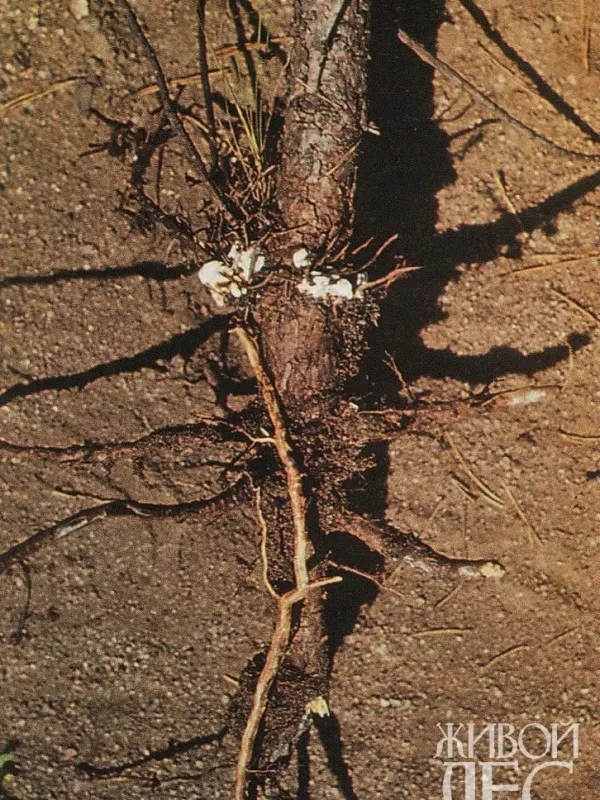
The most reliable sign of infection is the presence of the pathogen's fruiting bodies. These are typically found at the base of the trunk or on exposed roots, often concealed by debris.
Wood decay is a key diagnostic feature. Infected wood exhibits a characteristic mottled appearance and often smells of mushrooms or decay. The heartwood at the base of the trunk shows advanced signs of rotting.
Increased susceptibility to windthrow is common. As the roots rot away, the tree loses its anchorage in the soil, making it fall over even during moderate wind conditions.
Resin flow, or resinosis, can often be seen at the root collar as the tree attempts to defend itself against the fungal attack, though this is rarely sufficient to halt the infection.
Pathogen
The disease is caused by the fungus Heterobasidion abietinum, a member of the Bondarzewiaceae family. This pathogen is a serious threat to coniferous forests, specifically targeting fir trees.
It is classified as a root and butt rot fungus. The pathogen spreads primarily through airborne spores that land on fresh stump surfaces or through root-to-root contact between adjacent trees.
Once established, the mycelium invades the wood, causing a progressive decay known as white rot. The fungus breaks down lignin and cellulose, compromising the internal structure of the tree.
The fungus produces perennial fruiting bodies (conks) at the base of infected trees. These structures are the source of new spores, allowing the disease to persist in the forest for decades.
Because it is a facultative parasite, the fungus can survive in dead stumps and woody debris, acting as a permanent reservoir for infection in the surrounding ecosystem.
Conditions for development
High soil moisture and poor drainage significantly increase the rate of fungal spread. Wet conditions favor the growth of the mycelium throughout the root network.
Wounds on roots and the lower stem serve as infection courts. These wounds are frequently caused by harvesting equipment, wildlife, or human activity in the forest.
The presence of root grafts, where roots of neighboring trees fuse together, facilitates the rapid movement of the fungus from an infected tree to a healthy one.
Warm and humid weather conditions are optimal for the production and dispersal of spores. The pathogen is particularly active when fresh stumps are exposed to the air.
Low-diversity plantations are more prone to rapid infection because the pathogen can move efficiently between trees of the same susceptible species.
Why it matters
The primary economic impact is the loss of timber value due to internal rot. Infected wood is weakened and often becomes useless for high-quality structural applications.
The disease causes significant mortality in forest stands. Once a root rot center is established, it expands year by year, creating large gaps in the canopy.
Infected stands are more susceptible to secondary attacks by bark beetles, as the trees are already stressed and compromised by the root rot.
Environmental damage includes the disruption of soil stability and the loss of biodiversity within the forest ecosystem, requiring expensive restoration efforts.
The persistent nature of the fungus makes replanting on infected sites challenging, as young seedlings can become infected by the residual mycelium in the soil.
Protection
The most effective strategy is the prevention of wounds during silvicultural activities. Protecting the stems and root systems of healthy trees is paramount.
Treating fresh stumps with biological control agents, such as specific Phlebiopsis species, can outcompete Heterobasidion abietinum and prevent its establishment.
- Removing infected trees to reduce the inoculum load.
- Stump removal (stumping) in heavily infested areas to clear the soil.
- Planting a mix of tree species to break the network of susceptible root systems.
- Monitoring the forest during thinning operations to detect early signs of the rot.
Integrated forest management, focused on maintaining tree vigor and reducing soil compaction, helps build long-term resistance against this destructive pathogen.
Discussion
No discussions yet — be the first.