
Helminthosphaeria clavariarum
Helminthosphaeria clavariarum
Description
Symptoms
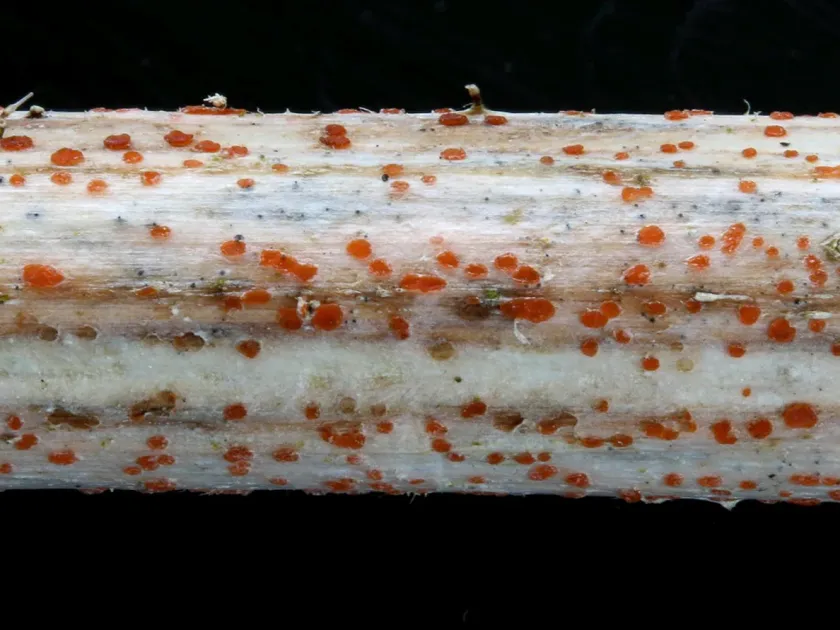
Helminthosphaeria clavariarum manifests through the formation of specific fruiting bodies on the surface of the infected substrate. Visually, this appears as small, dark, often point-like or club-shaped structures emerging through the tissues of the plant or the host fungus.
A primary sign of colonization is the appearance of a characteristic growth or black eruptions, which indicate the active reproduction of the pathogen. Affected areas may lose their natural pigmentation and structural integrity due to the metabolic activity of the fungus.
Unlike many other pathogens, this fungus often acts as a hyperparasite. It colonizes the fruiting bodies of other fungi (e.g., species of Clavaria), leading to their premature wilting, deformation, or complete tissue degradation.
Microscopic examination reveals perithecia—closed fruiting bodies characteristic of the class Sordariomycetes. These are rounded or slightly elongated, embedded within the host tissue, making visual identification possible only upon detailed inspection of the sample.
The progression of the disease is accompanied by the gradual necrosis of the affected zones. As the fungus ages, the color of these structures changes from grayish to coal-black, which is a diagnostic feature of the mature spores and perithecia of this species.
Pathogen
The pathogen is the fungus Helminthosphaeria clavariarum, belonging to the Ascomycota division. It is a highly specialized parasite whose biological cycle is inextricably linked to obtaining nutrition from other fungi or weakened organic residues.
This pathogen is characterized by the formation of black perithecia that develop directly inside the host tissue. Its life cycle includes sexual reproduction through ascospores, which are dispersed by wind or water droplets.
The fungus is categorized as a saprotrophic-parasitic organism. Under certain conditions, it can transition to active colonization, making it a threat to fungal communities within the ecosystem.
The taxonomy of this species requires accurate molecular genetic confirmation, as it can be visually confused with other members of the Sordariales order. The main mycological feature lies in the morphology of its asci and spores.
The high adaptability of this pathogen allows it to remain viable during adverse periods by forming dormant structures. This ensures the stability of the population in soil or plant debris over several seasons.
Conditions for development
Optimal development of Helminthosphaeria clavariarum requires high humidity and moderate temperatures. Ideal conditions are created during prolonged rainfall when the surfaces of plants or host fungi remain constantly wet.
The presence of free liquid water is a critical factor for the germination of ascospores. It is during these periods that outbreaks of infection are observed, as the pathogen can rapidly colonize available host tissues.
The fungus prefers shaded and cool areas where evaporation is slow. This is common in forest ecosystems, dense vegetation, or areas with poor ventilation, where the microclimate becomes favorable for mycoses.
The temperature optimum for mycelial growth is typically between 15 and 22 degrees Celsius. At temperatures above 30 degrees, the pathogen's growth significantly slows down or enters a resting phase.
Dispersal of spores occurs via air currents, insects, or direct contact of affected parts with healthy substrates. High density of host organisms significantly accelerates the epiphytotic spread of the fungus.
Why it matters
The primary harm lies in the suppression of growth and reproductive functions of the host organisms. If the hosts are beneficial fungal cultures or mycorrhizal fungi, it disrupts essential symbiotic relationships in the soil.
In an agricultural context, the infection leads to a loss of commercial value. Contamination results in rapid tissue spoilage, rendering the infected objects unsuitable for any further use.
The accumulation of the pathogen in the environment can reduce biological diversity in agroecosystems. The disappearance of beneficial fungal flora negatively impacts soil structure and nutrient availability for higher plants.
Indirect harm manifests as a decline in the overall immune resistance of the ecosystem. Affected areas become entry points for other, more aggressive fungal and bacterial infections.
Economic damage is associated with the necessity of conducting costly sanitary measures. In cases of outbreaks in greenhouses or specialized mushroom farms, losses can be significant due to the speed of infection spread.
Protection
A key method of protection is maintaining an optimal humidity regime. Preventing water stagnation and ensuring efficient ventilation in indoor facilities or fields significantly reduces the risk of an outbreak.
Sanitary cleaning of the area from infected plant residues and host fungal bodies allows for a radical reduction in the infection background. Collected material must be disposed of immediately or buried deeply.
- Implementation of crop rotation.
- Improvement of soil aeration and drainage.
- Management of nitrogen fertilizer levels.
- Application of fungicides when necessary.
- Regular phytosanitary monitoring.
The use of biological fungicides based on antagonistic fungi, such as Trichoderma, helps suppress the growth of Helminthosphaeria clavariarum in the soil. This is an environmentally friendly way to limit the pathogen population.
In critical situations, local application of systemic chemical fungicides is permissible. However, the choice of products must be based on regulations permitted for specific crops to avoid the accumulation of residues in the harvest.
Discussion
No discussions yet — be the first.