
Laurel wilt
Harringtonia lauricola
Description
Symptoms
Symptoms often manifest as sudden wilting of leaves, which quickly transition from healthy green to drooping, yellow, and finally brown or black, remaining attached to the branches.
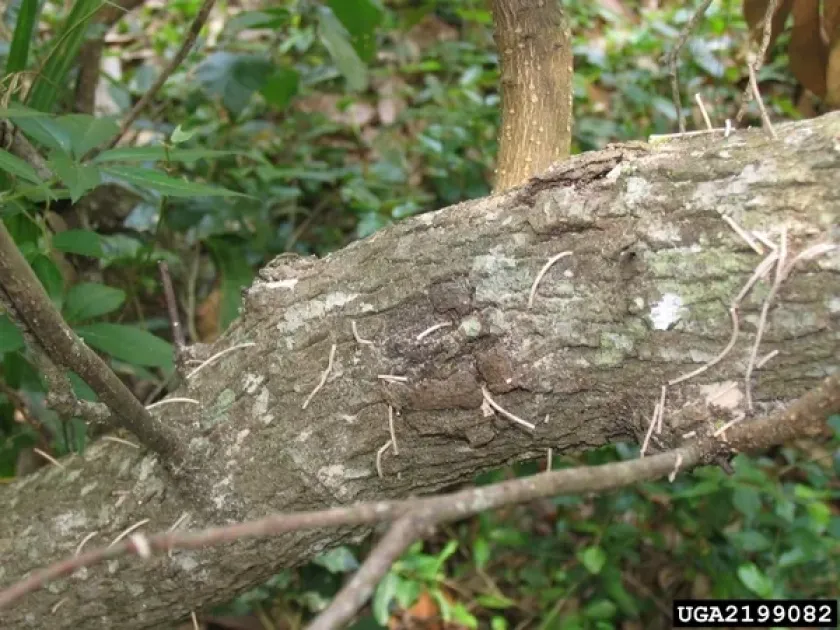
A closer inspection of the trunk or branches reveals small, round entry holes made by the ambrosia beetles, often accompanied by fine sawdust produced by the boring activity.
When the bark is peeled back, one can observe dark, discolored streaks in the sapwood, which are the direct result of the tree's defensive response to the fungal infection.
As the disease progresses, the entire canopy of an affected tree can turn brown within a few weeks, indicating severe systemic dysfunction.
Early identification is difficult because the visual symptoms often appear only after the fungus has already spread significantly through the tree's vascular system.
Pathogen
The disease is caused by the fungus Raffaelea lauricola, which is transmitted by the redbay ambrosia beetle (Xyleborus glabratus).
The beetle carries the fungal spores in specialized structures known as mycangia, allowing the fungus to hitchhike directly into the tree's vascular system during the beetle's boring process.
Once inside, the fungus colonizes the tree's xylem, producing a dense mycelium that physically obstructs the transport of water and nutrients throughout the tree.
The pathogen is highly specialized and relies entirely on the beetle vector to move from an infected host to a healthy one, creating a symbiotic cycle of destruction.
This vascular wilt disease leads to rapid systemic failure of the tree's internal water-conducting tissues, effectively starving the plant of moisture.
Conditions for development
Environmental conditions that favor the activity and dispersal of the ambrosia beetle are primary drivers for the spread of Laurel Wilt.
Warm temperatures encourage the beetle's flight and colonization of new host trees, leading to increased disease incidence during the warmer months.
Human activity is the most significant factor in long-distance spread, primarily through the movement of infested firewood, logs, and wood chips.
Trees already suffering from environmental stress, such as drought or root damage, are more susceptible to beetle attacks and, consequently, are more likely to succumb to the infection.
The availability of host plants, such as redbay or avocado, within the beetle's range facilitates the rapid establishment of new outbreaks.
Why it matters
Laurel Wilt poses a catastrophic threat to various species in the Lauraceae family, most notably causing massive losses in commercial avocado orchards.
The damage is irreversible; once a tree is infected with Raffaelea lauricola, there is currently no practical method to clear the pathogen from the vascular system.
The loss of trees is not only an agricultural concern but also an ecological one, as the death of native host species disrupts forest ecosystems and wildlife habitats.
The economic impact on the avocado industry is profound, leading to significant yield reductions, the loss of mature orchards, and increased management costs for growers.
Because the disease kills trees so rapidly, it leaves little time for intervention, making it one of the most destructive tree diseases in impacted regions.
Protection
Strict regulatory measures regarding the transport of woody debris and timber are essential to prevent the spread of the beetle-fungus complex.
Sanitation practices, such as the immediate removal and proper destruction of infected trees, are critical to reducing the local inoculum load.
Monitoring programs utilizing pheromone-based lures and traps are employed to track beetle populations and inform timely management decisions.
- Application of systemic fungicides as a preventative measure to protect high-value specimen trees.
- Trunk injection techniques with specialized equipment to deliver fungicides directly into the tree's circulatory system.
- Regular surveys of orchards and landscapes to identify and remove infested trees before they become major sources of further spread.
Integrated pest management strategies are crucial for protecting sensitive areas, focusing on a combination of quarantine, monitoring, and sanitation.
Discussion
No discussions yet — be the first.