
Gymnotelium blasdaleanum
Gymnotelium blasdaleanum
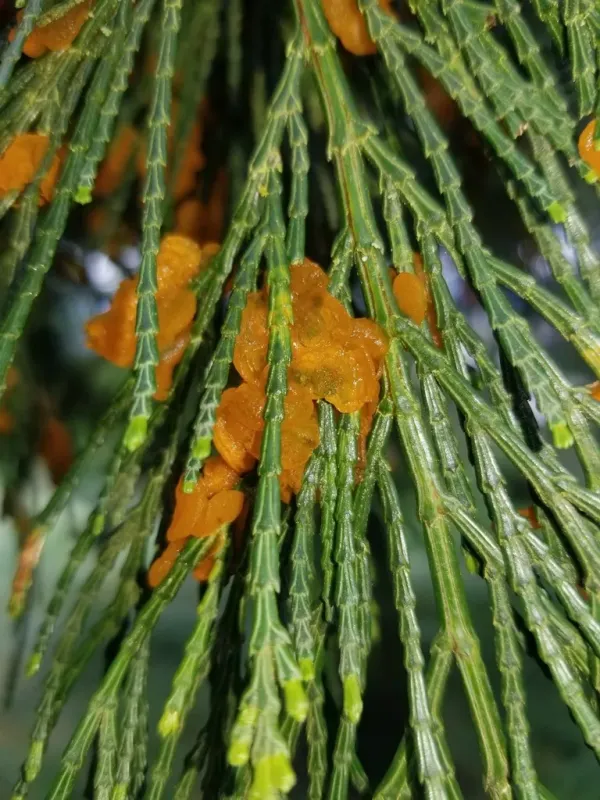
Description
Symptoms
The most prominent sign is the appearance of bright orange or yellow pustules on leaves, petioles, and young green shoots.
Infected areas often show signs of deformation, such as leaf curling, twisting of stems, and stunted development of new growth.
As the infection progresses, affected tissues develop necrotic spots that turn dark brown or black, leading to premature leaf drop.
Identification is easiest when observing the underside of leaves, where the spore-producing structures are most densely clustered.
Severe infections result in a sickly appearance of the plant, characterized by thinning foliage and irregular growth patterns.
Pathogen
The disease is caused by the specialized rust fungus Gymnotelium blasdaleanum, which belongs to the Basidiomycota phylum.
This pathogen follows a monoecious lifecycle, meaning it completes all developmental stages on a single host plant species.
It primarily affects plants within the Rosaceae family, specifically targeting members of the Amelanchier genus (serviceberry).
The fungus acts as an obligate parasite, penetrating plant tissues to extract nutrients, which disrupts the host's physiological functions.
Reproduction occurs through spores that are dispersed by wind and water splashes to infect healthy neighboring tissues or new plants.
Conditions for development
Gymnotelium blasdaleanum thrives in conditions characterized by high atmospheric humidity and moderate ambient temperatures.
The presence of free moisture, such as morning dew, light rain, or overhead irrigation, is essential for successful spore germination.
Poor air circulation, often caused by overly dense planting or lack of pruning, creates a humid microclimate favored by the fungus.
Wind serves as the primary vector for long-distance spore dispersal, making localized outbreaks difficult to contain.
Plants under physiological stress, whether from drought, poor soil nutrition, or mechanical injury, are significantly more susceptible to infection.
Why it matters
The primary impact of the disease is a drastic reduction in photosynthetic capacity due to the loss of functional leaf surface area.
Premature defoliation drains the plant's energy reserves, reducing its ability to survive winter or recover from other environmental stressors.
The aesthetic value of ornamental specimens is heavily compromised by the characteristic distortions and discolored lesions on the foliage.
Chronic infection stunts the overall growth rate, which can lead to the decline of young trees if the disease is left unmanaged.
The presence of the fungus weakens the plant's natural defenses, making it more vulnerable to secondary invaders, including other pests and diseases.
Protection
Sanitation is a critical control measure; all infected plant material should be pruned and removed to minimize the local inoculum load.
Implementing proper cultural practices, such as spacing plants adequately to ensure good airflow, is essential for disease prevention.
Chemical control can be achieved through the application of copper-based fungicides or systemic products during the early stages of the growing season.
Strengthening the plant's health through balanced fertilization and proper hydration helps increase its natural resistance to fungal pathogens.
Regular inspections throughout the growing season allow for the early detection and immediate treatment of new infections before they spread.
Discussion
No discussions yet — be the first.