
Juniper and rowan rust
Gymnosporangium torminali-juniperini
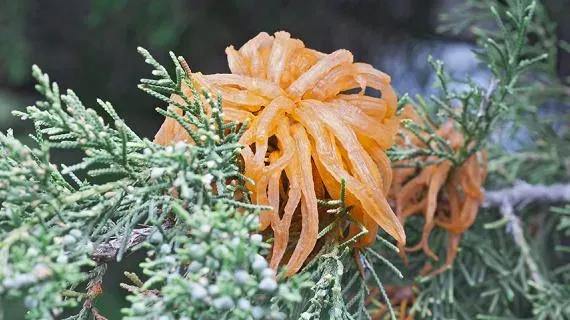
Description
Symptoms
On juniper, the disease manifests as branch swellings, woody galls, or localized deformations of the stems and trunk, often appearing as thickened, distorted areas.
During damp spring weather, bright orange to brown gelatinous protrusions emerge from the infected juniper tissues, which significantly expand in size when exposed to moisture.
On rowan leaves, the first signs are small, yellow to orange-colored spots on the upper leaf surface, which gradually increase in diameter as the infection progresses.
On the underside of the rowan leaves, distinct cone-like structures called aecia develop, releasing spores that are easily carried by the wind to reinfect juniper trees nearby.
Heavily infected rowan trees exhibit premature leaf yellowing and severe defoliation, which negatively impacts the tree's vigor and overall aesthetic quality in the landscape.
Pathogen
The causal agent of this disease is the heteroecious rust fungus Gymnosporangium torminali-juniperini. This pathogen requires two different host species to complete its complex biological life cycle.
The primary host is the juniper, where the fungus overwinters as mycelium within the branches. The secondary host is the rowan tree, which serves as the site for summer spore production.
Infection is systemic, as the fungus penetrates the cambium of the juniper, making it difficult to eradicate with simple contact fungicides after the initial colonization occurs.
The fungus can persist in the woody tissues of the juniper for several years, ensuring a continuous supply of inoculum for nearby susceptible hosts during the spring and summer months.
The cycle relies on the production of gelatinous spore-producing bodies that emerge from the juniper after periods of spring rainfall, facilitating the spread of wind-borne spores to the rowan foliage.
Conditions for development
Disease development is highly dependent on humidity levels, with frequent spring rains and persistent fog being the most critical environmental factors for the fungus.
Optimal temperatures for spore germination range between 15 and 22 degrees Celsius, creating a favorable window for infection during the late spring and early summer periods.
The proximity of juniper and rowan trees within the same microclimate acts as a primary driver for the disease cycle, as it provides a constant reservoir of spores for both hosts.
Dense canopies and poor air circulation within the garden environment allow moisture to stay on the foliage and branches longer, facilitating the penetration of fungal germ tubes.
Lack of proper garden sanitation, such as leaving infected plant debris on the ground, provides an additional site for the survival of fungal spores throughout the growing season.
Why it matters
Rust infection causes significant aesthetic damage, rendering ornamental plants unsuitable for landscaping due to the visible galls, branch distortions, and defoliation.
Chronic infection weakens both juniper and rowan plants by impairing photosynthetic processes and nutrient transport, leading to reduced growth rates and poor vitality.
The disease can lead to the eventual death of individual branches or even the entire plant if the infection reaches the main trunk or if the tree is subjected to additional environmental stressors.
Infected trees become more susceptible to secondary pests and opportunistic pathogens, which further compounds the health decline of the woody plants in the garden.
The need for repeated chemical interventions and the loss of mature plants result in significant economic costs for both home gardeners and commercial landscape managers.
Protection
The most effective strategy is to maintain a distance of at least 500 meters between juniper and rowan plantings to break the cycle of spore transmission.
Sanitary pruning is essential: all infected branches exhibiting galls or swellings must be removed promptly and destroyed to reduce the local inoculum pressure.
- Apply copper-based fungicides in early spring during the bud-break stage to protect new growth.
- Utilize systemic fungicides (triazole class) at intervals during periods of high humidity.
- Ensure adequate spacing between plants to improve airflow and reduce leaf moisture duration.
- Maintain tree health through proper fertilization to boost natural resistance mechanisms.
- Monitor the garden regularly to identify and treat early stages of infection before the spores can spread.
Discussion
No discussions yet — be the first.