
Pear rust
Gymnosporangium sabinae
Description
Symptoms
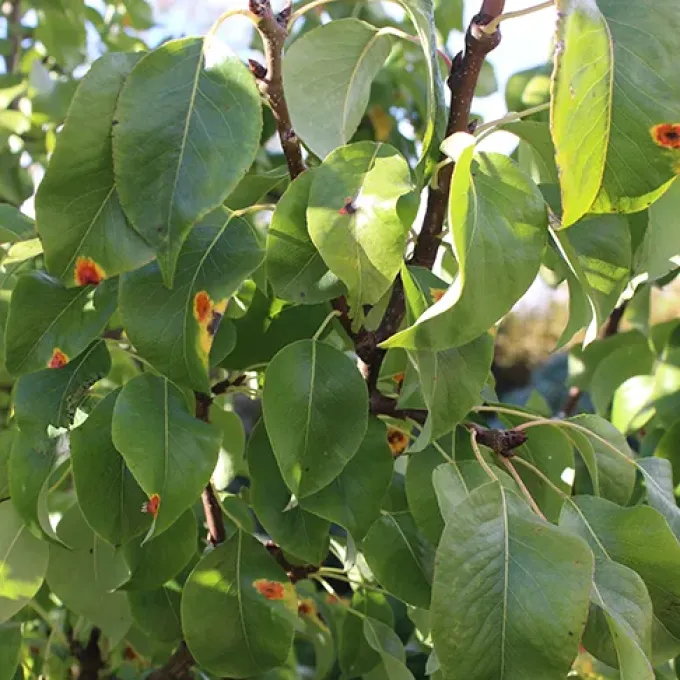
Early symptoms appear on the upper leaf surface as small, bright yellow or orange spots that gradually turn reddish-brown. Over time, these spots may develop a dark, ring-like margin.
As the infection progresses, distinct, cone-shaped projections known as aecia develop on the undersides of the leaves, directly beneath the orange spots on the top side.
In severe cases, the fungus affects the fruit and young shoots. This can cause deformation, stunted growth, and in some instances, the development of similar rust-like structures on the fruit surface.
Premature leaf drop is a hallmark of significant infection. Losing the foliage mid-season severely limits the tree's ability to produce energy, impacting overall health and future fruit yield.
Gardeners can easily identify the disease by the vibrant orange discoloration of the leaves, which is distinct from other common fungal leaf spots that typically look brown or grey.
Pathogen
Pear rust is caused by the fungus Gymnosporangium sabinae, a basidiomycete that requires two different hosts to complete its complex life cycle. This pathogen alternates between pear trees and juniper species.
The fungus overwinters as mycelium within the branches of junipers, particularly the Savin juniper. During the spring, it produces gelatinous, orange-colored spore masses on the juniper host.
These spores are then wind-dispersed to nearby pear trees, where they infect leaves, fruit, and twigs. The infection process is highly dependent on environmental moisture levels.
On the pear host, the fungus develops distinct structures called aecia on the underside of leaves. By late summer, these structures release spores that travel back to juniper hosts to re-infect them.
This heteroecious nature makes the disease notoriously difficult to eradicate if infected juniper trees are present within several hundred meters of a pear orchard.
Conditions for development
The development of pear rust is heavily favored by warm, humid weather during the spring months. Rain and high humidity are critical for the dispersal and germination of fungal spores.
Optimal temperatures for infection typically range between 15°C and 20°C. Prolonged periods of moisture on the leaves facilitate the rapid penetration of the fungus into the plant tissue.
Proximity to juniper trees is the most significant environmental risk factor. Without the presence of the alternate host, the disease cycle would be interrupted, significantly reducing the impact on pear trees.
Densely planted orchards with poor airflow create a localized microclimate with higher humidity, which is an ideal environment for the proliferation of Gymnosporangium sabinae.
Stressed trees due to drought, nutritional deficiencies, or poor management are generally more susceptible to colonization by the pathogen compared to well-maintained, healthy trees.
Why it matters
Pear rust causes significant economic damage to fruit production. The destruction of leaf tissue reduces photosynthetic capacity, leading to smaller, lower-quality fruits with poor taste profiles.
The premature loss of leaves significantly reduces the tree's winter hardiness. Trees that lose their foliage early are more likely to suffer from winter injury or cold damage in subsequent months.
Structural damage can occur when the fungus attacks young twigs, causing them to swell and crack. This weakens the branches, making them more prone to breakage under the weight of a crop.
The overall vigor of the tree declines as it uses excessive energy to cope with the infection. Over time, this leads to a shorter lifespan and reduced productivity, potentially forcing the removal of the tree.
In heavy infestation years, the cumulative stress on the tree can render it vulnerable to secondary pests and opportunistic pathogens, further compounding the damage to the orchard.
Protection
The primary control strategy involves eliminating the source of infection. Removing nearby juniper trees is the most effective way to prevent the disease from establishing in the orchard.
If removal is not possible, implement a strict fungicide spray program. Treat the trees with copper-based products early in the spring, followed by systemic fungicides during the active growth period.
Sanitation is crucial. Prune out all infected twigs and branches, ensuring that you cut well into the healthy tissue to remove all mycelium. Dispose of all infected material by burning or burying it deep.
Always sanitize pruning tools with alcohol or a bleach solution between cuts to prevent spreading the fungal spores to healthy parts of the tree or other plants.
- Maintain a buffer zone of at least 500 meters from junipers.
- Select resistant pear varieties when planting new orchards.
- Boost tree immunity through balanced fertilization and correct irrigation.
- Monitor the orchard regularly, especially during wet springs, for early detection.
Discussion
No discussions yet — be the first.