
Oriental pear rust
Gymnosporangium orientale
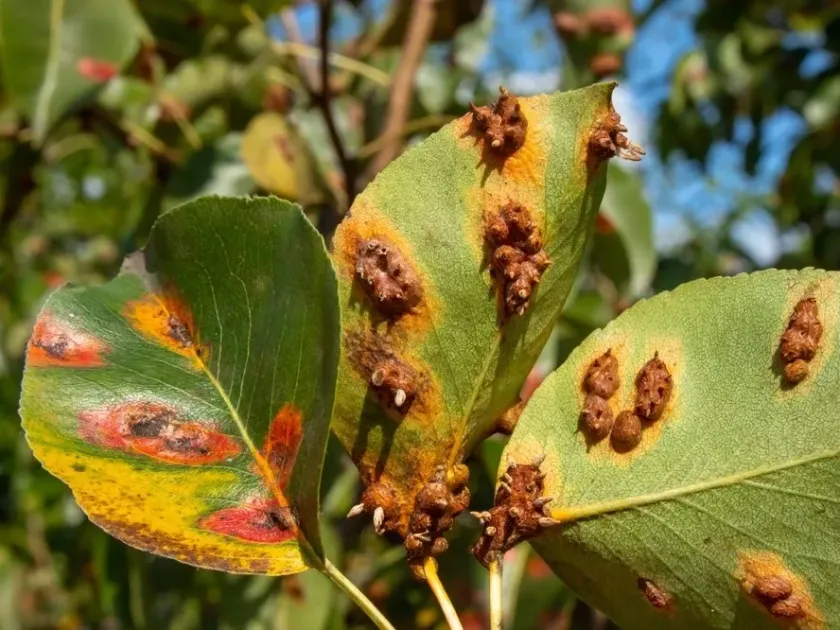
Description
Symptoms
The initial signs on pear leaves appear as small, chlorotic spots that gradually develop into distinctive orange-red lesions.
As the infection progresses, black spots known as spermogonia appear on the upper surface of the affected leaf tissues.
On the underside of the leaves, cone-shaped structures called aecia develop, releasing masses of fungal spores into the environment.
Severe infections can cause the leaves to thicken, curl, and eventually drop prematurely, significantly impacting the tree's health.
Infected juniper hosts often exhibit swollen, woody galls or horn-shaped growths that become gelatinous during humid, rainy weather conditions.
Pathogen
The causal agent of this disease is the basidiomycete fungus Gymnosporangium orientale, which is a highly specialized plant pathogen.
This fungus exhibits heteroecious behavior, meaning its life cycle requires two distinct hosts to complete its complex biological development.
The primary host for the pathogen is typically the juniper tree, specifically various species of the Juniperus genus, where it overwinters.
The secondary host is the pear tree, where the fungus causes significant physiological damage during the active growing season.
Understanding the spore dispersal mechanisms of Gymnosporangium orientale is essential for predicting disease outbreaks in commercial and private orchards.
Conditions for development
The development and spread of the disease are highly dependent on the presence of both pear and juniper hosts in close proximity.
High humidity, frequent spring rains, and moderate temperatures are the most critical factors favoring the germination of fungal spores.
Poor orchard sanitation and high-density planting exacerbate the risk of infection by limiting airflow and keeping leaf surfaces wet for longer periods.
The timing of spore release coincides with the early development stages of pear leaves and blossoms, making this a vulnerable period for infection.
Environmental conditions play a decisive role in the annual intensity of the rust outbreak, with wet springs usually leading to more severe cases.
Why it matters
Oriental pear rust causes a significant reduction in photosynthetic activity, which impairs the tree's overall growth and development.
Defoliation caused by the disease leads to weakened trees that are less capable of accumulating nutrients for the following growing season.
The infection of fruit leads to deformation and rotting, making the harvest entirely unsuitable for market or consumption.
Persistent attacks on woody parts of the pear tree can cause cankers and general dieback, eventually shortening the tree's lifespan.
Economic impact is high due to both direct loss of crop quantity and the increased cost of necessary protective treatments throughout the year.
Protection
The most effective strategy for long-term management is to eliminate the source of inoculum by removing junipers located near the pear trees.
Pruning is a vital practice, which involves the removal and destruction of all infected plant materials to lower the local spore density.
Chemical control programs should focus on applying systemic fungicides, particularly those containing triazoles or strobilurins, during critical infection windows.
- Apply fungicides before flowering begins in the spring.
- Continue treatments immediately after the petal fall stage.
- Ensure thorough coverage of both sides of the leaves during spraying.
It is recommended to implement an integrated pest management approach that combines cultural practices with targeted chemical applications.
Discussion
No discussions yet — be the first.