
Juniper rust
Gymnosporangium monticola
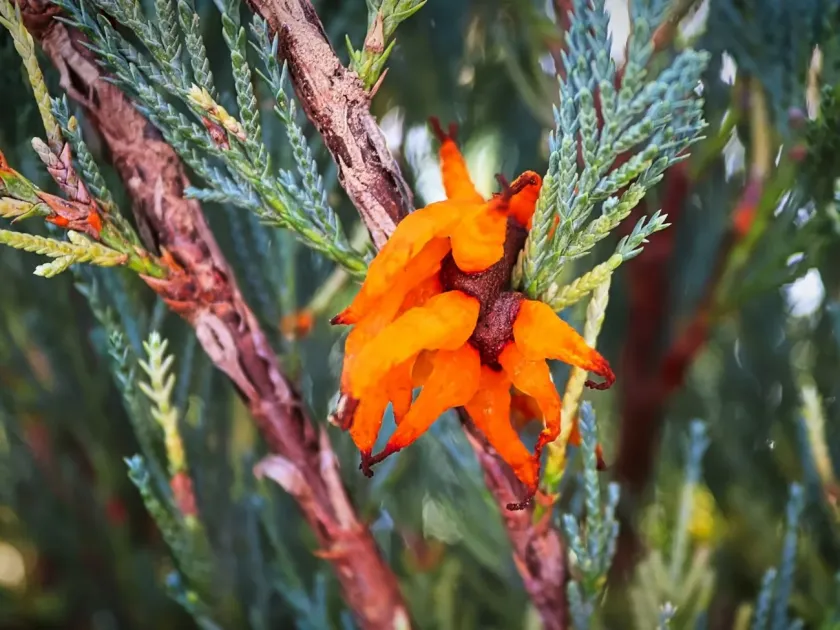
Description
Symptoms
The most visible symptoms are galls, swellings, or cankers on the stems and branches. The bark often cracks open, revealing brown or orange tissue underneath.
During periods of high moisture, particularly in spring, bright orange or jelly-like spore masses emerge from the galls. These structures are the primary indicators of active infection.
The foliage may become discolored, turning yellow or light brown as the branch loses its vigor. Needle drop is common in areas surrounding the infection site.
Structural damage is evident as the affected branches become distorted or curved. In severe cases, the terminals of the branches will die back completely.
- Characteristic orange jelly-like masses.
- Swollen branches with cracked, rough bark.
- Premature needle yellowing and loss.
Pathogen
The disease is caused by the rust fungus Gymnosporangium monticola. It is a heteroecious pathogen, meaning it requires two different host plant species to complete its complex life cycle.
Juniper acts as the primary host where the fungus overwinters within the branches and stems. The mycelium remains dormant in the woody tissues until favorable conditions arrive.
The fungus produces spores that can travel long distances via wind currents. This mobility makes it a persistent threat to landscapes containing susceptible juniper varieties.
Once established, the pathogen grows deep into the cambium layer. This internal colonization makes it difficult to eradicate with simple contact fungicides alone.
The biological cycle is tightly linked to seasonal changes. Understanding these phases is crucial for timing effective management interventions throughout the year.
Conditions for development
High humidity and mild temperatures are the primary catalysts for infection. Spores require moisture to germinate and penetrate the host tissue successfully.
Rainy spring seasons are particularly dangerous for juniper plantings. Water droplets facilitate the dispersal of spores from the galls to new parts of the plant.
Overcrowded landscapes with poor air circulation create the perfect microclimate for the fungus to thrive. Stagnant air prevents foliage from drying out after rain.
Plants under environmental stress or those lacking proper fertilization are more prone to infection. A compromised immune system makes the plant vulnerable.
The proximity of alternative hosts, such as various Rosaceae species, ensures a constant supply of inoculum. This interaction maintains the disease pressure.
Why it matters
The fungus disrupts the vascular system, preventing the proper transport of nutrients and water. This leads to gradual decline and stunted growth.
Severe infestations can lead to the death of major limbs or the entire shrub. The loss of foliage significantly reduces the plant's aesthetic value.
The presence of necrotic lesions creates entry points for secondary pathogens. This often leads to compounded health issues for the juniper.
Management costs can be substantial, involving professional pruning and repeated chemical applications. Often, infected plants may need to be removed entirely.
If not contained, the rust can spread to adjacent landscape plants, causing widespread ecological damage and requiring intensive remediation efforts.
Protection
Sanitation is the first line of defense. All infected branches must be pruned out at least several inches below the visible galls and destroyed.
Preventative fungicide sprays applied during the spring are effective in protecting new growth. Choosing the right product and timing is essential for control.
Spatial separation between junipers and susceptible Rosaceae hosts is the best long-term strategy. This prevents the life cycle of the fungus from completing.
Maintaining plant health through regular fertilization and proper watering builds resilience. Healthy plants are better equipped to withstand fungal pressure.
Consistent monitoring of the garden is vital. Early detection allows for immediate action, preventing the spread of spores to healthy plant tissues.
Discussion
No discussions yet — be the first.