
Juniper rust
Gymnosporangium minus
Description
Pathogen
Juniper rust is caused by the heteroecious rust fungus Gymnosporangium minus (and related species). This pathogen requires two different host plant species to complete its complex biological life cycle.
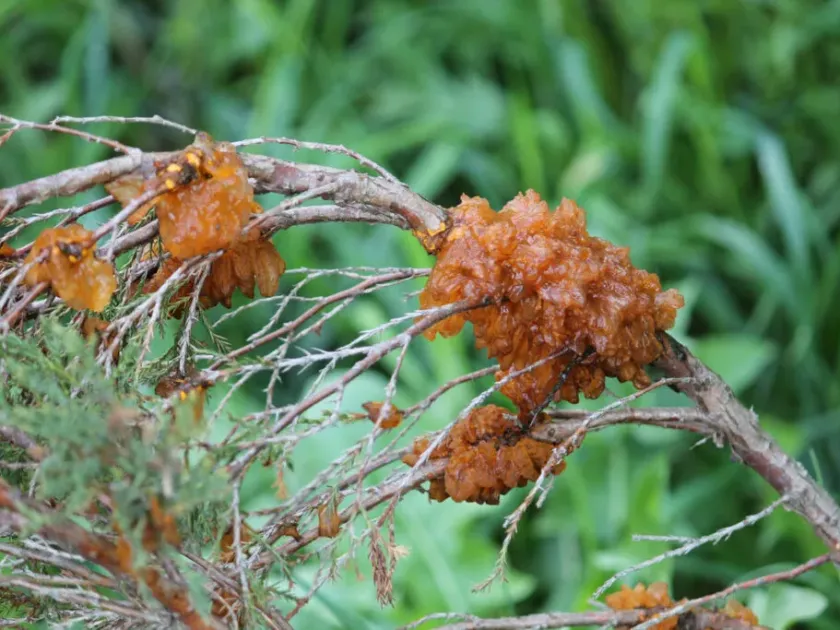
The fungus overwinters in the tissue of juniper branches and stems, forming mycelium deep within the wood and bark. In spring, it produces teliospores that mature into striking orange spore masses.
The second stage of its life cycle occurs on plants in the Rosaceae family, primarily pear trees. Basidiospores are wind-borne from the juniper to the pear leaves, where they cause leaf spot infections.
Because the fungus is a perennial parasite on juniper, it stays within the plant indefinitely unless physically removed. This creates a persistent reservoir for the infection to return every growing season.
The fungus is highly specialized, and its ability to switch between hosts is the key reason why it is so difficult to eradicate from gardens where both host types are present.
##signs##The most distinctive symptom of juniper rust is the formation of spindle-shaped galls or swellings on the twigs and branches. The bark at these sites often cracks and may show signs of tissue necrosis.
During damp spring weather, these galls erupt with bright orange to brown, gelatinous spore horns. These structures are the fruiting bodies of the fungus and are highly visible during the peak of the infection.
Branches distal to the infection site may begin to show chlorosis or needles turning brown. Over time, these branches lose their needles and eventually die, leading to thinning of the canopy.
Severe infestations cause distortion of the shoot growth and overall deformation of the juniper's natural shape. The woody tissue becomes brittle, making the branches susceptible to wind breakage.
In advanced cases, if the infection is located on the main stem or trunk, the entire plant may slowly decline. The presence of these lesions is a clear indicator that the tree is serving as an active host for the fungus.
Conditions for development
High relative humidity and consistent rainfall in the spring are essential for the production of spore masses. Without moisture, the teliospores remain dormant and cannot release the infective basidiospores.
The ideal temperature range for fungal development is between +15°C and +22°C. While spores can survive in various conditions, this specific range triggers the most rapid and aggressive spread.
Poor air circulation within the canopy of dense juniper bushes provides a perfect microclimate for infection. Moisture trapped in thick foliage allows the fungus to colonize the bark more effectively.
Spore dissemination is carried out primarily by wind currents. These spores are capable of traveling long distances, meaning your garden can become infected even if the source juniper is several kilometers away.
Proximity to susceptible pear trees significantly elevates the risk of widespread disease. Gardens lacking in sanitation or regular inspection are far more likely to experience repeat cycles of the disease.
Why it matters
The aesthetic damage to ornamental junipers is significant, as the disease causes unsightly galls and dieback. This ruins the intended look of the plant in any landscape design.
Physiologically, the disease acts as a drain on the plant's resources. By interfering with the flow of nutrients and water through the branches, the fungus eventually causes the death of the infected parts.
In agricultural settings, the main harm is the transmission of the disease to pear trees. This leads to premature leaf drop, which stunts fruit growth and severely reduces the quality and quantity of the harvest.
Managing the disease requires frequent application of fungicides, which adds to maintenance costs. Constant chemical treatment also increases the environmental footprint on the garden soil.
If left unmanaged, the cumulative damage can lead to the death of both the junipers and the associated fruit trees, requiring costly removal and replacement of mature plants.
Protection
The most effective strategy is to avoid planting junipers and pear trees within the same vicinity. A buffer zone of at least 500 meters is recommended to reduce the risk of cross-infection.
Regular sanitation is crucial. Homeowners should inspect their junipers in early spring and prune out all branches showing signs of swelling or galls, disposing of the material by burning to destroy the spores.
Preventative fungicide sprays, particularly those containing copper or systemic triazoles, should be applied in the spring before the gelatinous spore horns emerge.
Maintaining good plant vigor through proper watering, soil health, and balanced nutrition helps the juniper defend itself against fungal pathogens more effectively.
Continuous monitoring is essential. If a specific cultivar of juniper shows high susceptibility year after year, it is often best to replace it with a more rust-resistant species.
Discussion
No discussions yet — be the first.