
Juniper rust
Gymnosporangium juniperinum
Description
Symptoms
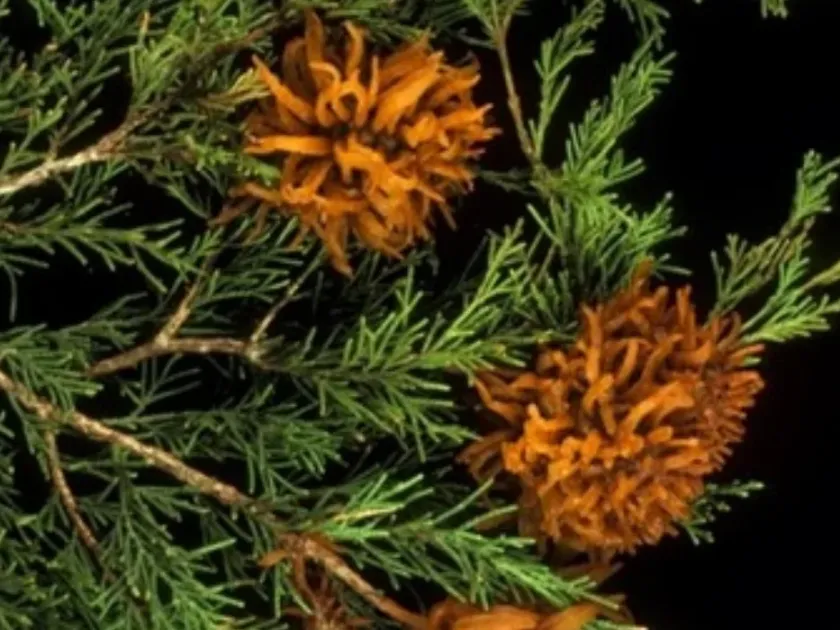
The most recognizable symptom on junipers is the formation of gall-like swellings or spindle-shaped deformations on the branches. These swellings are often bark-covered and hard to notice until they sporulate.
In wet spring weather, these galls swell and erupt, producing bright orange, jelly-like gelatinous masses. This is the characteristic sporulation stage of the fungus visible to the naked eye.
As the infection progresses, needles in the affected areas may turn yellow or brown and eventually drop off. This leads to sparse foliage and a loss of the plant's natural ornamental beauty.
Chronic infections lead to deep cracks in the bark, causing branches to die back. The structural integrity of the juniper can be compromised, leading to asymmetrical growth and branch breakage.
If the infection spreads to pear trees, distinct reddish-orange spots appear on the upper surface of leaves, often surrounded by a light yellow halo. Eventually, spore-bearing structures develop on the underside of these leaves.
Pathogen
Juniper rust is caused by the pathogenic fungus Gymnosporangium juniperinum, a specialized obligate parasite. This fungus has a complex life cycle that requires two different hosts to complete its reproduction stages.
The primary host is the juniper plant, where the fungus overwinters as mycelium within the wood and needles. The alternate hosts are typically rosaceous plants, such as pear, apple, or mountain ash trees.
During the spring, the fungus develops distinct fruiting structures on the juniper branches. These structures release spores that are carried by wind to infect the leaves and fruits of the secondary host plants.
The fungal mycelium can persist inside the juniper host for many years, causing perennial damage. This systematic infection makes the plant a constant reservoir for new outbreaks each season.
Understanding the life cycle is crucial for effective management, as breaking the cycle by removing one of the hosts can significantly reduce the pressure of the disease in a garden environment.
Conditions for development
High humidity and moderate temperatures during spring are the primary drivers for the development and spread of juniper rust. Spore germination and infection are highly dependent on moisture.
Rainy weather combined with temperatures ranging from 15°C to 22°C creates the optimal environment for the fungus to release and spread its spores to new host plants.
Poor air circulation within the plant canopy significantly increases the risk of infection. Dense plantings that stay wet for long periods after rainfall provide perfect conditions for the pathogen.
Proximity between junipers and orchard trees is the most critical factor for the disease's propagation. The closer these two hosts are, the higher the likelihood of a severe, recurring infection cycle.
Plants under stress from poor soil fertility or previous mechanical damage to the bark are much more susceptible to successful colonization by the fungal mycelium.
Why it matters
Juniper rust severely damages the aesthetic value of landscape plantings. Heavy infestations result in branch dieback and an overall sickly appearance of the juniper shrub.
In the orchard, the disease causes significant economic losses. Infected pear or apple trees suffer from reduced photosynthesis, leading to early defoliation and poor fruit quality.
The deformed and small fruits resulting from the infection are often unsalable, and the overall yield of the orchard can be drastically reduced during heavy rust years.
Constant disease pressure forces gardeners to increase their use of chemical fungicides, which raises maintenance costs and impacts the local garden ecosystem.
Weakened trees become more prone to secondary invaders, including wood-boring insects and other opportunistic fungal pathogens that thrive on compromised plants.
Protection
The most effective strategy is to avoid planting junipers near orchards. A buffer zone of several hundred meters is recommended to prevent the life cycle from completing.
Pruning is essential. Any branches displaying signs of galls or swelling should be removed promptly. These clippings must be destroyed or disposed of away from the site to stop spore spread.
Chemical control involves applying copper-based fungicides or systemic triazoles during the early spring before bud break and throughout the susceptible vegetative period.
Improving the site's microclimate by thinning the canopy and ensuring proper spacing between plants will help leaves dry faster, reducing the success rate of spore germination.
- Inspect plants regularly during early spring for galls.
- Apply preventive fungicide sprays as recommended by local agricultural guidelines.
- Promote plant health through balanced fertilization and proper irrigation.
- Select rust-resistant juniper cultivars when planning new landscapes.
- Dispose of infected plant material by burning or deep burying.
Discussion
No discussions yet — be the first.