
Juniper and Rosaceae rust
Gymnosporangium gracile
Description
Symptoms
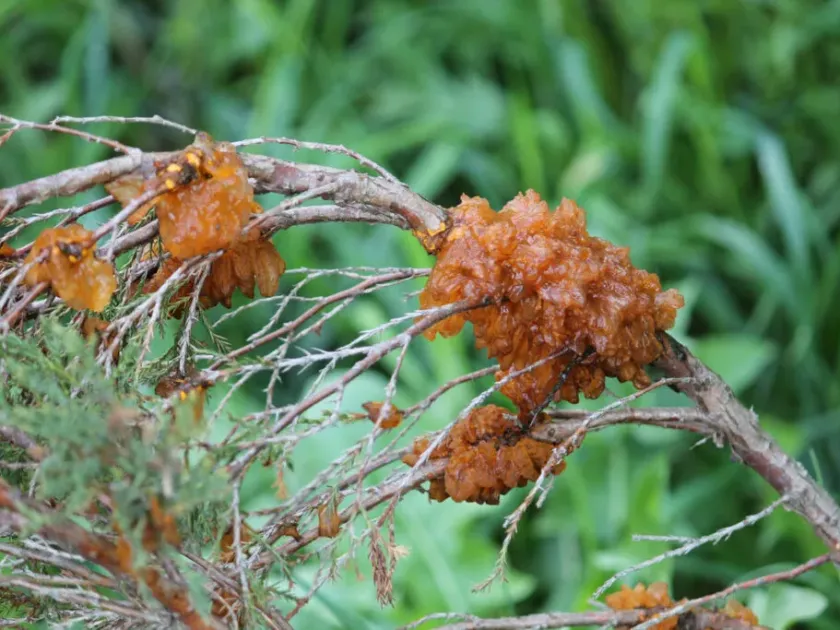
On juniper plants, symptoms appear as spindle-shaped galls or swellings on stems and twigs. During wet weather, these swellings produce distinctive, jelly-like orange protrusions, which eventually harden into dry, cracked lesions.
Infected Rosaceae leaves exhibit bright yellow or orange circular spots. These spots gradually develop small black dots in the center, known as spermogonia, which serve as an early diagnostic feature of the rust infection.
The underside of leaves on infected fruit trees develops cone-shaped structures called aecia. These structures release thousands of tiny spores that are easily carried by the wind to neighboring plants.
Severe infections result in premature yellowing and dropping of leaves, significantly reducing the tree's photosynthetic capacity. This leads to diminished vigor and poorer performance in the following growing season.
Fruits infected by the fungus often become misshapen, bumpy, and discolored. These fruits are prone to secondary rot and have poor storage quality, making them unsuitable for harvest or consumption.
Pathogen
The disease is caused by the specialized basidiomycete fungus Gymnosporangium gracile. This pathogen is heteroecious, meaning it requires two unrelated host plants to complete its complex biological life cycle.
The fungus overwinters primarily on juniper species, residing in the host tissues as mycelium. During early spring, the pathogen develops teliospores that mature and disperse through air currents, seeking out suitable hosts within the Rosaceae family.
The second stage of development occurs on members of the Rosaceae family, such as pears, apples, hawthorns, and quinces. Once these plants are infected, the fungus produces aeciospores which can then re-infect juniper plants, completing the cycle.
The mycelium grows systematically within the plant tissues, obstructing vascular pathways and disrupting normal nutrient transport. This physiological interference leads to progressive weakening and stunted growth of the host.
On junipers, the fungus induces characteristic gall-like swelling on branches. Under high humidity, these areas erupt into bright orange, gelatinous spore masses, which are a hallmark of the active infection phase.
Conditions for development
The development of rust is heavily dependent on moisture and temperature. High relative humidity during the spring season is the most critical factor for spore germination and successful host infection.
Frequent rainfall and persistent morning fog facilitate the rapid spread of spores. These wet conditions allow the fungus to thrive and migrate from juniper reservoirs to nearby fruit orchards over significant distances.
Proximity is a major risk factor; planting junipers in close proximity to susceptible fruit trees creates a perpetual cycle of infection. Gardens that combine these species are at the highest risk for severe disease outbreaks.
Poor canopy ventilation due to lack of pruning creates a microclimate trapped within the branches, characterized by high humidity. This environment is perfect for fungal growth and speeds up the disease progression.
Temperatures ranging from 15°C to 25°C are ideal for the rapid growth of the mycelium. Under these conditions, the incubation period is shortened, and visible symptoms may appear within just two weeks of initial contact.
Why it matters
The economic impact of this disease is significant, as it leads to substantial yield losses in orchards. Reduced foliage leads to poor fruit development, low sugar content, and overall loss of marketability.
On junipers, the pathogen causes branch dieback and, if the infection reaches the main trunk, can lead to the gradual death of the entire plant, which is particularly devastating for ornamental landscapes.
The loss of leaves prematurely interferes with nutrient storage, leaving trees more vulnerable to cold weather damage during winter months. This decreases the overall longevity of the orchard or garden.
The open wounds and lesions left by the fungus act as entry points for various bacterial pathogens and other secondary fungal invaders, further weakening the plant's structural integrity.
Management costs are a major concern, as they include the expense of chemical fungicides, labor for pruning, and the potential total loss of valuable ornamental shrubs that require expensive removal.
Protection
The primary control strategy is spatial isolation; ensure that susceptible Rosaceae hosts are planted far from any juniper species to break the life cycle of the pathogen.
Sanitary pruning is essential. All infected branches on junipers showing signs of galls or swelling must be pruned and removed from the site and burned to prevent further spore dispersal.
Applying preventative fungicides during the spring, especially before the flowering stage of fruit trees, is highly effective in managing rust outbreaks. Systemic fungicides are generally preferred for better efficacy.
Regular maintenance, including collecting fallen leaves in autumn and removing wild juniper plants from the vicinity, helps significantly reduce the primary source of the inoculum.
- Selection of resistant or less susceptible cultivars.
- Balanced fertilization to boost plant immunity.
- Disinfecting pruning tools between cuts to avoid cross-contamination.
- Monitoring juniper plants closely for the first signs of gall formation.
Discussion
No discussions yet — be the first.