
Juniper rust
Gymnosporangium gaeumannii
Description
Symptoms
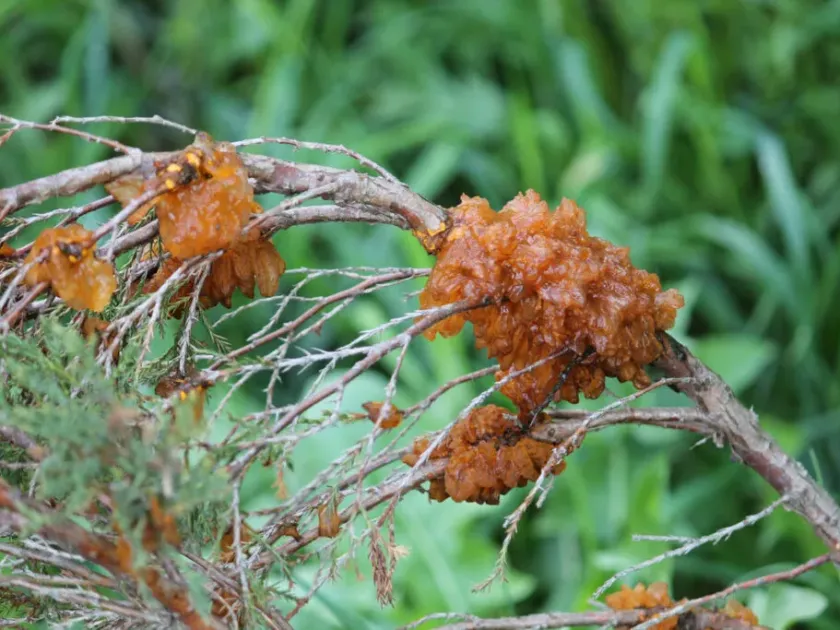
The most visible sign of infection is the emergence of bright orange, gelatinous or dry spore-producing galls on the branches during the spring. These structures are the primary diagnostic feature.
Infected areas of the branches often show significant distortion, twisting, and thickening. The bark in these regions frequently cracks, leading to visible lesions or sores.
The needles on the affected branches typically turn yellow and drop prematurely. As the disease progresses, the branch may die entirely, leading to a thinning and unsightly crown.
- Appearance of bright orange spore-laden galls in spring.
- Distortion, bending, and swelling of young shoots.
- Bark cracking and deep lesions on branches.
- Premature needle yellowing and loss.
- Gradual dieback of individual branches or the entire plant.
During wet weather, the galls swell and become gelatinous, making them even more prominent. In drier conditions, they may appear as hardened, brownish crusts on the wood.
Pathogen
The causal agent of this disease is the rust fungus Gymnosporangium gaeumannii, a highly specialized obligate parasite. It possesses a complex life cycle that involves survival within the woody tissues of its host.
The fungus overwinters as mycelium within the branches of the juniper host, remaining dormant throughout the colder months. When spring arrives, it produces characteristic reproductive structures.
This pathogen is known for its ability to create perennial infections, meaning the fungus remains active in the plant tissue for many years. Such longevity makes the disease difficult to eradicate completely.
The fungus produces spores that can be easily dispersed by wind over considerable distances, allowing it to move quickly between susceptible hosts in a garden or landscape.
As the mycelium grows, it systematically disrupts the host's normal biological functions. This parasitic behavior is highly efficient at draining the resources of the juniper, often leading to decline.
Conditions for development
High humidity and consistent moisture are essential for the fungus to complete its life cycle and release spores. Springtime rainfall and morning dew are critical factors for infection.
The pathogen thrives in moderate temperature ranges, which align with typical spring weather. Mild winters often enhance the survival rate of the fungal mycelium within the host.
Poor air circulation, often caused by overly dense planting, creates a microclimate conducive to infection. When moisture stays on the needles and bark, the fungus can germinate more easily.
Lack of sanitation, such as failing to remove infected material, allows the pathogen to establish a permanent presence in the garden. Each infected branch acts as a continuous source of inoculum.
The proximity of other susceptible plants or infected wild populations increases the likelihood of re-infection. Because wind carries the spores, absolute containment is often challenging.
Why it matters
The disease significantly diminishes the aesthetic appeal of junipers, making them unsuitable for formal garden landscapes. The visual damage to the structure of the plant is often permanent.
Severe infections can lead to the death of major branches, which significantly weakens the tree's health. In some cases, the persistent stress caused by the fungus leads to complete plant death.
Managing a juniper rust outbreak requires time, effort, and financial resources for fungicides and specialized care. Once the disease is established, ongoing management is necessary.
The presence of the fungus limits the choices for plant combinations in the garden. Gardeners must avoid planting susceptible species close together to minimize the risk of spread.
Weakened plants are more susceptible to secondary pests and additional diseases. The cycle of decline can significantly shorten the lifespan of a healthy ornamental juniper.
Protection
The most effective management strategy is early detection followed by the physical removal and destruction of all infected branches. This practice reduces the amount of inoculum available.
Application of fungicides, particularly those containing copper or systemic ingredients, can help protect susceptible growth. Treatments should be timed to coincide with the spring infection period.
Proper plant spacing and regular pruning are essential to improve air circulation and reduce the humidity around the foliage. Dry foliage is much less likely to be infected.
Watering at the base of the plant, rather than overhead irrigation, helps keep the branches dry and prevents spore germination. Ensuring plants receive proper nutrients boosts their natural resilience.
Monitoring the surrounding area for sources of infection and coordinating with neighbors can help reduce the overall disease pressure. Prevention remains the primary defense against rust.
Discussion
No discussions yet — be the first.